
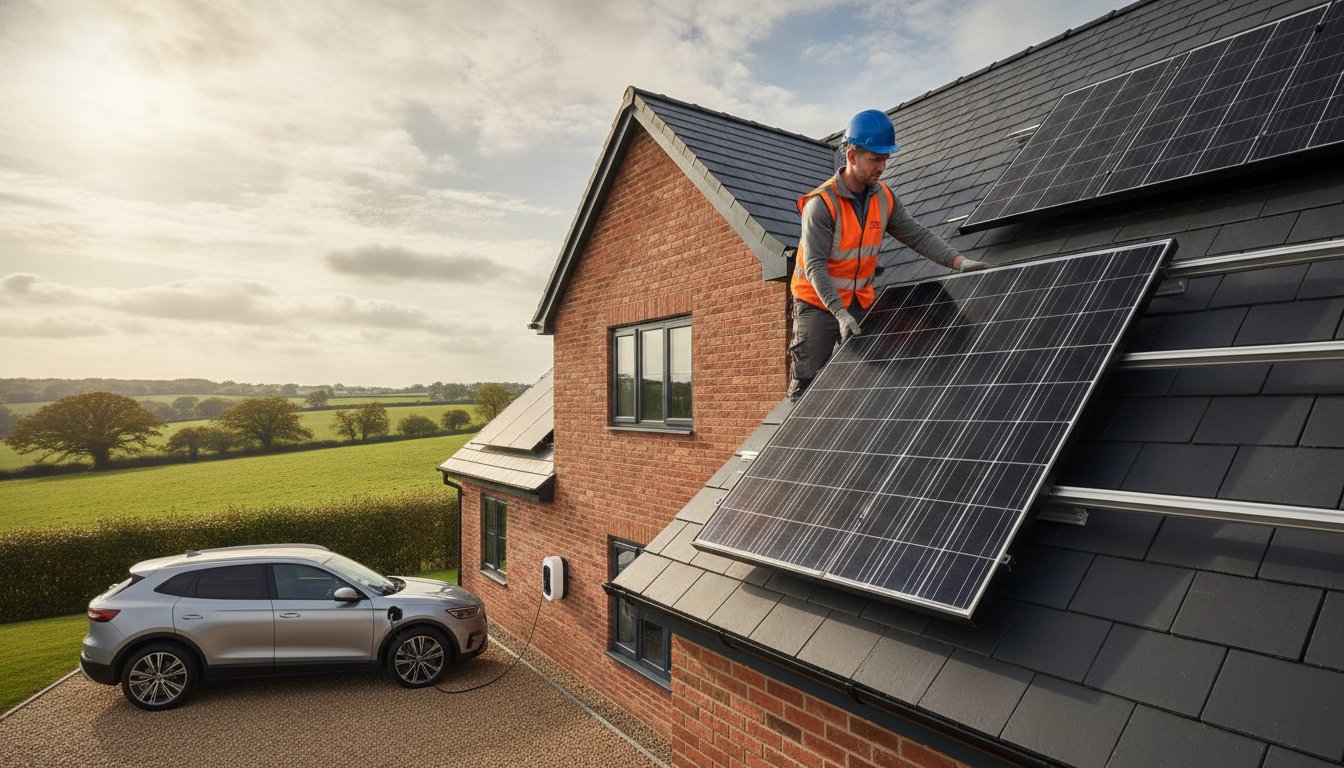
A successful solar installation is a multi-phase regulatory and technical journey, not just a one-day roofing job. If you're feeling anxious about "cowboy" installers or how long your roof might be exposed to the British weather, you aren't alone. Many homeowners find the jump from planning permission to grid connection confusing, especially with the latest 2026 industry updates. Understanding the solar panel installation process UK residents must follow is the only way to ensure your system is safe, legal, and high-performing.
We've designed this guide to help you master every stage of the journey, from the initial site survey to securing your export tariffs. You'll gain the confidence to choose a certified professional under the redeveloped MCS scheme and learn exactly how to navigate DNO regulations like G98 and G99 applications. We'll also explain how to maximize your returns through the Smart Export Guarantee and take advantage of the 0% VAT rate before it's scheduled to change in 2027. We're providing a clear timeline for your transition to clean energy, including how to integrate battery storage and EV charging points effectively.
Key Takeaways
- Learn why a thorough site survey is critical for checking your roof's structural integrity and ensuring your electrical system is ready for solar.
- Get a clear breakdown of the solar panel installation process UK residents experience, including the logistics of scaffolding and the technical steps of roof preparation.
- Understand how to secure your MCS certification and Handover Pack to guarantee your eligibility for the Smart Export Guarantee.
- Discover the long-term benefits of integrating battery storage and EV charging points to increase your energy independence and reduce future labor costs.
- Identify the advantages of working with local installers who understand regional DNO requirements and provide personalized long-term support.
Preparing for Solar: The Survey and Regulatory Phase
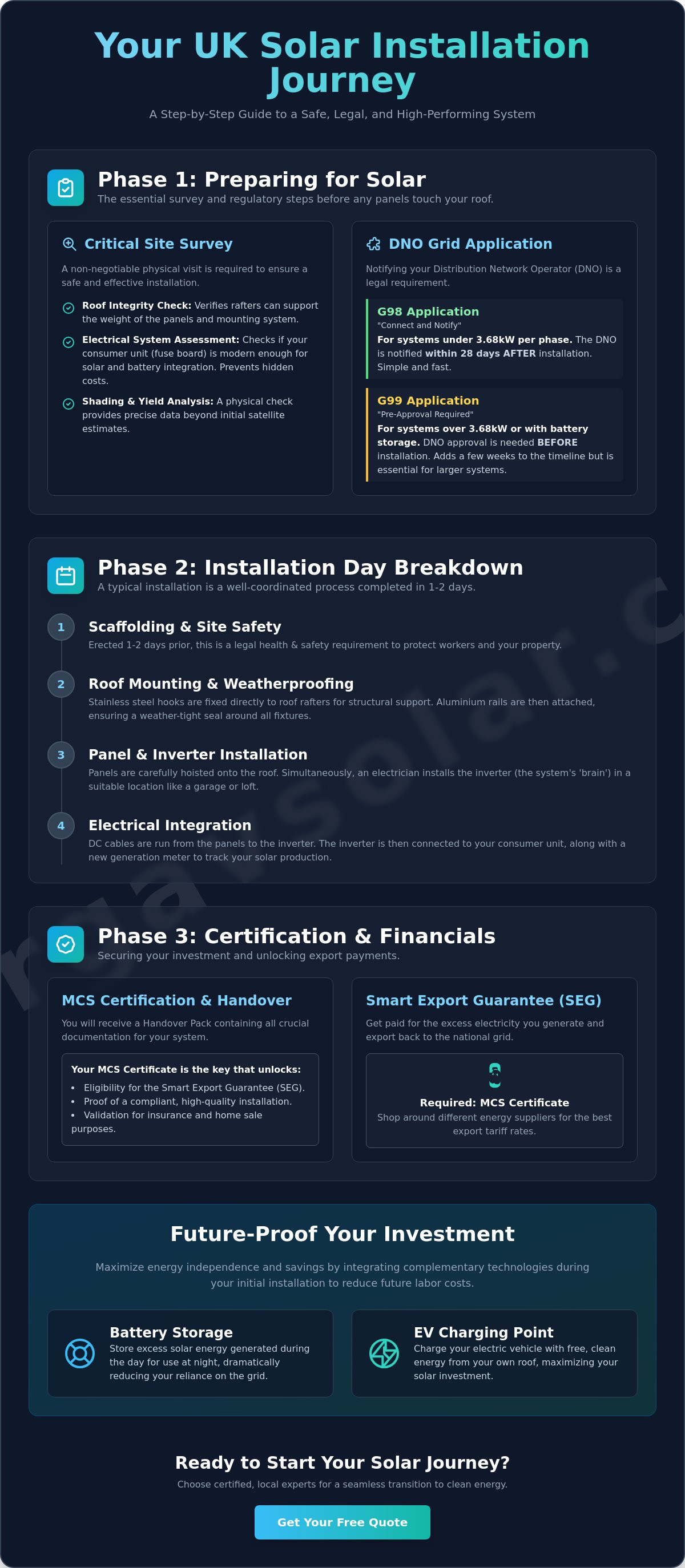
The solar panel installation process UK journey starts with paperwork and precision, not panels and pliers. Skipping the technical survey is where many homeowners run into trouble. A professional survey identifies if your roof can handle the weight and if your electrical system is ready for the influx of power. It's the foundation of a safe, high-performing system. This phase ensures your installation complies with both local building regulations and national grid standards.
This foundational stage is also an ideal time to consider the broader health of your property. Ensuring your home is free from damp and that your cavity walls are properly maintained can significantly impact your comfort and energy savings; experts such as CavClear can provide the necessary inspections and maintenance to ensure your home remains in excellent condition.
Most residential solar projects in England and Wales fall under "Permitted Development" rights. This means you won't usually need to apply for full planning permission. Exceptions exist for listed buildings, conservation areas, or if you're installing panels on a flat roof where they protrude significantly. Checking these constraints early prevents costly legal delays. As Solar power in the United Kingdom continues to grow, local authorities have become more efficient at processing these inquiries, but professional guidance remains essential.
Desktop vs. Physical Site Surveys
We use satellite data for initial shading analysis and yield estimates to give you a ballpark figure. It's a useful starting point, but it isn't enough for a final technical design. A physical visit is non-negotiable. An engineer needs to measure rafter spacing to ensure the mounting system is secure. They'll also check your electrical consumer unit. If your fuse board is outdated, you might need an upgrade before the solar PV system or battery storage can be safely integrated. Spotting these "hidden" costs early prevents surprises on the day of the build.
DNO Applications: G98 vs. G99
Your Distribution Network Operator (DNO) owns the cables that bring electricity to your home. They must know when you're adding a power plant to their grid. The application type depends on the size of your system. For small systems under 3.68kW per phase, we use a G98 application. This is a "connect and notify" process. We simply inform the DNO within 28 days of finishing the job. It's straightforward and rarely faces grid constraints.
Systems larger than 3.68kW, or those including battery storage, require a G99 application. This is more complex because you need DNO approval before the installation starts. The DNO checks if the local grid can handle your potential energy export. Your installer manages this paperwork to ensure grid compliance. While it adds a few weeks to the timeline, it's the only way to ensure your system is legal and that you can eventually claim export payments through the Smart Export Guarantee.
The Solar Panel Installation Day: A Step-by-Step Breakdown
The solar panel installation process UK homeowners experience usually begins with the arrival of the installation team and a final safety walk-through. Scaffolding is typically erected a day or two before to provide a secure working platform. This isn't just about convenience; it's a legal health and safety requirement that protects both the workers and your property. Once the site is secure, the team will begin the transition of your roof into a clean energy power plant.
Roof Mounting and Weatherproofing
The team starts by preparing the roof. Installers carefully lift or remove specific tiles to fix stainless steel roof hooks directly to the rafters. This ensures the weight of the panels is supported by the building's structure, not the tiles themselves. Once hooks are in place, we attach aluminum rails. Whether you have traditional slate or rosemary tiles, the goal is a seamless, weather-tight finish. We use specialized hoist equipment to lift the panels onto the roof, reducing the risk of damage. If you're considering your own project, you can find a detailed step-by-step solar panel installation guide to visualize the technical requirements.
Electrical Integration and Inverter Setup
While the roof team works, an electrician handles the internal components. The inverter is the "brain" of the system, converting DC power from the panels into usable AC power. We typically mount this in a well-ventilated area like a garage or a loft. We run DC cables from the roof down to the inverter, using conduit where necessary to keep everything tidy. If you've opted for Battery Storage Solutions, we'll integrate the battery at this stage too. This allows you to store excess energy generated during the day for use at night.
The last step involves connecting the inverter to your consumer unit and installing a generation meter. This meter tracks every kilowatt-hour your system produces, which is vital for claiming the Smart Export Guarantee later. Once everything is wired, we perform a series of electrical safety tests. We check for insulation resistance and earth continuity before switching the system on for the first time. Our team will walk you through the system's operation, showing you how to monitor your energy production via an app. It's a satisfying moment when the meter starts ticking and you've officially finished the solar panel installation process UK journey. If you are ready to begin, you can explore our Residential Solar PV Systems to see the options available for your home.
Post-Installation: Certification and Export Tariffs
Once the scaffolding comes down and your panels are soaking up the sun, the administrative phase of the solar panel installation process UK homeowners must navigate begins. This stage is just as critical as the physical build. Without the correct paperwork, you cannot prove the safety of your system to insurers or, more importantly, get paid for the energy you export back to the grid. Your installer should provide a comprehensive "Handover Pack" containing your MCS certificate, electrical installation certificates, and manuals for your inverter and battery storage.
Understanding MCS and NICEIC
The Microgeneration Certification Scheme (MCS) is the gold standard for quality assurance in the UK. It's a mandatory requirement if you want to access financial incentives. In 2026, the MCS "Redeveloped Installer Scheme" has shifted focus toward on-site installation quality and enhanced consumer protection. While MCS covers the solar technology, NICEIC certification ensures the broader electrical work meets stringent UK safety standards. This dual certification is vital for your home insurance validity. Even if your project fell under permitted development, keeping records of your compliance with Planning permission for solar panels guidelines protects your property's value during future sales.
Registering for Export Payments (SEG)
The Smart Export Guarantee (SEG) is how you turn your excess solar energy into a revenue stream. You cannot apply for these payments without your MCS certificate. It's a common mistake to assume your current energy provider will automatically sign you up. You must proactively apply, and you don't have to stay with your existing supplier for your export tariff. In mid-2026, rates have become highly competitive. Some suppliers offer up to 25p/kWh for customers who use their installation services, while others provide variable rates around 20p/kWh.
To track this energy, you'll need a functional smart meter (specifically a SMETS2 model). This device records exactly how much electricity you send back to the local network. Once your application is processed, which typically takes six to eight weeks, you'll start receiving payments for every unit of green power you don't use. This income, combined with the savings on your monthly bills, is what drives the 6 to 10 year payback period seen in 2026. Managing this final administrative step correctly ensures the solar panel installation process UK delivers the maximum financial return for your household.
Maximizing Your System: Batteries and EV Integration
While the core solar panel installation process UK homeowners follow focuses on the roof, the real magic happens in how you manage that energy. In 2026, smart integration is the key to achieving a faster return on investment. Installing solar battery storage alongside your panels is a strategic move that saves significant labor costs. Since the scaffolding is already in place and the electrician is already wiring your consumer unit, adding a battery adds very little to the installation time but can double your self-consumption rates.
Combining solar PV with EV charging points creates a powerful synergy for your household. Instead of selling your excess energy to the grid for 15p to 25p per kWh and then buying it back at a higher rate to charge your car, you can divert that green power directly into your vehicle. This effectively allows you to drive on sunshine, drastically reducing your transport costs while future-proofing your home energy infrastructure. Coordinating these installs during the same solar panel installation process UK timeline ensures all components are designed to work together from day one.
The Benefits of Hybrid Inverters
A hybrid inverter is a single unit that manages energy flow from both your solar panels and your battery storage. Traditional systems often required two separate inverters, which led to higher energy conversion losses. By using a hybrid model, you keep more of the power you generate. If you have an older system, considering inverter upgrades can breathe new life into your setup, making it compatible with modern high-capacity batteries. This streamlined approach means fewer components on your wall and a much simpler maintenance schedule.
Smart Energy Monitoring
Data is your best tool for maximizing ROI. Using smart monitoring platforms like the GivEnergy Cloud allows you to visualize your energy flow in real-time. You can see exactly how much you're generating, consuming, and exporting. These tools aren't just for show; they allow you to set automated charging schedules. For instance, you can program your battery to top up from the grid during cheap off-peak hours in winter when solar generation is lower. This ensures you always have a source of cheap or free energy to get you through the day. Smart apps also alert you to potential issues like shading from new tree growth or a faulty panel, ensuring your system always performs at its peak.
Ready to build a fully integrated energy system? Explore our Battery Storage Solutions to start saving more on every kilowatt you generate.
Why Local Expertise Matters for Staffordshire Homeowners
Choosing the right partner for your solar panel installation process UK journey often comes down to local presence. National "sales-first" companies frequently prioritize high volumes over long-term customer care. If a sensor fails or a panel needs a deep clean three years from now, you don't want to be stuck in a national call center queue. A local expert provides a level of accountability that large corporations simply can't match. For residents, securing a solar panel installation in Staffordshire means having a technical team just a short drive away for any follow-up support or warranty fulfillment.
Local installers don't just disappear once the panels are on the roof. They understand the environmental factors specific to the region, from local agricultural dust to urban pollutants. Regular solar panel maintenance and professional cleaning are essential for maintaining the efficiency of your system. Having a local team ensures you have direct access to technical support whenever you need to adjust your battery settings or integrate a new EV charging point.
Local Knowledge of Staffordshire Grid Constraints
Staffordshire has its own unique landscape of grid constraints and planning regulations. Local installers have deep experience with the regional DNOs, such as National Grid Electricity Distribution or SP Energy Networks. They understand which areas might face grid capacity issues, which is vital for a smooth G99 application. They also know the nuances of local council planning departments. Whether you live in a conservation area in Lichfield or a listed building in Stafford, local insight helps navigate these hurdles without unnecessary delays. This regional expertise speeds up the solar panel installation process UK timeline by avoiding common administrative errors that national firms might overlook.
The MarGav 20-Year Expertise Advantage
With two decades of industry experience, our approach focuses on building sustainable home ecosystems that grow with your family. We've seen solar technology evolve since the early days of the industry, which informs our careful selection of high-quality components. We believe in transparency and reliability. That's why we provide fixed-price installation contracts with no hidden fees. You'll know exactly what you're paying for before the first tile is even lifted.
Our commitment to Staffordshire homeowners goes beyond just the initial build. We offer a full suite of services to ensure your investment pays off over its entire lifespan, including:
- Residential Solar PV Systems designed for maximum yield in local light conditions.
- Battery Storage Solutions to increase your energy independence.
- EV Charging Points integrated seamlessly with your solar generation.
- Inverter Upgrades to keep your system compatible with the latest smart technology.
By choosing a local specialist with 20 years of expertise, you're not just buying hardware. You're securing a partner who understands the local landscape and is committed to your long-term energy goals.
Start Your Journey to Energy Independence
Transitioning to solar is a significant step toward reducing your electricity bills. Success depends on navigating the regulatory landscape and choosing an installer who prioritizes technical quality. Every detail matters, and companies like Sonalis demonstrate how expert planning and high-quality installation can maximize the potential of renewable energy systems. From the initial DNO application to receiving your final Handover Pack, accuracy ensures your long-term return on investment. Understanding the technical stages of the solar panel installation process UK homeowners follow helps you avoid common pitfalls like non-compliant wiring or missed export payments. By integrating battery storage and EV charging points now, you'll effectively future-proof your property against rising energy costs.
Don't wait to start saving. Request a Fixed-Price Solar Installation Quote from MarGav Solar. With over 20 years of renewable energy expertise, our NICEIC and MCS Certified Installers provide reliable, Staffordshire-based local support and maintenance you can trust. It's time to take control of your energy. We're here to help you every step of the way.
Frequently Asked Questions
Do I need planning permission for solar panels in the UK?
Most residential solar installations are considered "Permitted Development" and don't require full planning permission. You'll usually only need to apply if your home is a listed building, located in a conservation area, or if you're installing panels on a flat roof where they protrude significantly. It's always best to check with your local planning office if you're unsure about specific regional restrictions.
How long does the actual physical installation take?
A typical residential system usually takes between one and two days to install. This timeline covers both the roof mounting and the internal electrical work. Keep in mind that scaffolding is usually erected a few days before the team arrives and is taken down shortly after the final safety checks are completed. Larger systems or complex roof shapes might add an extra day to the schedule.
Will solar panels damage my roof tiles?
Professional installers use a mounting system that doesn't put pressure on your tiles. We fix stainless steel hooks directly to the roof rafters. Tiles are carefully lifted or notched to allow the hooks to pass through without compromising the roof's water seal. This ensures the structural integrity of your roof remains intact while the weight of the panels is safely supported by the building's frame.
What happens if it is cloudy on the day of installation?
Cloud cover won't stop the installation from going ahead. While panels produce the most energy in direct sunlight, they still generate electricity from daylight. The only weather conditions that typically delay a project are high winds, heavy rain, or snow, which create safety risks for the team working on the roof. If the weather is safe for the installers, the solar panel installation process UK homeowners expect will stay on track.
Can I add a battery to my solar system later?
You can definitely add a battery at a later date. AC-coupled systems make it easy to integrate storage into an existing setup at any time. However, many people find that including battery storage as part of the initial installation is more efficient. It saves on labor costs and ensures all components, including the inverter, are optimized to work together from the very first day.
What is the MCS certificate and why is it important?
The Microgeneration Certification Scheme (MCS) certificate is your proof that the system was installed to high industry standards by a qualified professional. You won't be able to claim Smart Export Guarantee (SEG) payments without it. In 2026, this certification also serves as a vital document for home insurance and future property sales, providing peace of mind that your clean energy investment is safe and compliant.
How much disruption should I expect during the installation?
Most of the disruption is limited to the outside of your home. The electricians will need access to your loft and consumer unit, but they'll keep noise and mess to a minimum. You should expect a brief power outage, usually lasting about an hour or two, when the system is finally connected to your home's electrical grid. We'll always coordinate this with you to ensure it causes as little inconvenience as possible.
Do I need a new consumer unit for solar panels?
You might not need a full replacement, but your consumer unit must meet current safety standards. During the solar panel installation process UK survey phase, we check if your board has enough spare capacity and the correct circuit protection. If your unit is very old or lacks the necessary safety features, an upgrade ensures your new solar PV system operates safely and meets modern electrical regulations.


