

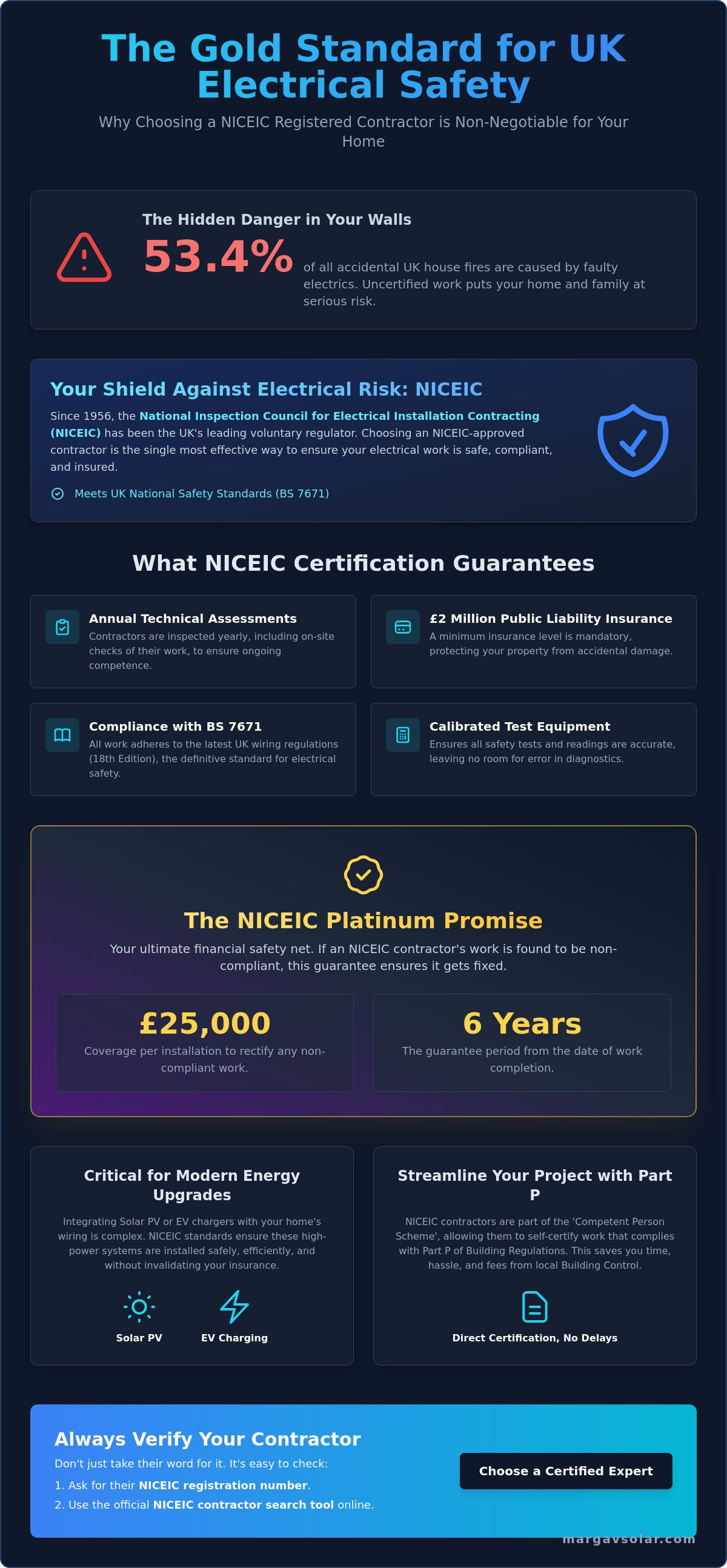
Did you know that faulty electrics cause 53.4% of all accidental house fires in the UK? This specific figure from Electrical Safety First highlights why choosing a contractor is about much more than just finding the lowest quote. You likely already feel that your home safety is non-negotiable, yet the sheer number of different trade bodies and certifications can feel overwhelming when you're just trying to upgrade your property. It is stressful to worry if a poor installation might invalidate your insurance or leave your family at risk. Choosing a professional with niceic registration is the most effective way to remove that uncertainty from your next home project.
This guide shows you why this specific certification stands as the definitive gold standard for electrical excellence in Staffordshire. You will discover how this registration protects your high-value solar investments and ensures every wire meets current Building Regulations. We will break down the specific benefits of the Platinum Promise guarantee and explain exactly how certified professionals keep your home safe and compliant for years to come. By the end, you'll know exactly how to verify a contractor so your home remains a safe haven.
Key Takeaways
- Learn why hiring an niceic registered contractor is the most effective way to ensure your home’s electrical work complies with the latest UK safety standards.
- Understand how the Platinum Promise acts as a £25,000 financial safety net, protecting your investment if a contractor's work is found to be non-compliant.
- Discover the critical safety requirements for solar PV and EV charging installations to ensure your green energy upgrades are integrated safely with existing domestic wiring.
- Find out how to streamline your project by using installers who can self-certify their work under Part P, avoiding extra fees from Staffordshire Building Control.
- Get actionable tips on how to verify local tradespeople and choose the correct registration tier for your specific Staffordshire home improvement project.
What is NICEIC and Why Does it Matter in Staffordshire?
NICEIC stands for the National Inspection Council for Electrical Installation Contracting. Since 1956, this body has operated as the UK's primary voluntary regulator for the electrical industry. It doesn't just hand out badges; it maintains a strict "Roll of Approved Contractors" to ensure public safety across the country. For a homeowner in Staffordshire, seeing that red and gold logo is a vital safeguard. Whether you're installing solar panels in Stafford or rewiring a Victorian terrace in Stoke-on-Trent, the niceic accreditation proves the contractor meets high national standards. It separates legitimate professionals from unqualified individuals who might leave your property at risk of fire or electrical failure.
The organisation plays a critical role in the UK's "Competent Person Scheme" framework. By choosing a registered contractor, you're hiring someone who has been independently verified as capable of completing work that complies with building regulations. This is particularly important in the West Midlands, where local authorities require specific certification for any "notifiable" electrical work under Part P of the Building Regulations.
The Purpose of NICEIC Certification
The core mission is ensuring electricians are competent and capable of meeting the BS 7671 wiring regulations. These are the UK national standards for electrical installations. In Staffordshire, "cowboy" traders often undercut prices by skipping safety checks. The certification protects you by providing a framework for regular technical excellence. Contractors undergo yearly inspections to prove their work remains safe and compliant. These assessments typically include:
- Verification of technical documentation and £2 million minimum public liability insurance.
- On-site inspection of active electrical work to check for safety.
- Confirmation that all testing equipment is calibrated correctly.
- Review of the contractor's knowledge regarding the latest 18th Edition amendments.
NICEIC vs. Other Competent Person Schemes
While other schemes like NAPIT exist, niceic remains the most recognised name in the industry. Many mortgage lenders and local authorities in Staffordshire specifically request certificates from this body during property surveys or planning applications. The assessment process is notoriously rigorous, requiring firms to demonstrate documented safety systems. This level of scrutiny gives homeowners peace of mind that their electrical project is in expert hands. It also ensures that if something goes wrong, you have access to the Platinum Promise, a six year guarantee that protects consumers if the work doesn't meet the required building standards.
The NICEIC Platinum Promise: Your Financial Safety Net
Investing in your home's electrical infrastructure is a significant commitment. The Platinum Promise acts as a dedicated consumer protection insurance scheme for homeowners across the UK. If a contractor registered with the niceic performs work that doesn't meet the required Building Regulations or safety standards, this scheme provides the financial backing to correct it. It's a robust layer of security that ensures you aren't left with the bill for someone else's mistakes.
How the Platinum Promise Works
The claim process follows a clear path to resolution. You must first attempt to resolve the issue directly with the original installer. If the contractor has ceased trading or fails to rectify the non-compliant work, the niceic intervenes directly. They will commission another approved contractor to assess the site and perform the necessary remedial repairs. The scheme provides a limit of indemnity up to £25,000 for any single installation. This substantial coverage protects your home from the financial burden of fixing substandard wiring or faulty components.
Eligibility for Staffordshire Homeowners
This protection isn't indefinite; it carries a strict six-year validity period from the date the work was completed. To be eligible, your project must fall under the scope of domestic electrical work and must have been performed by a registered member. The foundation of this protection is Part P compliance. This regulation ensures that all electrical installations in dwellings are safe and properly documented. You must receive a formal certificate upon completion to trigger this safety net. Without this paperwork, you won't have the evidence needed to file a claim if things go wrong.
For residents in Staffordshire, this financial backing is vital for high-value projects like solar PV installations. A typical residential solar array can cost between £5,000 and £10,000. Because these systems involve complex DC to AC conversions and roof-mounted hardware, the technical risks are higher than standard lighting circuits. The Platinum Promise ensures that if your solar setup isn't compliant with UK safety standards, the costs of making it safe are covered. If you're considering upgrading your home's energy efficiency, you should speak with an accredited team to ensure your investment remains fully protected by these industry guarantees.
Why NICEIC Standards are Critical for Solar and EV Installations
Installing renewable energy tech isn't the same as adding a new kitchen circuit. Solar PV and Electric Vehicle (EV) chargers transform your home into a mini power station. This creates complex electrical demands that standard house wiring wasn't originally designed to handle. A niceic certified installer understands how to integrate these systems without compromising the safety of your Staffordshire property.
One primary challenge involves load management. A standard UK home typically has a 60A or 100A main fuse. If you're charging an EV at 7kW while running an electric shower and a heat pump, you risk overloading the service cable. NICEIC contractors use specific calculations to determine if your supply needs an upgrade or if load-shedding devices are required. They also bridge the gap between the Microgeneration Certification Scheme (MCS) and electrical safety. While MCS focuses on the performance and efficiency of the solar panels, the NICEIC certification ensures the AC and DC integration meets BS 7671 standards.
Handling Direct Current (DC) requires specialist expertise. Unlike the Alternating Current (AC) in your sockets, DC electricity doesn't have a "zero-crossing" point. This means if a fault occurs, the electrical arc is much harder to extinguish, creating a significant fire risk. Professional installers ensure that DC isolators, string fuses, and inverter placements meet strict cooling and clearance requirements to prevent overheating.
Solar PV and Electrical Safety
High-voltage solar arrays can operate at levels up to 600V or even 1000V DC. This requires advanced earthing arrangements that differ from standard domestic setups. NICEIC training now incorporates the latest 2026 amendments to the wiring regulations, which focus on prosumer electrical installations. These rules mandate specific surge protection devices (SPDs) to protect your expensive solar equipment from lightning strikes or grid spikes, ensuring your investment doesn't fry during a storm.
Safe Battery Storage Integration
Modern homes are increasingly adding battery backup to their solar setups. Installing GivEnergy or similar lithium-ion systems requires strict adherence to fire safety protocols. These units are heavy and generate heat during rapid discharge cycles. NICEIC standards dictate that batteries must be installed with proper ventilation and, in many cases, fire-rated backing boards. This prevents thermal runaway and ensures the installation complies with Part P of the Building Regulations. To get the most out of your setup, you can learn about GivEnergy Cloud and smart storage to see how software and hardware work together safely.
- DC Safety: Proper cable sizing to prevent voltage drop and overheating.
- Inverter Placement: Ensuring adequate airflow to prevent component failure.
- Earthing: Specialized "Type B" RCDs are often required for EV and solar circuits to detect DC leakage.
- Future Proofing: Installations that meet niceic standards are ready for the 2026 regulatory shifts regarding smart grids.
Navigating Building Regulations and Certification in Staffordshire
Part P of the Building Regulations ensures that electrical installations in Staffordshire homes are safe from fire or electric shock. Since its introduction in 2005, most significant electrical work must be notified to local authorities. If you're working with an niceic registered contractor, they have the legal authority to self-certify their work. This is a major benefit for homeowners in areas like Stafford or Stoke-on-Trent. Instead of paying local council building control fees, which often range between £300 and £450 for a single inspection, your contractor handles the legalities at no extra administrative cost to you.
Since the 2022 update to the IET Wiring Regulations (BS 7671:2018+A2:2022), the standards for domestic safety have become even more rigorous. Local authorities like Stafford Borough Council don't have the resources to inspect every home, so they rely on the self-certification scheme. If you choose an unregistered electrician, you're legally obligated to inform Building Control before work starts. This involves a formal application and a fee that often exceeds £350, depending on the scale of the project. Using a certified professional avoids these hurdles entirely.
The Notification Process Explained
The journey from installation to legal certification follows a strict path. Your contractor ensures the work meets the highest safety benchmarks before the paperwork is filed.
- Step 1: The contractor completes the work to BS 7671 standards.
- Step 2: The contractor notifies niceic of the completed project via their online portal within 30 days.
- Step 3: The organization informs the local authority in Staffordshire on your behalf.
- Step 4: You receive your Building Regulations Compliance Certificate in the post, typically within 15 to 30 days.
Selling Your Home: The Paper Trail
Selling a property in the West Midlands involves intense scrutiny of your home's history. During the conveyancing process, solicitors will provide a TA6 Property Information Form. This document asks for proof that all electrical work complies with building regulations. If you cannot produce an Electrical Installation Certificate (EIC) or a Part P compliance notice, it can cause significant delays. In some cases, sales fall through because buyers are wary of uncertified wiring.
The Law Society’s Conveyancing Quality Scheme has made electrical paperwork a non-negotiable part of property transfers. In Staffordshire, where many properties are older builds in areas like Penkridge or Stone, solicitors are particularly cautious about DIY wiring. If you've had a new circuit installed for an electric vehicle charger or a kitchen renovation, the buyer's lender will require the compliance certificate before releasing funds. If you've lost your documents, you can usually retrieve digital copies through the official online portal for a fee of approximately £15.
Ready to upgrade your home's electrical system with fully certified professionals? Contact Margav Solar for expert electrical services in Staffordshire today.
Choosing an NICEIC-Certified Installer in Staffordshire
Finding a reliable electrician in Stoke-on-Trent, Stafford, or Cannock starts with the niceic "Find a Contractor" tool. This online database allows you to filter by postcode to ensure your chosen professional is fully registered and assessed. You'll encounter two main categories during your search. An "Approved Contractor" undergoes assessment for all types of electrical work, including commercial and industrial sectors. A "Domestic Installer" focuses specifically on residential work under Part P of the Building Regulations. For most home improvements, either is qualified; however, Approved Contractors often demonstrate a broader scope of technical competency across diverse electrical systems.
Verification Checklist for Homeowners
Homeowners should perform a quick background check before any work begins on their property. Ask to see the contractor's photo ID card. This card features the niceic logo and a unique registration number that you can verify online in under 60 seconds. Always confirm they hold current Public Liability insurance, typically covering at least £2 million, and Professional Indemnity insurance. These protections ensure you aren't liable for accidents or design errors during the project. For more complex energy upgrades, read our guide to solar panel installation in Staffordshire.
- Verify the registration number on the official roll of approved contractors.
- Check that their insurance policies are active and provide adequate coverage.
- Confirm the contractor is specifically registered for the type of work you require.
The MarGav Solar Commitment
MarGav Solar integrates these high standards into every project we undertake across the region. Our team brings 22 years of industry experience to Staffordshire homes, ensuring every solar array or battery system meets strict safety benchmarks. We provide end-to-end certification, meaning we handle the technical notifications for solar, battery storage, and EV chargers ourselves. This streamlined approach guarantees that your installation complies with the latest 18th Edition Wiring Regulations. If you're looking to upgrade your driveway, explore EV charging solutions in Staffordshire to see how we apply this rigorous safety culture to modern transport.
Ask your installer these specific questions to ensure they're currently registered:
- Can I see your current registration certificate and photo ID?
- Will you provide a Building Regulations Compliance Certificate once the work is finished?
- Is your work covered by the Platinum Promise six-year warranty?
- Are you assessed annually to maintain your standing with the regulatory body?
Verified contractors will answer these questions directly and provide the necessary documentation without hesitation. Choosing a certified professional protects your investment and ensures your home remains a safe environment for your family.
Secure Your Staffordshire Home’s Electrical Future
Choosing a certified professional ensures your home stays compliant with the latest BS 7671 standards, specifically the 18th Edition of the IET Wiring Regulations. You gain the peace of mind that comes from the Platinum Promise, which offers financial protection if work doesn't meet the required safety benchmarks. This protection is especially vital for complex solar and EV charger installations where high voltage systems require precise handling by qualified experts. You'll avoid the risks of uncertified work while adding long term value to your property.
Our Staffordshire-based team brings over 20 years of industry expertise to every project. We manage all necessary notifications for Building Regulations and ensure every connection meets strict niceic criteria. It's about more than just wiring; it's about building a sustainable, safe environment for your family. Book a safety-first solar consultation with our NICEIC-standard experts today to start your transition to clean energy. Your home deserves the highest level of technical excellence and local care.
Frequently Asked Questions
Is NICEIC a legal requirement for electrical work in the UK?
No, it's not a legal requirement for an electrician to be NICEIC registered, but they must comply with the UK Building Regulations. Most homeowners choose registered contractors because they can self-certify their work. This saves you from paying local authority building control fees, which often exceed £300 for a single notification. Choosing a registered professional ensures the work meets the BS 7671 safety standards.
What is the difference between NICEIC Approved Contractor and Domestic Installer?
An Approved Contractor is licensed to carry out all types of electrical work, including commercial and industrial installations. A Domestic Installer focuses specifically on work within residential properties under the Part P scheme. Both paths require rigorous annual assessments. Currently, over 38,000 businesses use these registrations to prove their competence to UK consumers and local authorities.
How can I check if my electrician is actually NICEIC registered?
You should verify a contractor's status by using the official "Find a Contractor" search tool on the NICEIC website. Simply enter the business name or your Staffordshire postcode to see their current registration details. It's a vital step because industry data shows that 1 in 4 homeowners fail to check credentials, leaving them vulnerable to uninsured or substandard work.
Does NICEIC cover solar panel installations and battery storage?
Yes, the organization provides certification for renewable technologies through the Microgeneration Certification Scheme (MCS). To claim government incentives or export tariffs like the Smart Export Guarantee, your system must be installed by an MCS certified professional. Using an niceic registered installer for solar PV ensures the installation follows the specific MIS 3002 standards for safety and efficiency.
What happens if I don't have an NICEIC certificate for my electrical work?
You may face a fine of up to £5,000 from your local authority if your electrical work doesn't comply with Building Regulations. Selling your home also becomes difficult since solicitors require valid certificates during the conveyancing process. If a fire occurs due to faulty wiring, your insurance provider might refuse to pay out without proof that a competent person performed the installation.
Can I self-certify my own electrical work if I follow NICEIC guidelines?
No, you cannot self-certify unless you're a registered member of a Competent Person Scheme. If you perform DIY electrical work in "special locations" like bathrooms, you must notify Local Authority Building Control before you start. They'll charge an inspection fee and perform their own tests. Statistics show that 15% of domestic fires in the UK stem from faulty wiring, so professional certification is the safest route.
How much does an NICEIC certificate cost for a homeowner?
A standard Electrical Installation Condition Report (EICR) usually costs between £150 and £300 for a typical three-bedroom house. This price includes the professional's labor for a 100% circuit inspection and the administrative cost of the digital niceic certificate. While the regulatory body doesn't set these prices, these figures represent the current market average for a thorough safety assessment in the UK.
What is Part P and how does it relate to NICEIC?
Part P is the specific section of the Building Regulations that ensures electrical installations in homes are safe from fire and electric shock. It's a legal requirement for most domestic electrical work in England and Wales. NICEIC is a government-authorised body that allows electricians to certify that their work meets these Part P standards. This registration removes the need for you to involve council inspectors directly.


