

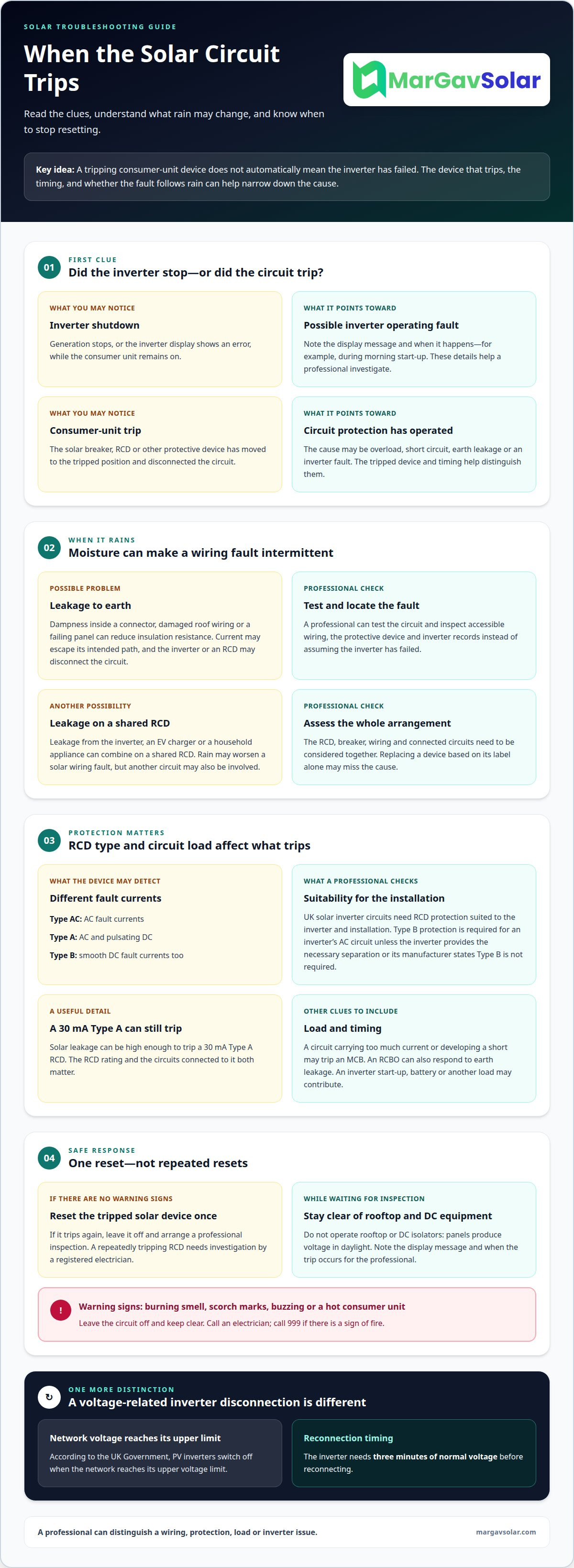
The inverter isn’t always at fault. A solar inverter tripping the consumer unit may indicate an overloaded or short-circuited circuit, or earth leakage detected by an RCD. Moisture in a connector or damaged solar wiring can contribute, especially in wet weather. Reset the tripped solar circuit protective device once. If it trips again, leave it off and arrange a professional inspection.
It’s understandable to suspect the solar system when the power cuts out, but a shared RCD can also trip because of leakage from another appliance or circuit. This guide explains what may be tripping, why rain and wiring faults matter, and what a repeat trip means. It also explains how a professional can determine whether the fault is in the solar circuit or elsewhere, without you handling rooftop or DC equipment.
Key Takeaways
- Identify whether the consumer unit’s protective device has tripped or the inverter has simply shut down; the distinction helps narrow the cause.
- Note when the fault happens and any inverter display message so a professional can use these clues during diagnosis.
- RCD type and circuit arrangement matter: a professional can assess whether protection is suitable and whether leakage or a wiring fault is involved.
- If the assessment points to an inverter fault or an upgrade, MarGav Solar offers inverter upgrades and replacements.
Moisture and insulation faults in solar wiring
A trip may involve the consumer unit’s protective device, the inverter or the solar wiring. The device that trips, and whether the problem follows rain or inverter start-up, can help narrow down the cause.
Ground Faults and Insulation Resistance
A ground fault occurs when current escapes its intended path towards earth, often because damaged insulation no longer separates live wiring from earthed parts. The inverter or an RCD may detect this leakage and disconnect the circuit. Moisture inside a cable connector, damaged roof wiring or a failing panel can reduce insulation resistance and trigger a trip. A professional tests the circuit to locate the fault instead of assuming the inverter has failed.
Diagnosing and Repairing Trips
Diagnosis identifies which device trips and whether the cause is an overload, short circuit, earth leakage or inverter fault. An MCB can trip when a circuit carries too much current or develops a short; an RCBO can also respond to earth leakage. For example, a fault may appear when the inverter starts, while a battery or another load may contribute to an overloaded circuit. The cost of diagnosis or repair depends on the fault, access to the affected wiring and any parts required; the price depends on the case and is given after a quote request. Electrical Safety First advises that an RCD that keeps tripping needs investigation by a registered electrician.
Grid Voltage, Earthing and Water Ingress
Grid voltage, earthing faults and water ingress can each make an inverter disconnect, but they affect the system differently. According to the UK Government, PV inverters switch off when the network reaches its upper voltage limit and need three minutes of normal voltage before reconnecting. A poor earth connection or damaged insulation can instead cause leakage that trips an RCD. Rain can allow moisture into a connector or damaged cable, lowering insulation resistance and making the fault intermittent. A professional checks the wiring, protective device and inverter records to distinguish these causes.
A tripping MCB or RCBO does not automatically mean the inverter is faulty. The device’s function, the load on its circuit and the timing of the trip all help identify what needs investigation.
Is it safe to keep resetting the RCD?
First distinguish an inverter shutdown from a trip at the consumer unit, as they point to different problems. Reset a tripped solar circuit protective device once. If it trips again, leave it off and arrange an inspection.
Inverter Shutdowns and Consumer-Unit Trips
An inverter shutdown stops generation, while a consumer-unit trip disconnects a circuit through its protective device. If the inverter display shows an error but the consumer unit remains on, the inverter may have detected an operating fault. If its breaker or RCD has moved to the tripped position, the circuit protection has operated. Note the display message and whether the trip happens during morning start-up; these details help narrow down the investigation.
Safe Steps After an RCD Trip
An RCD trips when it detects current leaking to earth on protected circuits. A single reset is reasonable if there are no warning signs. If it trips again, leave it off instead of repeatedly restoring power. Don’t operate rooftop or DC isolators, because panels produce voltage in daylight. A professional can check the wiring, protective device and inverter for leakage or damage, then identify what needs repair. Electrical Safety First advises that a repeatedly tripping RCD indicates a fault requiring investigation by a registered electrician.
Micro-Inverters and RCD Trips
Transformerless micro-inverters can contribute small leakage currents between solar equipment and earth. Panels, wiring and other connected equipment may each add leakage, so the combined current can trip a sensitive RCD. Wet conditions can increase leakage where connectors or insulation are damaged. A professional assesses the complete circuit and its protection rather than treating one micro-inverter as the automatic cause. Adding equipment, such as a battery or EV charger, can also change the leakage shared by protected circuits.
When to Arrange an Inspection
Arrange an inspection if the RCD trips again after its single reset, or if the inverter repeatedly shuts down. A professional can test for leakage, inspect accessible wiring and assess whether the protective device suits the inverter. A burning smell, scorch marks, buzzing or a hot consumer unit means leave it off and keep clear; call an electrician, and call 999 if there’s a sign of fire. For an inverter fault that calls for replacement, explore inverter upgrades and replacements.
Why does it only trip when it rains?
Rain can increase leakage through damp connectors or damaged cables, while other circuits may add leakage on a shared RCD. The RCD type and the way the solar installation is wired both affect whether it trips.
RCD Ratings and Shared Circuits
An RCD’s type determines which fault currents it can detect; its rating and connected circuits also affect protection. Type AC detects AC fault currents, while Type A detects AC and pulsating DC. Type B also detects smooth DC fault currents. On a shared RCD, leakage from an inverter, EV charger or household appliance can combine until the device trips. A 30 mA Type A RCD can still trip if solar leakage is high.
Rain may worsen leakage through wet solar wiring, but other circuits can also be involved. A professional checks the RCD, breaker, wiring and circuit arrangement together, rather than replacing a device based on its label alone. Some inverter manufacturers specify a different RCD type or rating where wiring rules allow.
Wiring Rules and RCD Protection
UK solar inverter circuits need RCD protection suited to the inverter and installation. Type B protection is required for an inverter’s AC circuit unless the inverter provides the necessary separation or its manufacturer states Type B isn’t required. For circuits connected to plug-in solar systems, BS 7671 Amendment 4 requires at least Type A protection.
These requirements matter because one RCD type does not detect every fault current. A professional considers the inverter manufacturer’s instructions, the installation and the protective device before deciding what is suitable. A device that trips repeatedly may indicate leakage or an unsuitable arrangement, rather than simply being too sensitive.
Type AC RCDs were the most common in UK installations before around 2015, while most consumer units installed after 2015 have Type A RCDs. This doesn’t establish whether a particular circuit is suitable. Checks should also account for other circuits sharing the RCD, connected equipment and the condition of solar cables. Persistent trips need investigation, not repeated switching back on.
How a professional checks whether the solar system is causing the trip
An electrician first identifies which device trips and what else loses power. If the inverter display shows an error while the consumer-unit breaker stays on, that points towards an inverter shutdown. If the breaker or RCD trips, the protected circuit has disconnected. The timing, weather and connected loads help narrow down the cause.
Next, the professional checks whether the fault follows the solar circuit. They can safely isolate the solar AC circuit, then observe whether the consumer unit continues tripping. If the trips stop while it’s isolated, the solar system becomes a stronger suspect, though this alone doesn’t identify the fault. If trips continue, another connected circuit or appliance may be involved. A professional assessment avoids unsafe handling of live solar equipment.
Electrical checks can then focus on insulation, earthing, wiring and protective devices. The electrician looks for damaged cables or moisture ingress, tests whether insulation is sound and assesses leakage on the affected circuit. They also compare the inverter’s protection requirements with the installed RCD and breaker. The inverter manufacturer’s instructions help determine whether the protection and installation are suitable.
Not every inverter stop means the consumer unit has tripped. According to the UK Government, PV inverters switch off when the network reaches its upper voltage limit and require three minutes of normal voltage before reconnecting. An electrician can compare this behaviour with the consumer-unit device and inverter records. That distinction helps separate a grid-voltage shutdown from a wiring or earth fault.
A clear diagnosis connects the trip to a specific circuit, device or operating condition, rather than relying on guesswork. If assessment identifies an inverter fault that calls for replacement, discuss inverter upgrade and replacement options.
MarGav Solar: Inverter Upgrades and Replacements
MarGav Solar provides inverter upgrades and replacements when a professional diagnosis identifies an inverter fault or an unsuitable unit. Replacing an inverter may be appropriate when the existing equipment cannot be repaired or no longer suits the solar installation. The right option depends on the system’s configuration, connected equipment and the cause of the trip.
If the inverter is working normally and checks point to damp or damaged wiring, replacement alone may not address the underlying fault. Diagnosis helps establish whether the issue is the inverter or another part of the solar system. Where the wider setup needs attention, MarGav Solar also offers residential solar PV systems, battery storage solutions and EV charging points.
For help with an inverter fault or replacement, contact MarGav Solar.
Make your next decision with confidence
If a solar inverter is tripping the consumer unit, treat diagnosis as the starting point for deciding what happens next, not simply a way to restore power. Understanding the cause helps distinguish a repairable fault from a problem that may call for an inverter replacement. It also gives you a clearer basis for considering how the system should operate alongside other connected equipment.
Before deciding on changes, focus on whether the proposed work addresses the identified cause and suits the existing installation. MarGav Solar can help with inverter upgrades and replacements when they are the appropriate next step. The aim is to choose a solution based on the fault, rather than replace equipment without understanding why the trip occurred.
For support with your next step, contact MarGav Solar. A clear diagnosis can make the way ahead easier to plan.
Frequently Asked Questions
What is actually tripping?
Usually, it’s a protective device in the consumer unit that trips, not the inverter itself. An MCB responds to excessive current from an overload or short circuit; an RCD responds to current leaking to earth. An RCBO combines these functions for its circuit. The switch position and any inverter display message help distinguish a consumer-unit trip from an inverter shutdown.
How can a professional tell if the solar system is tripping your electrics?
A professional compares which circuits lose power with the inverter’s status and the protective device that has operated. For example, if the solar breaker trips but household lights remain on, the fault is more localised than if a shared RCD disconnects several circuits. In Staffordshire, an electrician can also consider whether the trip follows rain, system start-up or another connected load.
Is it safe to leave the solar switched off?
Yes, the home can continue using grid electricity while the solar circuit remains off, but solar generation stays unavailable until the fault is fixed. Don’t operate rooftop or DC isolators yourself: panels produce voltage in daylight. If the consumer unit smells of burning, buzzes, shows scorch marks or feels hot, leave it off and keep clear. Call 999 if there’s a sign of fire.
How can a professional check whether the solar system is causing the trip?
An electrician can separate the solar circuit from other connected circuits, then assess whether the trip continues. They may test insulation and leakage, inspect wiring and compare the protective device with the inverter’s requirements. For example, a fault that appears only when the solar circuit is connected narrows the investigation, while continued trips point towards another circuit or a shared cause.
Why do my solar panels keep tripping the RCD?
Moisture, damaged wiring or a failing panel can increase current leakage to earth, especially during wet weather. Leakage from the inverter, an EV charger or household appliances may also combine on a shared RCD. The pattern matters: a trip after rain suggests a different lead from one that occurs when another appliance starts. A professional can assess the circuit and protective device together.
Why does a solar inverter trip a consumer unit in the UK?
The cause may be an overload, short circuit, earth leakage, unsuitable protection, or a fault in the inverter or wiring. A useful distinction is whether the consumer-unit switch trips or the inverter simply stops generating. Grid voltage can also make a PV inverter disconnect without operating the consumer-unit device. The device that moves, the circuits affected and the inverter display help identify the next diagnostic checks.


