
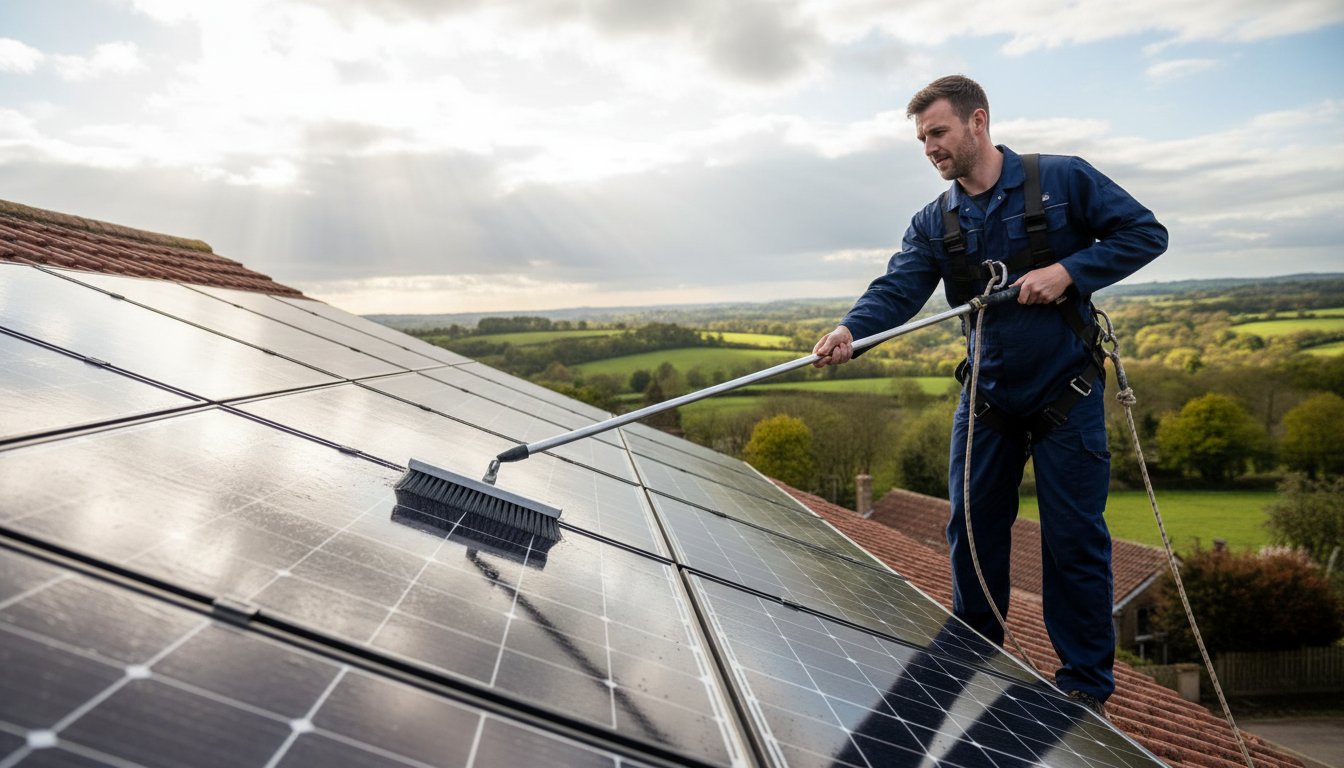
Did you know that a layer of Staffordshire grime and bird droppings can slash your energy output by as much as 25% in a single season? It's a frustrating reality for the 1.3 million UK households that have already embraced renewable energy. You probably invested in your system to lower those monthly bills and do your bit for the planet, so watching your yields drop while pigeons nest under your panels is the last thing you want. It's perfectly normal to feel uneasy about climbing a ladder yourself or worrying if a DIY scrub might accidentally void your manufacturer's warranty.
We've created this guide to show you how professional solar panel maintenance protects your investment and ensures your system hits peak performance even during our greyest West Midlands winters. You'll discover the essential safety checks, bird proofing strategies, and the specific 2026 regulations you need to know to keep your home powered and your warranty secure. We'll help you move from worrying about your roof to enjoying the full financial benefits of your green energy setup.
Key Takeaways
- Learn why Staffordshire’s specific weather patterns aren't enough to keep your system efficient and how professional care protects your long-term energy yields.
- Understand the vital distinction between basic surface washing and comprehensive solar panel maintenance that follows NICEIC safety standards.
- Identify the "silent killers" of UK solar arrays, including how to prevent permanent damage caused by pigeon nesting and acidic bird droppings.
- Follow our seasonal 2026 calendar to schedule your inspections and cleaning at the optimal times for peak performance during the summer months.
- Discover the hidden risks of DIY cleaning and why using high-pressure equipment can void your warranty and ruin sensitive panel coatings.
Why Solar Panel Maintenance is Essential for Staffordshire Homes in 2026
Solar panel maintenance involves more than a quick rinse with a garden hose. It's a dual-process regime combining professional physical cleaning with comprehensive electrical health checks. While the hardware is durable, neglecting these systems leads to the "Silent Yield Gap." Technical data from 2025 indicates that invisible technical faults, such as micro-cracks or PID (Potential Induced Degradation), can cause a 15% to 25% drop in energy production without the homeowner ever noticing. Understanding how photovoltaic systems work helps clarify why these efficiency drops occur as components age or encounter environmental stress.
Staffordshire's weather patterns in 2026 continue to challenge the "self-cleaning" myth. While the county receives an average of 820mm of rainfall annually, this isn't enough to remove stubborn grime. Rain often carries fine particulates that bake onto the glass during dry spells, creating a film that blocks sunlight. Regular solar panel maintenance also protects your 25-year manufacturer warranty. Most major brands now require documented evidence of professional inspections every 24 months to honor claims related to panel degradation or inverter failure.
The Local Factor: Staffordshire Dust and Debris
Homes near Cannock Chase or the agricultural belts of East Staffordshire face high levels of organic build-up, including heavy pollen and bird droppings. In urban areas closer to Stoke-on-Trent or the West Midlands fringe, industrial particulates and traffic soot create a sticky residue. These contaminants don't wash away easily. Professional "self-cleaning" coatings require a specialist eye every 12 to 24 months to ensure the hydrophobic layer hasn't been compromised by local pollutants or lichen growth.
Financial Impact: ROI and Energy Yields
Maintaining your solar panel installation ensures it remains a high-yielding financial asset. A system producing 20% less energy can cost a Staffordshire household over £165 a year in lost savings based on 2026 electricity price caps. Consistent solar panel maintenance prevents these losses from compounding over time.
- Soiling loss is the percentage of energy lost due to surface contaminants.
- Annual inspections identify "hot spots" before they cause permanent cell damage.
- Clean panels operate at lower temperatures; this improves the conversion efficiency of the silicon.
Investing between £100 and £220 in a professional service often pays for itself through restored generation capacity and the prevention of mid-term hardware failures. It's the most effective way to secure the long-term return on your renewable energy investment.
Cleaning vs. Technical Servicing: What a Professional Health Check Includes
Many Staffordshire homeowners mistake a quick hose-down for proper solar panel maintenance. While removing bird droppings or dust helps efficiency, it doesn't address the electrical integrity of your system. A professional health check follows strict NICEIC standards to ensure the array remains safe and productive. DIY cleaning often does more harm than good. Using a high-pressure washer or abrasive household chemicals can strip the anti-reflective coating from the glass. This leads to a permanent drop in energy yield. Professional cleaners use de-ionised water and soft-reach brushes to protect your investment without risking micro-cracks in the silicon cells.
For larger installations, such as solar panels for business, the stakes are significantly higher. These high-voltage DC arrays require specialized thermal imaging to spot "hotspots" before they cause equipment failure. Following best practices for operation and maintenance ensures that DC strings and AC connections are checked for thermal wear. This prevents potential fire risks caused by loose terminals or weathered insulation. Professionals also check for signs of "snail trails" or delamination that aren't visible from the ground.
The Technical Servicing Checklist
Engineers don't just look at the glass. They inspect the mounting hardware for signs of wind-lift, which is a common issue during Staffordshire's increasingly volatile winter storms. A comprehensive solar panel maintenance visit typically includes:
- Testing the inverter's performance against original commissioning data.
- Checking for firmware updates and internal error logs.
- Measuring voltage and current on every string to identify failing cells.
- Inspecting cable conduits for rodent damage or UV degradation.
- Verifying that the isolation switches operate correctly in an emergency.
Battery and Inverter Health
In 2026, most modern systems include sophisticated storage. Maintaining GivEnergy battery units involves checking ventilation paths and ensuring cable connections are torqued correctly. Heat is the enemy of battery life, and poor airflow can reduce a battery's lifespan by several years. Utilizing givenergy cloud monitoring allows technicians to identify cell imbalances remotely. This often prevents the need for a physical call-out by solving software glitches over the air. If you haven't had your system checked in the last 24 months, you can book a comprehensive health check to ensure your manufacturer warranty remains valid and your home stays powered efficiently.
Addressing the "Silent Killers": Bird Proofing and Inverter Wear
In Staffordshire residential areas like Stoke-on-Trent and Stafford, feral pigeons represent the primary biological threat to solar efficiency. These birds find the gap between the roof and the panels an ideal nesting spot. While it seems harmless, the buildup of nesting material and acidic droppings creates a "silent killer" effect for your system. Bird droppings have a high uric acid content that can permanently etch the glass surface of your panels if left for more than six months. This damage reduces light absorption and cannot be simply washed away once the glass is compromised.
Beyond surface damage, nesting material creates a significant fire hazard. Debris like twigs and dried grass can ignite if electrical faults occur. It also restricts vital airflow. Proper solar panel maintenance ensures that the system stays cool. When airflow is blocked, panel temperatures can rise by 15 percent, leading to accelerated cell degradation. For a deeper look at technical standards and performance optimization, the U.S. Department of Energy's guide to solar O&M highlights how thermal stress impacts long-term yield and safety.
The Importance of Professional Bird Proofing
Staffordshire homeowners often choose between mesh guards and spikes. Stainless steel mesh is the gold standard for solar arrays because it creates a physical barrier without piercing the roof or the panel frame. Unlike spikes, which birds often use as anchors for more nesting material, mesh prevents entry entirely. This protection also stops debris from clogging your gutters. Preventing these blockages is essential to avoid damp issues in your home's eaves and potential respiratory risks from dried bird waste.
When to Consider an Inverter Upgrade
The inverter is the hardest working component of your system. While panels may last 25 years, most string inverters require a comprehensive health check every 5 years. By 2026, many Staffordshire systems installed during the early 2010s feed-in-tariff boom are reaching their natural end. You should watch for red status lights, audible humming, or a 10 percent drop in daily yield compared to the same month last year.
Upgrading to modern micro-inverters or hybrid models allows for better monitoring and often includes 10 to 12 year warranties. Regular solar panel maintenance identifies these technical bottlenecks before the unit fails completely. Catching a struggling inverter early prevents weeks of zero generation while you wait for a replacement part. Modern upgrades also offer better efficiency in the low-light conditions common during Staffordshire winters.
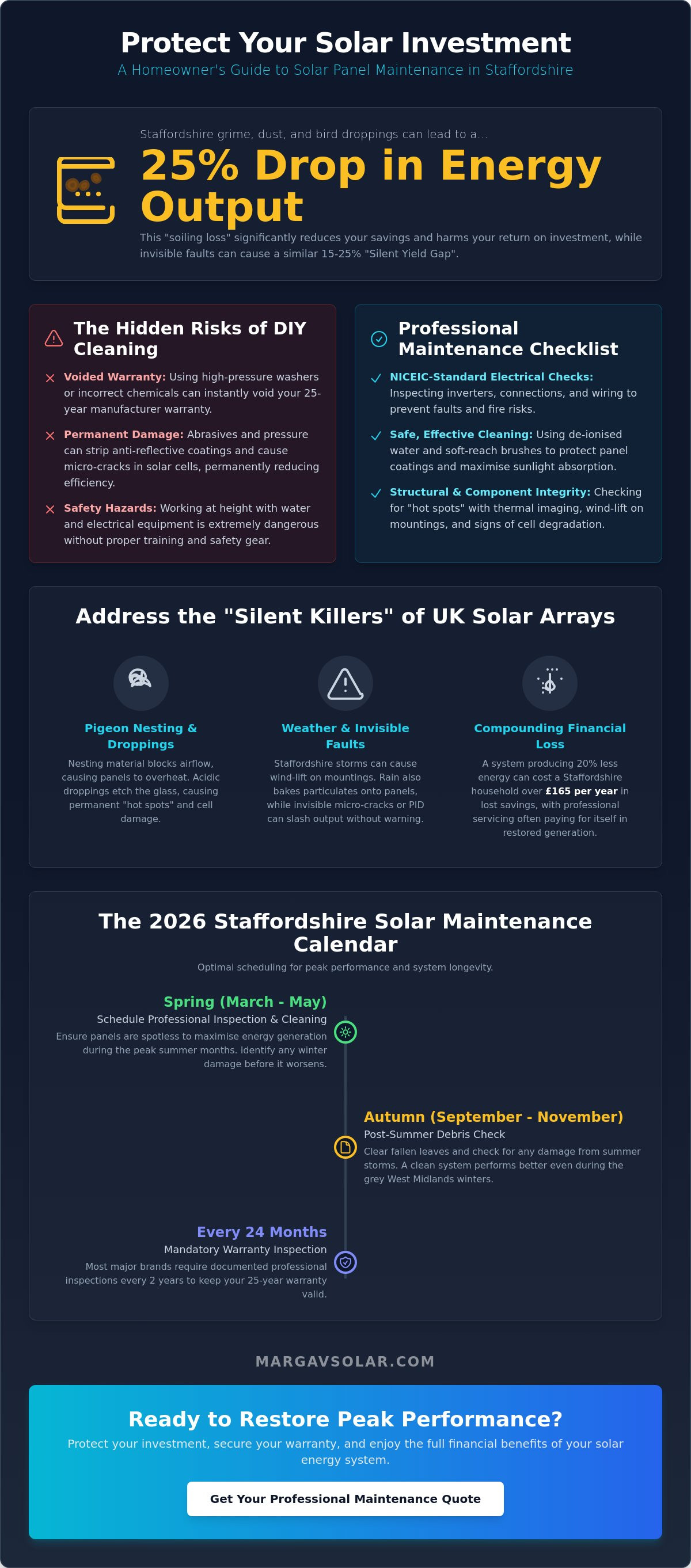
The 2026 Staffordshire Solar Maintenance Calendar
Maintaining a photovoltaic system in the West Midlands requires a strategy that shifts with the seasons. Staffordshire's unique mix of urban traffic from the M6 corridor and rural debris from areas like Cannock Chase means your solar panel maintenance schedule can't be a one-size-fits-all approach. By following a structured 2026 calendar, you ensure that environmental factors don't quietly erode your return on investment.
Spring Cleaning and Inspection
March is the most critical month for professional intervention. Throughout the winter, a "winter film" composed of traffic soot, salt spray from gritted roads, and bird droppings accumulates on the glass. This grime can reduce your system's efficiency by 10% to 15% just as the UK enters its peak generation window. Spring cleaning ensures the modules are pristine for the high-yield months of May through August. It's best to schedule a professional visit early in the season to beat the April rush, as local installers often see a 40% spike in bookings once the sun starts appearing regularly.
Summer focuses on digital vigilance rather than physical climbing. During potential heatwaves, use your monitoring software to track yields. While solar panels love light, extreme heat can actually decrease efficiency. If you notice a sudden drop in output during a clear 25°C day, it could indicate a ventilation issue or a failing string inverter that needs immediate attention.
Autumn brings the specific challenge of organic debris. If you live near wooded areas in Lichfield or Stafford, falling leaves and pine needles can trap moisture against the panel frames. This dampness often leads to moss growth or, in rare cases, electrical "hot spots" where shaded cells overheat. A quick visual check from ground level using binoculars can identify these blockages before the wet weather sets in fully.
Winter Safety and Monitoring
Staffordshire winters often bring heavy frost and occasional snow loads. You don't need to climb on the roof to clear snow; most UK systems are pitched at angles that allow snow to slide off naturally as the cells warm up. Instead, use your GivEnergy app to monitor low-light performance. If your data shows zero generation on a bright, cold day, it might indicate a sensor error or a tripped breaker caused by moisture ingress.
- Cable Security: Check that all external cabling remains tight and hasn't been loosened by high winds, which reached gusts of 70mph in parts of the county during 2024 storms.
- Weather Sealing: Ensure your EV charging points and external isolator switches are free from ice build-up and that seals remain intact against driving rain.
- Inverter Health: Listen for unusual humming or fan noises from your inverter during the shorter days, as components can struggle with the rapid cycling of power in fluctuating light.
If your system hasn't been professionally checked in the last 24 months, it's time to protect your investment. Book a comprehensive solar panel maintenance assessment today to ensure your home remains energy-independent through 2026.
Expert Solar Maintenance and Support with MarGav Solar
MarGav Solar brings 22 years of localized expertise to homeowners across Staffordshire and the wider Midlands region. While many local outfits offer basic cleaning, our approach to solar panel maintenance relies on deep technical proficiency. Our NICEIC-certified engineers understand the intricate electrical components of your specific array. We don't just wipe down glass; we perform full diagnostic tests to ensure your inverter, DC cabling, and mounting structures remain compliant with 2026 safety standards. If a component fails, we manage the entire manufacturer liaison process. This service includes filing warranty claims on your behalf, which saves you from navigating complex technical paperwork and international support lines.
Our Professional Maintenance Packages
Our professional solar panel maintenance packages provide fixed-price technical inspections designed to protect your long-term investment. Each visit concludes with a detailed digital report. These documents are vital for maintaining your home insurance validity and keeping manufacturer warranties intact. Our surveys include a specific bird-proofing audit as standard. In Staffordshire, 15% of system efficiency drops are often linked to debris from nesting pigeons. We check for signs of infestation and evaluate the integrity of existing mesh or spikes. This proactive check prevents costly wire damage and potential fire risks caused by nesting materials under the panels.
Booking Your Staffordshire Solar Survey
Securing your system's performance is a straightforward process. It begins with an initial enquiry, followed by a scheduled visit from a local engineer who understands the specific environmental factors of the Midlands. Local expertise allows us to respond to call-outs within 48 hours in most Staffordshire postcodes. After the on-site inspection, you'll receive a comprehensive technical report outlining any necessary repairs or optimizations. Don't leave your energy independence to chance. You can Book your 2026 solar maintenance check with MarGav Solar today to ensure your system delivers maximum yield through the coming winter months.
Protect Your Staffordshire Energy Investment for 2026 and Beyond
Your solar installation isn't just a set of panels; it's a 25 year financial asset that requires proactive care to reach its full potential. By following the 2026 maintenance calendar, you'll avoid the common 15% to 30% efficiency drops caused by debris and technical wear. Professional solar panel maintenance ensures your inverter remains efficient and your roof stays free from pest damage, protecting your home's energy independence for the long term.
MarGav Solar brings 20+ years of industry expertise to every health check. Our NICEIC certified installers are specialists in GivEnergy systems and other leading brands, ensuring your setup meets the latest safety standards. We don't just clean; we verify every electrical connection to keep your system performing at peak output through the Staffordshire winters.
Don't wait for a system failure to take action. Request a Professional Solar Maintenance Quote from MarGav Solar today to secure your home's green future. It's the smartest way to guarantee your panels keep paying for themselves year after year.
Frequently Asked Questions
Do solar panels really need to be cleaned in the UK?
Yes, cleaning improves efficiency by 5% to 20% depending on your local environment. While the UK gets plenty of rain, it isn't enough to remove stubborn grime or lichen. In Staffordshire, agricultural dust and bird droppings often create a film that blocks sunlight. A professional clean every 12 months ensures your system produces the maximum possible kilowatt-hours throughout the year.
How much does professional solar panel maintenance cost in Staffordshire?
Professional solar panel maintenance typically costs between £100 and £200 for a standard 10-panel residential system according to 2024 Checkatrade data. This price covers a full safety check and a specialized clean using reach-and-wash poles. If your roof requires scaffolding for safe access, expect to pay an additional £300 to £500. It's a standard fee that varies based on the height and pitch of your property.
Can I use a pressure washer to clean my solar panels?
You shouldn't use a pressure washer because the high-intensity spray can cause micro-cracks in the tempered glass. These tiny fractures allow moisture to seep into the solar cells, leading to permanent hardware failure. High pressure also degrades the protective seals around the frame. It's safer to use a soft-bristled brush and low-pressure de-ionised water for a streak-free finish that won't damage the modules.
Does rain clean solar panels effectively enough?
Rain doesn't clean panels effectively because it lacks the friction needed to remove sticky residues. While a heavy downpour might clear loose dust, it often leaves behind mineral deposits and water spots. Research from the University of Sheffield shows that panels left to the elements can lose 10% of their output within a single year. Manual cleaning is the only way to remove baked-on debris.
How often should I have my solar inverter serviced?
You should book an inverter inspection every 5 years to check for hardware degradation and firmware updates. Most UK inverters have a lifespan of 10 to 15 years, but components like cooling fans can fail earlier. A health check prevents unexpected downtime. Replacing a failed inverter costs roughly £800 according to Energy Saving Trust estimates, so preventative care is a smart financial move.
Will bird droppings actually damage my solar panels?
Bird droppings cause damage by creating "hot spots" where shaded cells reach high temperatures. This thermal stress can lead to cell delamination or even fire risks. If droppings cover 5% of a panel's surface, the power output for that entire string can drop by 25%. You must clear these deposits quickly to protect the hardware and ensure the system's longevity.
Does solar maintenance affect my manufacturer warranty?
Regular solar panel maintenance is often a mandatory requirement for keeping your 25-year performance warranty valid. Most manufacturers state that damage caused by neglect or lack of care isn't covered. By keeping a logbook of professional services, you provide the evidence needed for a successful claim. It's a small investment that protects a system worth thousands of pounds and ensures you're always covered.
What is the best time of year to maintain solar panels in the UK?
Spring is the ideal time for a service because it prepares your array for the peak sunlight months of May through August. Cleaning in late March or April removes the salt and grit accumulated during the winter storms. This ensures your system is operating at 100% efficiency when the days are longest. You'll see the highest return on investment by cleaning before the summer generation peaks.


