
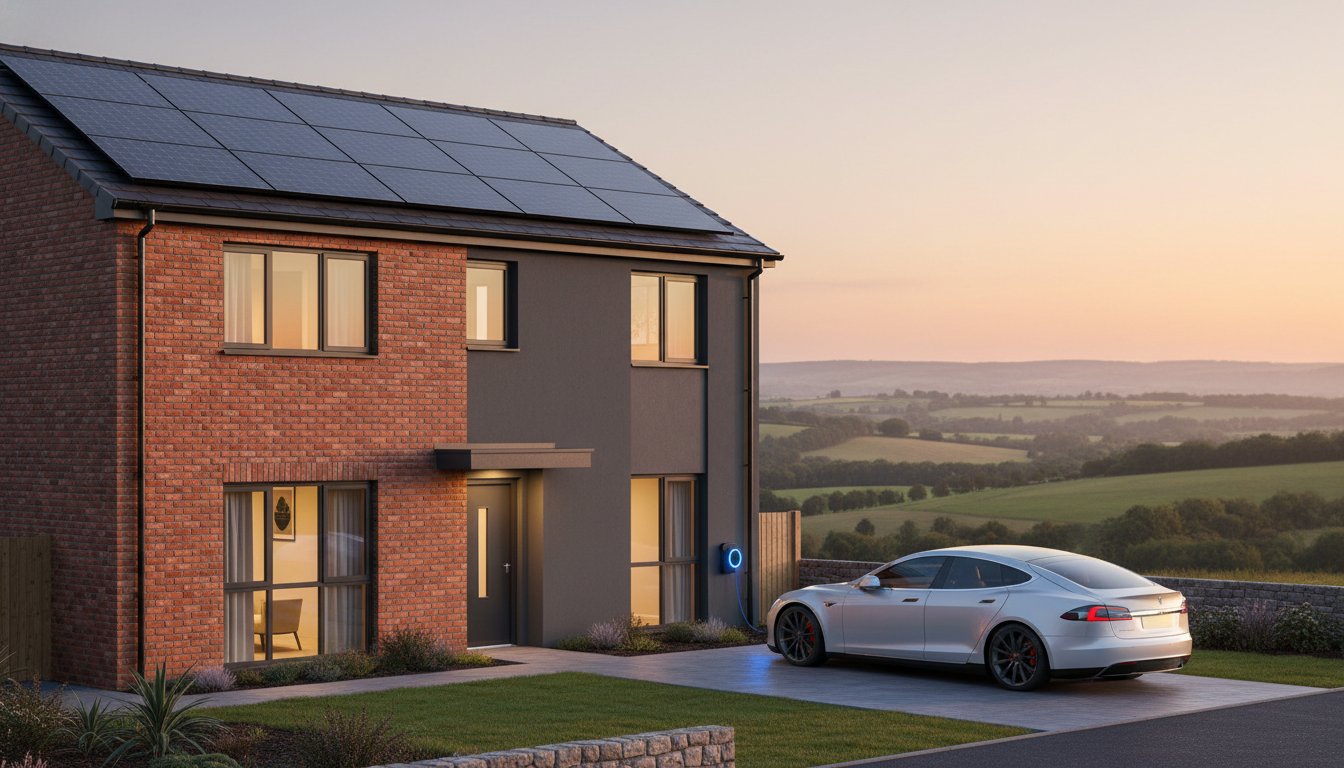
The Ofgem energy price cap just jumped by 13 percent to £1,862 per year, making it a critical time to learn how to future-proof my home against energy prices. If you feel like your monthly outgoings are a moving target, you aren't alone. It's frustrating to see electricity rates hit 26.11p per kWh while you're trying to budget for the months ahead. You deserve a living space that protects your wallet instead of draining it.
This guide will show you how to achieve energy independence by shifting from a passive consumer to an active energy producer. You'll discover how the right combination of solar PV, battery storage, and EV charging points creates a local energy ecosystem that locks in low costs for decades. We'll provide a clear roadmap for your upgrades, from initial installation to long-term maintenance and inverter replacements. You'll also learn how to maximize the 0% VAT benefit before it ends in March 2027 and how to access local support like the Staffordshire Warmer Homes grant for eligible residents.
Key Takeaways
- Discover why shifting from a passive consumer to an active energy producer is the most effective way to escape the cycle of grid price volatility.
- Learn the specific technical combination of solar PV and battery storage required to future-proof my home against energy prices for the long term.
- Identify how to balance high-tech generation with home efficiency to ensure your solar power isn't wasted on a "leaky" property.
- Follow a structured, phased roadmap that prioritizes the most impactful upgrades to secure your energy independence by 2026.
- Find out how professional maintenance and inverter replacements protect your property value and system longevity over several decades.
Understanding the Energy Landscape in 2026: Why Prices Remain Volatile
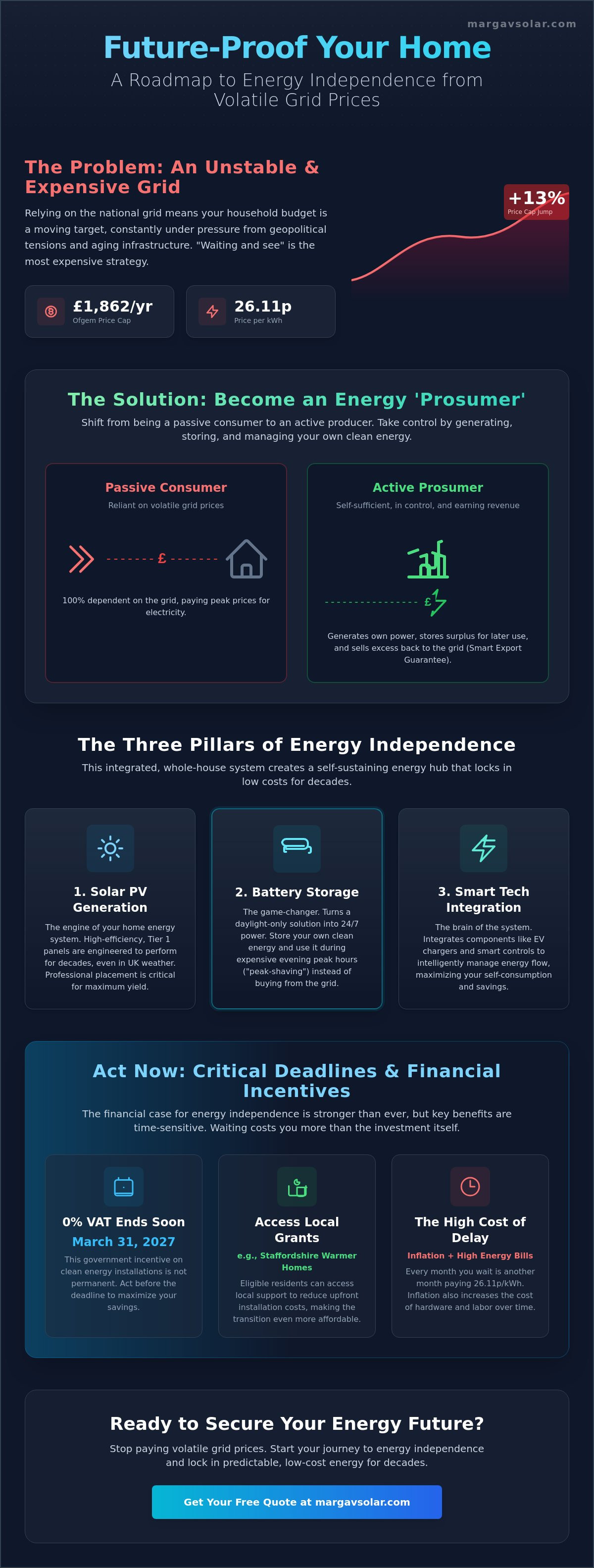
The UK energy market in 2026 has reached a turning point where grid power is no longer the affordable default. With the Ofgem price cap rising to £1,862 for a typical household from July 2026, a 13 percent increase from the previous quarter, the financial pressure is tangible. Many homeowners treat the price cap as a tool for savings, but it's actually just a safety net designed to prevent extreme overcharging. It doesn't lower your bills; it simply limits how high the unit rates can climb during periods of market instability. The primary goal for many families is to future-proof my home against energy prices before the next round of price cap increases.
Geopolitical tensions and the massive costs of upgrading the UK's aging grid infrastructure ensure that prices remain volatile. To achieve real security, you have to look beyond the quarterly announcements from regulators. True future-proofing means decoupling from the grid's price swings by reducing your reliance on external suppliers and taking control of your own generation.
The Shift from Passive Consumer to Prosumer
Becoming a prosumer means you aren't just buying electricity; you're actively producing and managing it. By integrating residential solar PV systems with battery storage solutions, you create a self-sustaining cycle. This transition is a core component of low-energy building design, where the goal is to minimize external energy needs. The 2026 grid increasingly relies on these smart homes to balance demand. Through the Smart Export Guarantee (SEG), you can even sell your surplus solar energy back to the grid, turning your roof into a small revenue stream while helping the national network stay stable.
Why "Wait and See" is the Most Expensive Strategy
Delaying the decision to upgrade often costs more than the initial investment itself. Every month spent waiting is another month of paying 26.11p per kWh for electricity. Over five years, these cumulative costs can reach thousands of pounds, far exceeding any potential slight drop in hardware prices. If your objective is to future-proof my home against energy prices, you must understand that the "wait and see" approach is the most expensive strategy.
Inflation also impacts the cost of labour and high-quality components like inverters or EV charging points. Energy price inflation compounds significantly faster than the interest rates offered by most standard savings accounts. By the time you decide to act, you've already lost the most valuable asset in energy independence: time. Taking action now allows you to secure your energy future while government incentives, such as the 0% VAT on installations, remain active until 31 March 2027.
The Three Pillars of Energy Independence: Solar, Storage, and Smart Tech
Achieving true independence requires a whole-house systems approach. It isn't just about sticking a few panels on a roof and hoping for the best. By creating a closed-loop system, you can effectively future-proof my home against energy prices by capturing, storing, and deploying energy exactly when your household needs it most. This strategy moves you away from being a victim of grid volatility and turns your property into a self-sustaining energy hub.
High-Efficiency Solar PV: More Than Just Panels
High-efficiency solar PV acts as the engine of your home energy factory. In the UK, choosing Tier 1 panels is vital because they're engineered to withstand decades of damp, windy, and overcast weather. Professional placement is equally important. In Staffordshire, factors like roof pitch, orientation, and local microclimates can change your generation potential by a significant margin. You can find more detail in our Staffordshire Solar Guide about optimizing your array for maximum yield.
Battery Storage: The Game Changer for 2026
Solar panels alone only work when the sun shines. Battery storage changes this by turning a daylight-only solution into 24/7 power. Without a battery, you might export half of your generation to the grid for a low rate while buying it back later at the current price cap rate of 26.11p per kWh. Storing that power allows for "peak-shaving." This is the process of using your own stored energy during the most expensive evening hours. It's a primary way to future-proof my home against energy prices. Check out our Solar Battery Storage Guide to understand which capacity fits your specific usage patterns.
The Brain: GivEnergy Cloud and Smart Tariffs
The final pillar is smart management. Software like the GivEnergy Cloud uses AI to predict your usage patterns based on your history and upcoming weather forecasts. It can integrate with agile tariffs to automatically charge your batteries from the grid when prices are at their lowest or even negative during windy nights. This level of automation means your home runs heavy appliances, like dishwashers or washing machines, during peak solar production without any manual effort. If you're ready to start building your system, consulting with a local specialist can help you map out the best configuration for your property.
Generation vs. Efficiency: Balancing Solar PV with Thermal Insulation
Think of your property as a bucket. Solar panels act like a tap filling that bucket with water. If your home has poor insulation, it's essentially a leaky bucket. You can pour as much energy as you want into the top, but it will continue to drain out through the walls and roof. To effectively future-proof my home against energy prices, you must address both the generation of power and the retention of heat. While generating your own electricity is the most direct way to bypass the 26.11p per kWh grid rate, it's far more effective when your home's fabric is tight and efficient.
Many homeowners struggle to decide whether to spend their budget on high-efficiency solar PV or traditional insulation. In 2026, the best strategy is a "Whole House" approach. Improving thermal efficiency reduces the overall demand on your heating system, which in turn allows for smaller, more cost-effective hardware installations. Governments around the world recognize this balance, often providing incentives like a tax credit for energy-efficient improvements to help residents manage the upfront costs of these combined upgrades.
Quick Wins in Thermal Efficiency
You don't always need a massive renovation to see results. Loft and cavity wall insulation remain the highest impact upgrades for the lowest relative cost. They stop the most common paths for heat loss. You should also look for "thermal bridges," which are specific points in a building's structure that allow heat to bypass insulation. Simple draft proofing around doors and windows is a cheap way to prevent cold air from entering. Pairing these physical changes with a smart thermostat ensures you aren't wasting gas or electricity heating empty rooms.
When Generation Outperforms Insulation
There are specific scenarios where installing solar provides a faster return on investment than complex retrofitting. If your home already has basic insulation, adding a residential solar PV system often yields quicker monthly savings than trying to achieve "passive house" levels of airtightness. This is especially true if you use a solar diverter. These devices send excess solar energy to your immersion heater, providing "free" hot water and reducing your gas bill.
A balanced strategy often involves a 50/50 split of your available budget. Use half to secure your generation capacity with solar and battery storage, and the other half to ensure your home's fabric is as efficient as possible. This dual approach is the most reliable way to future-proof my home against energy prices for the next twenty years. It ensures you're producing enough power to cover your needs while keeping that energy exactly where it belongs: inside your home.
Step-by-Step Roadmap to a Future-Proof Home in Staffordshire
Moving from a high-cost grid reliance to energy independence doesn't happen overnight. It requires a logical, phased approach that prioritizes immediate savings while building a foundation for long-term security. If your goal is to future-proof my home against energy prices, you need a strategy that accounts for both your current consumption and your future needs, such as switching to an electric vehicle. Following a structured roadmap ensures you don't waste capital on mismatched components or undersized systems.
- Phase 1: The Energy Audit. Before installing hardware, identify where your home loses energy. Look for thermal leaks and analyze your half-hourly usage data to determine your true baseline.
- Phase 2: The Solar & Storage Foundation. Install a residential solar PV system paired with battery storage. This locks in your generation capacity and protects you from the 26.11p per kWh grid rates.
- Phase 3: Electrification. Transition your high-drain activities to your own power. This includes adding EV charging points and considering heat pumps to replace gas boilers.
- Phase 4: Optimization. Fine-tune your system with Inverter Upgrades and AI software that learns your habits to maximize ROI.
Finding the Right Partner in Staffordshire
The success of your roadmap depends on the quality of the installation. In a market where technology evolves rapidly, NICEIC Certification is non-negotiable for safety and compliance. You should prioritize installers with deep local roots in Staffordshire who can provide verifiable references and a history of reliable solar panel maintenance. Choosing an expert with 20 years of experience ensures your system is designed to handle the specific weather patterns and planning regulations of the West Midlands. If you're ready to start your journey, you can view our full range of solar and storage solutions to see which options fit your property.
Integrating EV Charging into Your Ecosystem
Planning for EV Charging Points at the same time as your solar installation is a smart move. It allows you to charge your car for "free" using the surplus energy your roof generates during the day. This synergy is a powerful way to future-proof my home against energy prices by eliminating both home energy and transport fuel costs simultaneously. Vehicle-to-Home (V2H) technology will eventually allow your car battery to act as a secondary storage unit to power your entire house during peak grid hours. By preparing your infrastructure now, you're ready for these advancements the moment they become standard.
Why MarGav Solar is the Right Choice for Your Energy Security
MarGav Solar operates with a consultancy-first mindset. Instead of pushing generic sales targets, we design systems based on your actual usage data and property potential. This ensures you don't overspend on capacity you don't need or end up with a system that fails to meet your goals. When you decide to future-proof my home against energy prices, you need a partner who understands the technical nuances of the 2026 market. We focus on creating a tailored energy ecosystem that works for your specific lifestyle.
Our team brings over 20 years of expertise to every project. We've helped Staffordshire residents navigate two decades of changing regulations and evolving technology. From residential solar PV systems to integrated battery storage and EV charging points, our NICEIC-certified experts manage the entire process. This end-to-end support includes professional electrical certification, ensuring your home meets all current safety standards. We also provide long-term solar panel maintenance and cleaning to keep your system performing at its peak for the next 25 years.
Fixed-Price Peace of Mind
Budgeting for home improvements shouldn't be stressful. Our fixed-price contracts protect you from the unexpected cost hikes that often plague construction projects. When we provide a quote for your installation, it covers everything from high-efficiency hardware to labour and final commissioning. You receive a complete package that includes the latest inverter technology and battery solutions. This transparency allows you to calculate your exact payback period without worrying about hidden fees or mid-project price increases.
Local Staffordshire Support
Being based in Staffordshire means we're never far away when you need us. We understand the local building stock and the specific challenges of the West Midlands climate. Our team knows how to optimize arrays for local light conditions and roof types found across Rugeley, Stafford, and beyond. This local presence allows us to offer quick-response maintenance and honour equipment warranties without the delays associated with national firms. Regular professional care ensures your system continues to offset those 26.11p per kWh grid rates effectively. If you're ready to secure your energy independence, you can schedule your free energy future-proofing consultation today.
Take Control of Your Energy Future Today
The transition toward energy independence is no longer just a luxury; it's a necessary step to protect your household from a volatile grid. By combining residential solar PV with high-capacity battery storage and smart management tools, you can finally stop worrying about the next Ofgem price cap announcement. Balancing these generation tools with thermal efficiency ensures you don't waste the power you produce. Following a phased roadmap allows you to build a system that grows with your needs, from initial panels to EV charging points.
It's the most effective way to future-proof my home against energy prices while increasing your property's long-term value. As Staffordshire local specialists with over 20 years of renewable energy expertise, our NICEIC certified installers are here to help you navigate every step of the process. We focus on providing the technical clarity and high-efficiency hardware needed to secure your energy security for decades to come. Don't leave your monthly outgoings to chance when you can lock in predictable costs now.
Get a Fixed-Price Quote for Your Staffordshire Home
You have the power to transform your home into a self-sustaining energy hub. Start your journey toward independence and enjoy the peace of mind that comes with a truly resilient energy strategy.
Frequently Asked Questions
Is solar still worth it in 2026 with current energy prices?
Yes, solar remains a highly effective investment with electricity rates currently at 26.11p per kWh. A typical 4kW system can lead to annual electricity savings between £500 and £700. With the Ofgem price cap rising to £1,862 for typical households, generating your own power provides a significant buffer against market volatility and short-term price hikes. It's a reliable way to lock in lower costs for the next 25 years.
How much does it cost to future-proof a standard 3-bedroom home in the UK?
Costs vary depending on the specific combination of solar panels, battery storage, and EV charging points you choose to install. While 0% VAT is available on eligible installations until 31 March 2027, the total investment depends on your household's energy demand. You should seek a fixed-price quote tailored to your property's orientation and usage patterns. This ensures you can future-proof my home against energy prices without facing unexpected mid-project costs.
Can I really go 100% off-grid with solar and batteries?
Staying 100% off-grid is technically possible but rarely practical for most UK residential properties. During winter months, solar generation is significantly lower, meaning you'd need a massive battery array to cover consecutive dark days. Most homeowners find that a grid-tied system offers the best balance. This setup uses the grid as a backup while minimizing reliance on it during the most expensive peak hours of the day.
What is the lifespan of a modern solar battery storage system?
Modern lithium-ion batteries typically last between 10 and 15 years depending on how often they're charged and discharged. Most manufacturers design these systems to retain at least 70 to 80 percent of their original capacity after a decade of daily use. To protect your investment, it's important to schedule regular maintenance and consider inverter upgrades or replacements as the system ages to ensure everything continues to operate at peak efficiency.
Do I need planning permission for solar panels in Staffordshire?
Most solar installations fall under Permitted Development Rights, which means you won't need full planning permission. However, specific rules apply if your home is a listed building or located in one of Staffordshire's many Conservation Areas. You should always check with your local council or a certified installer who understands regional planning regulations before starting work. They can confirm if your specific property requires any special consents before the installation begins.
How does the Smart Export Guarantee (SEG) work with my battery storage?
The Smart Export Guarantee allows you to earn money by selling unused electricity back to the grid. When paired with battery storage, your system prioritizes charging your own battery first. Once that battery is full, any additional power your panels generate is automatically exported to the grid. This setup ensures you only sell power when your home doesn't need it, which maximizes your self-consumption and overall financial returns.
What happens to my solar power during a power cut?
Standard solar systems automatically shut down during a power cut to prevent electricity from feeding back into the grid and endangering utility workers. However, if your system includes battery storage with an Emergency Power Supply or "gateway" function, it can isolate your home from the grid. This allows you to continue using your stored energy to power essential circuits, like lights and refrigerators, even when the rest of the street is in a blackout.
Is it better to get solar panels or a heat pump first?
Many experts recommend installing solar panels and battery storage first to establish your own generation capacity. A heat pump significantly increases your home's electricity demand, so having a solar array in place helps offset those higher running costs from day one. Establishing your own production is a strategic way to future-proof my home against energy prices before you commit to electrifying your entire heating system and increasing your grid reliance.


