

Did you know that 94% of new solar installations in 2026 now include a battery? If you installed your system a few years ago, you might feel like you're missing out while watching your hard-earned energy flow back to the grid for pennies. Retrofitting solar battery storage for existing solar panels UK has become the definitive move for homeowners tired of high bills despite having panels on their roof.
It's frustrating to invest in green tech only to see your evening electricity costs spike because your panels stopped producing hours ago. You're likely wondering if a battery is actually worth the investment or if it will even work with your current setup. This guide will show you how adding storage can slash your remaining energy costs, take advantage of the current 0% VAT relief, and give you true independence from volatile grid prices.
We'll explore the latest smart tariffs, compatibility for older systems, and how specialists like MarGav Solar use GivEnergy technology to future-proof your home. With over 20 years of expertise in Staffordshire, we'll help you decide if 2026 is the right year to finally stop wasting your sunshine and start storing it instead.
Key Takeaways
- Learn how to close the "energy gap" by storing surplus power during the day to use during expensive peak evening hours.
- Discover why adding solar battery storage for existing solar panels UK is currently more affordable thanks to the 0% VAT relief available until March 2027.
- Understand how smart "time-of-use" tariffs allow you to charge your battery with cheap off-peak electricity, making storage valuable even during the winter months.
- Find out how to correctly size your system by calculating your home's baseload and peak demand to ensure you don't overspend on capacity.
- See why professional NICEIC-certified installation is vital for maintaining manufacturer warranties and ensuring your system is fully insurance-compliant.
Why Solar Battery Storage is Essential for UK Homes in 2026
For homeowners who installed solar years ago, the original setup often feels incomplete. While your panels are working hard, you're likely still seeing high electricity bills. This is because solar battery storage for existing solar panels UK has become the missing piece of the puzzle. In 2026, a battery isn't just an optional add-on; it's the critical engine that makes your entire renewable investment actually work for your wallet.
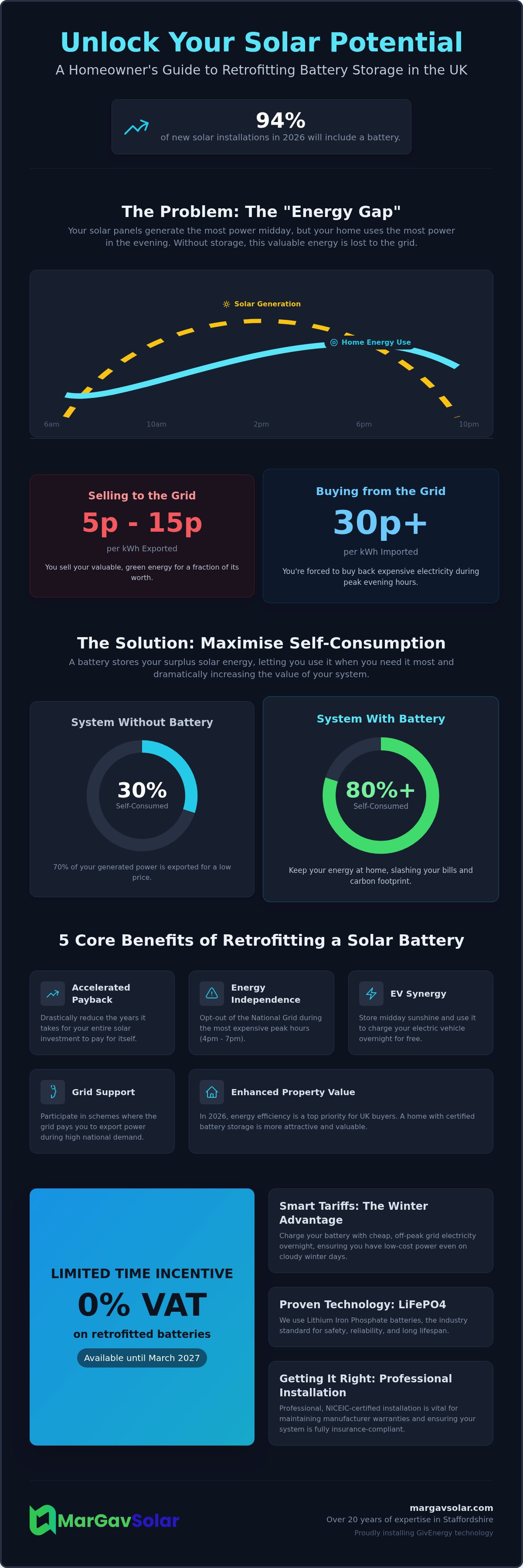
The core issue is the "energy gap." Most UK households generate the bulk of their power between 10am and 4pm when the sun is highest. However, peak energy demand usually hits between 4pm and 7pm, just as the sun goes down and families return home to cook, wash, and relax. Without storage, that free midday energy is sent back to the grid, and you're forced to buy expensive electricity when you need it most. A battery bridges this gap, holding your green energy until you actually need it.
The financial landscape has also shifted. The days of lucrative Feed-in Tariffs are gone. Today, the smartest way to see a return on your investment is through self-consumption. By keeping your energy at home, you protect yourself against the volatile price spikes that have become common in the UK energy market. It's about taking control and ensuring your home remains a sanctuary from rising grid costs.
The Problem with Exporting Energy
Exporting your surplus energy might feel like you're doing your bit for the planet, but it's often a poor financial deal. Many suppliers offer export rates between 5p and 15p per kWh, yet they'll charge you 30p or more to buy that same electricity back in the evening. You're essentially selling your "premium" product at a wholesale price and buying it back at retail. The Smart Export Guarantee (SEG) is a mandatory scheme where energy suppliers pay you for excess power, but the rates rarely match the cost of buying electricity back from the grid. By installing solar battery storage for existing solar panels UK, you keep that value within your four walls.
Maximising Self-Consumption Rates
The difference in efficiency is staggering. A typical UK home without a battery might only use 30% of the solar energy it generates. The rest is wasted through export. Adding a battery can instantly boost your self-consumption rate to 80% or higher. Understanding how rechargeable batteries work helps homeowners see how this technology bridges the gap between generation and demand. Beyond the savings, it's the fastest way to reduce your household carbon footprint, as you'll rely far less on gas-heavy grid power. Plus, with the 0% VAT incentive on retrofitted batteries available until March 2027, there's a clear window to upgrade your system with maximum tax efficiency.
The 5 Core Benefits of Retrofitting a Solar Battery
Retrofitting a battery turns a passive solar array into an active energy management hub. While your panels generate power, the battery ensures that power serves your household's specific needs. For those considering solar battery storage for existing solar panels UK, the advantages extend far beyond just saving a few pennies on the monthly bill.
- Accelerated Payback: By increasing self-consumption from 30% to over 80%, you drastically reduce the years it takes for your solar investment to pay for itself.
- True Energy Independence: You can effectively "opt-out" of the National Grid during the most expensive peak hours, typically between 4pm and 7pm, when prices are at their highest.
- EV Synergy: If you have an electric vehicle, you can store midday sunshine and use it to charge your car overnight, essentially driving on "stored sunlight."
- Grid Support: Modern systems allow you to participate in Demand Side Response (DSR) schemes, where the grid may actually pay you to export power during times of high national demand.
- Enhanced Property Value: In 2026, energy efficiency is a top priority for UK buyers. A home with a certified storage system is often more attractive and easier to sell than one without.
Cutting Bills with Smart Energy Management
Modern storage systems use sophisticated software to track grid prices and weather forecasts. This allows you to avoid the most expensive electricity rates by relying on your stored reserves. Most high-quality UK installations now use lithium-ion technology, specifically Lithium Iron Phosphate (LiFePO4), which is recognised for its safety and longevity. According to the Energy Saving Trust guide to battery storage, these systems are highly efficient at managing household loads. Premium brands like GivEnergy, which we specialise in at MarGav Solar, typically offer a 10-year warranty, giving you a decade of guaranteed performance and peace of mind.
Emergency Power and Resilience
For rural Staffordshire homeowners, power cuts can be more than just an inconvenience. Many modern batteries include an Emergency Power Supply (EPS) function. It is vital to distinguish this from a full off-grid setup; an EPS typically keeps essential circuits like lights, internet routers, and fridges running during a blackout. When retrofitting, we often recommend AC-coupled systems. These are generally easier to integrate with your existing inverter without needing to rewire your entire solar array. If you're unsure which setup fits your current system, you can explore our battery storage solutions to see how we tailor installations to specific home needs. With over 20 years of experience, we ensure your retrofit is seamless and compliant with all UK safety standards.
Smart Tariffs and the "Winter Benefit" of Storage
A common misconception among homeowners is that solar battery storage for existing solar panels UK is only effective during the sun-drenched months of summer. While it's true that solar generation drops during a British winter, the financial utility of a battery actually remains high. In 2026, the value of storage has shifted from just capturing sunlight to actively managing grid costs through "grid charging."
This shift is driven by the rise of Time-of-Use (ToU) tariffs, such as Octopus Flux or Agile. These tariffs offer varying electricity prices throughout the day based on national demand. Even if your panels don't produce a single watt on a dark December afternoon, your battery can still save you money by acting as an energy arbitrage tool. It allows you to buy electricity when it's at its cheapest and use it when the grid is most expensive.
Arbitrage: Making Money While You Sleep
Energy arbitrage is essentially the practice of buying low and selling high, or in this case, buying low and "consuming" high. You can program your system to charge from the grid at 2am when rates might be as low as 7p/kWh. When the 4pm peak hits and standard grid prices soar toward 35p/kWh, your home automatically switches to your stored reserves. This strategy ensures the battery is a productive asset 365 days a year. To facilitate these rapid, two-way energy flows between the grid, the battery, and your home, some older systems may require inverter upgrades to handle modern smart-grid communication.
Automation and AI Control
The best part is that you don't have to manage these price fluctuations manually. Modern energy management software uses AI to predict both your household usage and the local weather forecast. If the system predicts a cloudy day, it will automatically top up your battery using cheap overnight electricity. If it forecasts a clear, sunny morning, it will leave space in the battery for your panels to fill for free. For residents in Staffordshire, using the GivEnergy Cloud offers a transparent way to monitor these automated decisions. It's a "set and forget" solution that ensures you're always paying the lowest possible rate for your power, regardless of the season. This level of smart integration is a primary reason why nearly 94% of new UK solar installations in 2026 now include a storage component.
Choosing the Right Battery Size and Brand for Your Home
Sizing is the most frequent point of failure in a retrofit project. If the system is too small, you'll still find yourself paying for grid power during peak hours. If it's too large, you've overinvested in capacity that stays idle. Selecting the correct solar battery storage for existing solar panels UK requires a clear understanding of your home's "baseload", which is the constant energy used by fridges and standby devices, compared to your "peak load" when high-draw appliances like ovens or kettles are running.
It's a common mistake to focus only on the total storage capacity. You must also consider the power output. While capacity (measured in kWh) tells you how much total energy the "bucket" holds, the power output (measured in kW) tells you how fast you can pull that energy out. A 10kWh battery has become the UK residential standard in 2026 because it typically provides enough energy to sustain an average family home from sunset until the following morning. However, if that battery has a low kW output, you might still pull from the grid when you try to use the washing machine and dishwasher at the same time.
Capacity vs. Power Output
The relationship between these two metrics determines your daily experience. A high-capacity battery with a restricted output can't support a modern lifestyle. At MarGav Solar, we look for hardware that can deliver high burst power to handle the simultaneous demands of a busy UK household. We've seen that systems with at least a 5kW discharge rate are far more effective at keeping grid usage to a minimum, especially during the hectic 5pm to 8pm window when every appliance seems to be running at once.
Modular Systems and Future-Proofing
Technology moves fast, so we always recommend modular, "stackable" systems. These allow you to start with a modest capacity and expand later if your needs change, such as when you buy an electric vehicle or switch to a heat pump. We specialise in GivEnergy systems because their Lithium Iron Phosphate (LiFePO4) technology offers superior longevity and safety compared to older, now obsolete lead-acid alternatives. These modern units provide a high Depth of Discharge (DoD), meaning you can use almost 100% of the stored energy without damaging the battery cells.
For more specific advice on local property types, our Staffordshire solar battery guide offers detailed sizing tips tailored to our region. Getting the hardware right is the only way to guarantee the ROI you're expecting. If you're ready to see which capacity fits your energy profile, you can contact us for a professional battery storage assessment to ensure your system is perfectly matched to your home's demands.
Professional Installation: The MarGav Solar Advantage in Staffordshire
Attempting a DIY installation of solar battery storage for existing solar panels UK is a gamble with both your safety and your home's insurance. These systems involve high-voltage DC electricity and sophisticated integration with your existing consumer unit. One wrong connection can lead to thermal runaway or electrical fires. Beyond the physical danger, most premium manufacturers, including GivEnergy, will immediately void your warranty if the system isn't commissioned by a certified professional. Expert installation ensures that the hardware performs as intended for its entire lifespan.
Reliability comes from verified certification. Holding NICEIC certification is non-negotiable for insurance compliance and peace of mind. If a fault occurs and your installer wasn't properly accredited, your home insurance provider might refuse to cover the damages. MarGav Solar brings over 20 years of expertise to every project, ensuring that your retrofit isn't just functional but fully compliant with the latest UK building regulations and G98 or G99 grid connection requirements.
The Consultancy-First Approach
Every home has a unique electrical profile. A professional site survey is the only way to determine if your current consumer unit and cabling can handle the additional load of a battery. We don't just bolt a box to the wall. We carefully match the battery technology to your specific solar panel installation, ensuring the inverter and battery communicate perfectly. On a typical installation day in Staffordshire, our team arrives early to prep the site, install the hardware, and commission the software that manages your energy flows. We also handle the necessary DNO registration, so you don't have to worry about the paperwork.
Long-Term Support and Maintenance
The job doesn't end when the battery is mounted. Modern systems require regular firmware updates and health checks to maintain peak efficiency. This is where local support becomes invaluable for your solar battery storage for existing solar panels UK. If you have a technical query or need a quick response, having a Staffordshire-based team means you aren't stuck in a national call centre queue. We provide the ongoing maintenance and repairs needed to keep your system running for its entire 10-year warranty period and beyond. You can contact MarGav Solar for a bespoke battery storage consultation in Staffordshire to start your journey toward true energy independence with a team you can trust.
Take Control of Your Energy Future Today
Retrofitting solar battery storage for existing solar panels UK is the final step in turning a standard solar setup into a truly efficient, modern energy hub. By bridging the midday energy gap and leveraging smart time-of-use tariffs, you can transform your existing panels into a 24/7 power plant. With the 0% VAT relief available until March 2027, there is a clear window to maximise your return on investment while installation costs are at their most competitive.
Choosing the right installation partner is just as vital as the hardware itself. MarGav Solar brings over 20 years of expertise to Staffordshire homeowners, providing NICEIC-certified professional installations that guarantee safety and insurance compliance. As specialists in high-efficiency GivEnergy systems, we ensure your bespoke retrofit is perfectly sized to meet your home's unique demand profile.
Don't let your generated energy go to waste for another season. Secure your energy independence and protect your household from future grid price spikes by taking action now. Get a Fixed-Price Battery Storage Quote from MarGav Solar and start storing your own sunshine today.
Frequently Asked Questions
How much does a solar battery cost in the UK in 2026?
Industry data from 2026 suggests that the average cost for a home battery is approximately £5,000. Prices typically range from under £2,000 for small units to over £11,000 for high-capacity systems. A standard 10kWh unit often costs between £4,000 and £6,000 including installation. These figures are subject to the current 0% VAT relief on residential retrofits, which is set to remain in place until March 2027.
Will a solar battery work during a power cut?
A solar battery will only work during a power cut if it has been specifically configured with an Emergency Power Supply (EPS) function. Most modern systems can be set up to provide backup power to essential circuits, such as lighting and internet routers. It's a common myth that all batteries provide full off-grid power automatically. You should check with your installer to ensure your system includes the necessary gateway or switch to operate safely.
How long do solar batteries last before they need replacing?
Most modern lithium-ion batteries, particularly Lithium Iron Phosphate (LiFePO4) models, are designed to last between 10 and 15 years. Performance is often measured in cycles, with many premium brands guaranteeing at least 6,000 to 10,000 cycles before the capacity drops below 70%. Manufacturers typically provide a 10-year warranty as standard. Proper installation and keeping the unit in a temperature-controlled environment can help maximise the lifespan of your solar battery storage for existing solar panels UK.
Do I need planning permission to install a solar battery in Staffordshire?
In the vast majority of cases, you don't need planning permission to install a battery in Staffordshire as it falls under Permitted Development rights. This applies to both internal and external installations. However, if your property is a listed building or situated within a conservation area, you should always consult your local planning authority first. Professional installers can usually provide guidance on specific local regulations to ensure your upgrade remains fully compliant with all regional building standards.
Can I add a battery to my existing solar panel system?
Yes, you can easily add solar battery storage for existing solar panels UK through a process called AC-coupling. This method allows the battery to be integrated with your current system without needing to replace your existing solar inverter. It's a popular choice for retrofitting because it's less intrusive and works with almost any brand of solar panels. A specialist installer will check your current wiring to ensure the new storage unit integrates seamlessly with your home.
Is it worth getting a battery if I don’t have solar panels?
It's definitely worth considering a battery even without solar panels if you switch to a smart "time-of-use" tariff. You can program the unit to charge from the grid during cheap off-peak hours, such as overnight, and then use that stored energy during expensive peak times. This practice, known as energy arbitrage, can lead to significant savings on your annual electricity bills. It's an effective way to future-proof your home against rising energy costs and grid volatility.
How much space do I need for a home battery storage unit?
Modern home battery units are surprisingly compact, often being no larger than a small boiler or a medium-sized suitcase. Most wall-mounted systems measure approximately 80cm in height and 50cm in width, with a depth of around 20cm. Modular systems allow you to stack units vertically or side-by-side if you need more capacity. You'll also need a small amount of clearance around the unit for ventilation and maintenance access, as recommended by the manufacturer guidelines.
Are solar batteries safe to install inside the house?
Solar batteries are perfectly safe to install inside the house, provided they are fitted by a qualified professional. Most homeowners choose utility rooms, garages, or even lofts for installation. Modern Lithium Iron Phosphate (LiFePO4) technology is non-flammable and far safer than older battery types. To ensure maximum safety, your installer will follow strict building regulations regarding ventilation and fire separation. Choosing an NICEIC-certified installer ensures the electrical work meets the highest national safety standards for residential properties.


