

Did you know that nesting birds can reduce your solar panel efficiency by up to 15% just by blocking vital ventilation? Many homeowners in Staffordshire assume that a heavy rainstorm is all the cleaning their system needs, but hidden debris and electrical wear can quietly erode your energy savings. If you've noticed a dip in your generation or feel unsure how to implement a solar panel maintenance checklist, you aren't alone. It's common to feel a bit of anxiety when it comes to maintaining high-tech equipment installed safely out of reach.
We understand that you want the peace of mind that comes with a safe, high-performing system. This expert-approved guide for 2026 is designed to help you protect your investment, maximise your energy yield, and ensure your system remains safe for years to come. Drawing on over 20 years of industry expertise at MarGav Solar, we'll provide a clear schedule of tasks that separate simple DIY monitoring from essential technical health checks. You'll discover how to keep your inverter running efficiently, when to consider bird proofing, and how to ensure your residential PV system remains a reliable asset for your home.
Key Takeaways
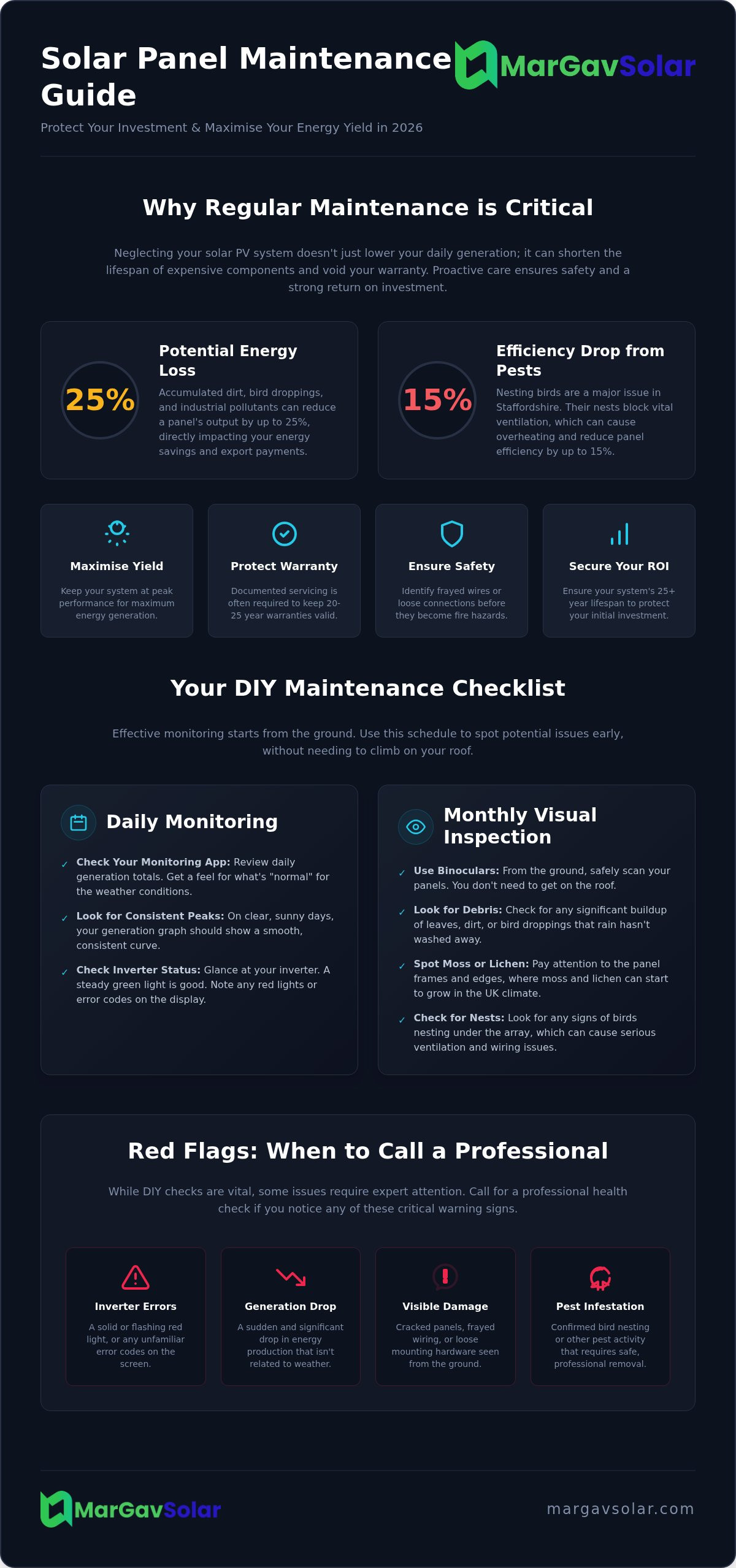
- Learn how routine cleaning and monitoring can prevent energy losses of up to 25% while ensuring your manufacturer warranties remain valid.
- Discover how to perform a solar panel maintenance checklist from ground level to identify early signs of wear or debris accumulation.
- Understand the importance of professional annual health checks for testing electrical DC strings and optimizing battery storage performance.
- Find out why bird proofing is an essential protective measure for Staffordshire homes to prevent efficiency drops caused by nesting materials.
- Identify the critical "red flags" that signal it is time for an inverter upgrade or professional system repair to restore peak generation.
Why Regular Solar Panel Maintenance is Essential in 2026
Owning a solar PV system is a long-term commitment to energy independence. While the hardware is designed for durability, it isn't a "set and forget" technology. Following a consistent solar panel maintenance checklist is the only way to ensure you're getting the full financial benefit of your investment. Neglecting the system doesn't just lower your daily generation; it can actually shorten the lifespan of expensive components like the inverter or battery storage unit.
- Maximising Energy Yield: Accumulated dirt, bird droppings, and industrial pollutants can reduce a panel's output by up to 25%.
- Protecting Your Warranty: Many manufacturers require documented proof of professional servicing to honor long-term equipment warranties, which often span 20 to 25 years.
- Safety and Fire Prevention: Annual inspections help identify frayed wiring, loose connections, or water ingress before they lead to serious electrical faults.
- Long-term ROI: Proactive care ensures your system remains operational for its intended 25+ year lifespan, protecting your initial capital outlay.
Because solar panel technology relies on clear light paths to generate electricity, any obstruction directly hits your wallet. A system that isn't maintained will slowly degrade, losing efficiency year after year until the cost of repair outweighs the energy savings. Regular monitoring ensures you catch these minor issues before they become major expenses.
The Impact of UK Weather on Solar Efficiency
Staffordshire homeowners face unique challenges due to our local climate. The frequent damp and overcast days provide the perfect breeding ground for moss and lichen, particularly along the bottom edges of the panel frames. There's a common myth that rain is enough to keep panels clean. In reality, light rain often just moves dust around, creating streaks that can cause "hot spots" on the cells. Soiling is the technical term for the accumulation of grime on the glass surface, and in the UK, this layer of organic matter can significantly stifle solar yields over time. Without manual intervention, this buildup hardens and becomes much more difficult to remove safely.
Maintaining Your Solar ROI
Your return on investment is directly tied to how much electricity you export. Under the Smart Export Guarantee (SEG), every kilowatt-hour you send back to the grid earns you money. If your system is underperforming due to poor maintenance, you're essentially leaving money on the table. Proper care also prevents "hidden" losses within the inverter, ensuring that the DC power from your roof is converted to usable AC power with minimal waste. For more localized advice, you can read our guide on Solar Panel Maintenance in Staffordshire to see how we help neighbors keep their systems at peak efficiency. Staying proactive now prevents the need for expensive inverter upgrades or replacements later in the system's life cycle.
Homeowner's DIY Solar Maintenance Checklist
Taking responsibility for your system's health doesn't mean you need to climb onto the tiles. In fact, the most effective solar panel maintenance checklist starts right inside your home. By establishing a daily and monthly routine, you can spot minor efficiency drops before they become expensive repairs. Most issues are caught through observation rather than technical intervention.
Daily monitoring is your best baseline. Checking generation totals once a day helps you understand what "normal" looks like for your roof. On a bright afternoon in Staffordshire, you should see consistent peaks. If the numbers look sluggish despite clear skies, it's the first sign that something needs attention.
Monitoring Your Solar App and Inverter
Your inverter is the brain of the operation. It communicates through LED lights or digital screens, often flashing specific error codes if a fault occurs. If you see a red light or an unfamiliar warning, it's time to call a professional. For those using specific platforms, our GivEnergy Cloud guide offers deep insights into monitoring performance across Staffordshire homes. Always cross-reference your app data with your physical generation meter to ensure your export figures are accurate and you aren't losing out on payments.
Ground-Level Visual Inspections
Once a month, take a walk around your property with a pair of binoculars. You're looking for physical changes to the array. Check for "hot spots", which appear as discoloured or burnt-looking patches on the cells, or any visible cracks in the glass. Pay close attention to the mounting frame channels where leaves and twigs often collect. While you might be tempted to handle DIY solar panel cleaning, remember that ground-level safety is paramount. Never use a pressure washer or abrasive chemicals, as these can permanently damage the protective coating on your panels.
Don't ignore the environment surrounding your roof. Overhanging branches can grow surprisingly fast in the spring, casting new shadows that significantly reduce output. Keeping trees trimmed ensures your panels receive maximum sunlight throughout the day. Finally, keep a simple maintenance log. Recording your monthly generation totals and any visual observations helps you complete your solar panel maintenance checklist with confidence. If you ever need to make an insurance claim or a warranty request, this log proves you've been a diligent owner. If your visual check reveals something concerning, it's best to consult a solar maintenance expert to prevent further damage.
Annual Technical Health Checks: The Professional's Role
While a visual check from the ground is a vital part of your solar panel maintenance checklist, it can't detect electrical degradation or software glitches. Professional servicing involves deep-level DC string testing. We measure the voltage and current of each string to ensure they match the original design specifications. This identifies if a specific panel or connection is underperforming. Thermal imaging cameras are a game-changer during these visits. They detect "hot spots" where a single cell might be failing, causing the whole panel to overheat. This is invisible to the naked eye but clear on an infrared scan.
Mechanical integrity is just as important as electrical output. We inspect the mounting system to ensure Staffordshire's wind and rain haven't loosened any components. Over time, bolts can vibrate loose and moisture can lead to corrosion on older mounting rails. Ensuring everything is torqued correctly prevents mechanical failure during severe weather. At MarGav Solar, our NICEIC certified team brings 20 years of expertise to these health checks, providing the technical depth that DIY monitoring simply cannot reach.
Inverter and Battery Storage Health
The inverter is the hardest-working part of your system. Most units have a lifespan of 10 to 15 years, so inverter upgrades are a common conversation for systems installed a decade ago. During a professional check, we examine battery cycle counts and State-of-Health (SoH) metrics. This ensures your storage capacity isn't degrading faster than expected. We also perform essential housekeeping, such as cleaning inverter cooling fans and heat sinks. This prevents the unit from throttling its power output due to overheating on summer days.
Wiring and Connection Integrity
Wiring is where safety risks often hide. We inspect MC4 connectors for signs of water ingress or arcing, which are potential fire hazards. Pests like squirrels or large birds can gnaw through conduit, exposing live wires to the elements. We also verify the integrity of the AC and DC isolator switches. These must function perfectly to ensure you can safely shut down the system during an emergency. This level of detail ensures your solar panel maintenance checklist is truly comprehensive, moving beyond surface-level cleaning to total system safety.
Tackling Staffordshire's Biggest Solar Pests: Bird Proofing
Pigeons aren't just a nuisance. For Staffordshire homeowners, they represent a significant threat to long-term solar efficiency. The gap between your panels and the roof tiles is warm, sheltered, and dry; this makes it the ultimate nesting site for the UK's estimated 18 million pigeons. Once a colony moves in, they are notoriously difficult to evict without professional intervention.
Bird droppings, or guano, are highly acidic. Over time, this substance can etch into the glass surface and corrode the aluminium frames. Nesting materials like twigs, straw, and feathers also block the ventilation gap. As mentioned earlier, this lack of airflow causes panels to overheat, which can drop your energy yield by up to 15%. Accumulated debris is also a genuine fire hazard. If an electrical fault occurs, dry nesting material provides the perfect fuel. Professional bird proofing should be a priority on any solar panel maintenance checklist to mitigate these risks. We typically recommend galvanised mesh or skirting that seals the perimeter without damaging the hardware.
Why DIY Bird Proofing is Risky
It's tempting to try a DIY fix, but drilling into panel frames to attach mesh will immediately void your manufacturer's warranty. Most modern systems require non-invasive clips that stay secure without piercing the metal. Working at height also requires specialist access equipment like scaffolding to remain safe. Professional mesh systems provide a permanent, humane solution that prevents birds from landing or nesting without causing them harm. It's also vital to remember the Wildlife and Countryside Act 1981, which protects active nests. A professional installer knows how to time the installation to stay within legal and ethical boundaries.
Cleaning After Pest Removal
Removing the birds is only half the battle. The area underneath the array must be thoroughly sanitised to remove bacteria and parasites left behind in the guano. When cleaning the panels themselves, never use a standard pressure washer. The high-pressure stream can force water into the electrical seals or cause micro-cracks in the silicon cells. Deionised water is the standard for professional cleaning because it lacks the minerals found in tap water that leave streaks or limescale deposits on the glass. This ensures your panels remain perfectly clear for maximum light absorption. If you've noticed birds gathering on your roof, contact MarGav Solar for professional bird proofing before they cause lasting damage to your system.
When to Call MarGav Solar for Professional Servicing
Even with a robust solar panel maintenance checklist, some issues require technical diagnostics that go beyond ground-level observation. Recognising the red flags of a failing system early can save you thousands in avoided repair costs. If your generation meter shows a sudden, unexplained drop in output or your monitoring app displays persistent error codes, it's time to call in the experts. Physical signs like discoloured cells, scorched-looking cables, or moisture inside the inverter casing are also critical indicators that your system needs immediate attention.
Choosing a local Staffordshire-based maintenance partner like MarGav Solar offers distinct advantages. We understand the specific environmental challenges of the region, from local pigeon populations to the impact of regional weather on moss growth. With over 20 years of industry expertise, we focus on residential PV systems and battery storage, ensuring your equipment warranties remain protected through professional care. Safety is our priority, and our local presence means we can provide responsive support when you need it most.
NICEIC Certification and Why It Matters
Safety is non-negotiable when dealing with high-voltage DC electricity. Our NICEIC certification ensures that every technician working on your home follows the highest electrical standards in the UK. This certification is more than just a badge of quality; it's often a requirement for home insurance providers. Most insurance companies prefer or even mandate maintenance reports from certified professionals to validate claims related to electrical fires or storm damage. MarGav Solar's commitment to these standards gives you total peace of mind regarding the safety of your family and your property.
Booking Your Professional Maintenance
When you book an annual health check for 2026, you're investing in the longevity of your system. During a MarGav Solar visit, you can expect a thorough technical audit that includes DC string testing, battery State-of-Health (SoH) diagnostics, and mechanical integrity checks of the mounting frames. We also ensure your inverter and battery software are fully up to date to prevent communication errors or efficiency losses. Following the visit, you'll receive a comprehensive system health report detailing our findings and any recommendations for future care. If you're ready to secure your energy future, you can contact MarGav Solar for a professional maintenance quote today. Taking this proactive step ensures your solar panel maintenance checklist is complete and your system is ready for another year of peak performance.
Securing Your Solar Investment for the Decade Ahead
Maintaining your solar PV system is about more than just keeping the glass clean; it's a strategic approach to protecting your home's energy future. By following a structured solar panel maintenance checklist, you can catch performance dips early and prevent pests like pigeons from compromising your roof's safety. Whether it's monitoring your generation app daily or scheduling a professional health check, consistency is the key to achieving a long system lifespan. Proactive care ensures that your residential array continues to deliver the maximum possible return on investment.
As a high-efficiency component specialist with over 20 years of local Staffordshire expertise, MarGav Solar is here to help. Our NICEIC certified team provides the technical depth required to keep your battery storage and inverter running at peak performance. We back our work with the NICEIC Platinum Promise, giving you total confidence in the safety of your installation. Book Your 2026 Solar Health Check with MarGav Solar to ensure your system remains a safe, high-yielding asset for your household. Your journey toward long-term energy independence is well worth the proactive effort.
Frequently Asked Questions
How often should solar panels be serviced in the UK?
You should schedule a professional health check at least once every year to ensure your system remains safe and efficient. While your monthly solar panel maintenance checklist includes visual monitoring from the ground, an annual technical service covers electrical string testing and inverter diagnostics. This regular interval helps identify minor wear before it leads to a total system failure. Regular servicing is particularly important in Staffordshire to manage moss growth and debris accumulation.
Do I really need to clean my solar panels if it rains often?
Rainfall is rarely enough to keep your system at peak performance. While light rain might rinse away loose dust, it often leaves behind streaks or fails to remove stubborn bird droppings and industrial pollutants. Over time, this "soiling" builds up a film that blocks sunlight from reaching the cells. Professional cleaning ensures that every panel is clear, which is essential for maintaining the high energy yields you expect from your investment.
Can I use a pressure washer to clean my solar panels?
You must never use a pressure washer on your solar array. The high-pressure stream can force water past the protective seals and into the electrical components, causing permanent damage or fire risks. It can also cause micro-cracks in the silicon cells that aren't visible to the naked eye but significantly reduce power output. Instead, professionals use low-pressure systems with deionised water to safely lift grime without risking the integrity of the hardware.
What are the signs that my solar inverter is failing?
Common red flags include a significant drop in daily energy generation or the appearance of red warning lights on the unit. You might also notice unusual buzzing sounds or error codes on your monitoring app. Since the inverter is the hardest-working part of your system, these signs often suggest it's time for a technical inspection. Addressing these issues early can prevent a complete shutdown and help you decide if an upgrade is necessary to restore efficiency.
Will pigeons under my solar panels cause a fire?
Pigeons under your panels create a genuine safety hazard. Their nesting materials, such as dry twigs and straw, are highly flammable and can ignite if an electrical fault or a "hot spot" occurs. Bird droppings are also acidic and can damage the protective coating on your wiring over time. Installing professional bird proofing is a critical step for Staffordshire homeowners to eliminate these risks while keeping the system ventilated and safe from pest-related damage.
Does solar maintenance void my manufacturer's warranty?
Professional maintenance actually helps protect your manufacturer's warranty rather than voiding it. Most leading brands require documented proof of regular servicing by a qualified professional to honor long-term equipment claims. Using a NICEIC certified installer ensures that all work meets the required safety standards. Neglecting your solar panel maintenance checklist or attempting risky DIY repairs is what typically leads to a warranty being cancelled by the manufacturer due to improper care.
How much does professional solar panel cleaning cost in Staffordshire?
The cost of professional cleaning in Staffordshire depends on several factors, including the number of panels in your array and how easily your roof can be accessed. Systems that require specialist scaffolding or those with significant bird debris may require more intensive labour. Rather than looking for the cheapest option, focus on finding a local specialist who uses deionised water and follows safe working practices. This ensures your panels are cleaned effectively without risking expensive damage.


