
What if your solar panels have been sitting idle for the last three months, and you're the only one who hasn't noticed? For many homeowners in Staffordshire, the first sign of a system fault isn't a warning light; it's a surprisingly high energy bill that arrives far too late. Investing in remote solar system monitoring ensures you never have to play this expensive guessing game with your home's energy production again.
We understand the frustration of feeling like your solar setup is a "black box" of complex jargon and hidden data. It's perfectly normal to worry about whether your upgrade was truly worth the cost or if a silent fault is quietly draining your savings. This guide will show you how to transform your panels from a passive installation into a high-performance energy asset that delivers a clear, measurable ROI in 2026. You'll discover how real-time visibility and automatic alerts from systems like the GivEnergy Cloud can help you master load shifting and keep your system running at peak efficiency without the stress.
Key Takeaways
- Learn why active energy management is replacing the "set and forget" approach to ensure your panels are always performing at their peak.
- Understand how remote solar system monitoring uses your inverter as a digital brain to track energy production and identify faults instantly.
- Discover the differences between manufacturer apps like GivEnergy Cloud and universal platforms to find the data granularity that suits your needs.
- Master the art of load shifting by identifying your home's baseload and timing high-drain appliances for peak sunlight hours to lower your bills.
- See how professional oversight from local Staffordshire experts can detect and fix technical issues before they impact your monthly energy savings.
What is Remote Solar System Monitoring and Why Do You Need It?
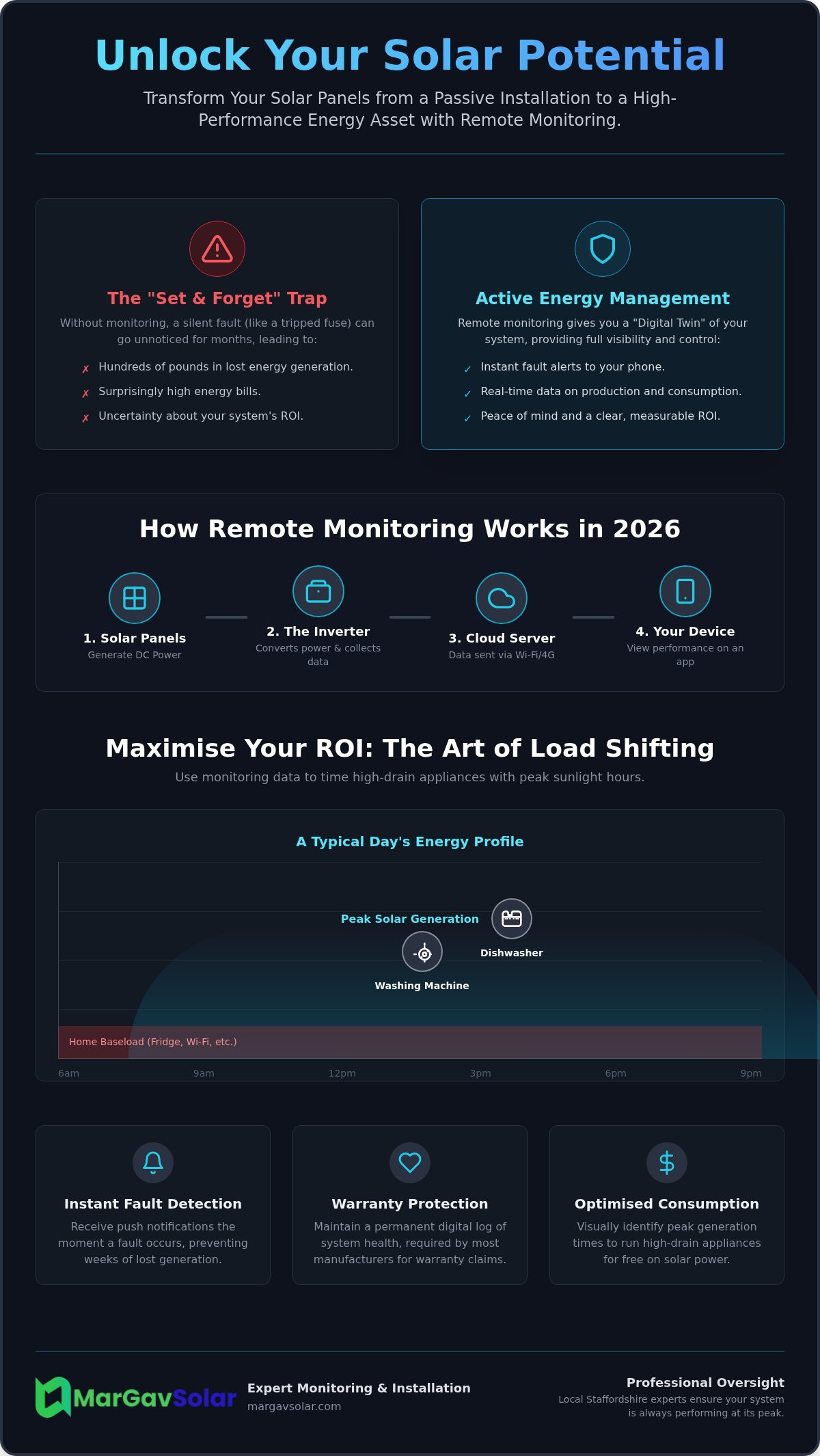
Remote solar system monitoring is the digital interface that connects your solar inverter to your smartphone, tablet, or PC. Think of it as a live "Digital Twin" of your home's energy ecosystem. Instead of walking to the garage to squint at a small LCD screen, you have a real-time stream of data showing exactly how much power your panels are harvesting and how much your home is consuming. This visibility allows you to see the invisible currents of energy flowing through your Staffordshire property, making your investment tangible and manageable.
The industry has moved away from the "set and forget" mentality of the early 2010s. In 2026, solar is an active asset that requires oversight to maintain its value. If you're "blind" to your system's output, a simple tripped fuse or a minor inverter fault could go unnoticed for months. In the height of a Staffordshire summer, that silence could cost you hundreds of pounds in lost energy generation and missed export payments. Active monitoring turns that risk into a controlled, visible process where you're always in command of your savings.
The Evolution of Solar Oversight
Solar technology has advanced far beyond the basic generation meters of the past. Modern solar panel installation now includes sophisticated cloud-based analytics as a standard feature. These systems use 4G or Wi-Fi connectivity to beam data to platforms like the GivEnergy Cloud, allowing for deep dives into photovoltaic system performance. Smart sensors now track everything from voltage fluctuations to temperature, ensuring every component operates within its ideal parameters. This connectivity makes high-level diagnostics accessible for every household, not just commercial solar farms.
Key Benefits for Staffordshire Homeowners
Staffordshire is known for its highly variable weather. One afternoon might be clear and bright, while the next brings heavy cloud cover over the Potteries. Using remote solar system monitoring allows you to track how these shifts impact your ROI in real time. It offers peace of mind through several key avenues:
- Instant Fault Detection: Receive a push notification the moment a string goes offline or the inverter detects a ground fault, preventing weeks of lost generation.
- Warranty Protection: Most manufacturers require documented performance data to honour hardware warranties. Monitoring provides a permanent digital log of your system's health.
- Optimised Consumption: By seeing exactly when your generation peaks, you can time your high-drain appliances to run for free rather than drawing expensive power from the grid.
At MarGav Solar, we've seen how professional oversight transforms the ownership experience. It's the difference between hoping your system works and knowing it does. With over 20 years of expertise, we ensure your monitoring setup provides the actionable data you need to protect your investment.
How Remote Monitoring Technology Works in 2026
Modern remote solar system monitoring starts at the heart of your installation: the inverter. While its primary job is converting DC power to AC, it also acts as the central nervous system of your home. Every few seconds, sensors capture performance metrics from your panels. These data packets are then encrypted and sent to a secure cloud server. This secure transmission is non-negotiable for home privacy in 2026, as it protects your daily energy routines from external prying eyes. It's the difference between a simple gadget and a professional energy management tool.
You might notice your system offers both local and cloud-based oversight. Local monitoring often uses Bluetooth, which is perfect for a quick diagnostic check while standing in your utility room. However, cloud monitoring is the gold standard. By using your home's internet connection, it builds a permanent historical record of your generation. This allows you to compare this year's performance to the last, helping you spot gradual degradation that a simple "live" view might miss. It ensures you have the data needed to hold manufacturers to their performance guarantees.
Hardware Components: Gateways and Dataloggers
If you're considering inverter upgrades, your new unit will likely include a dedicated datalogging stick. These small devices plug directly into the base of the inverter to handle all communication. While Wi-Fi is the most common connection method, Ethernet offers a more stable, hardwired link for your data. In rural Staffordshire areas where broadband can be intermittent, GSM sticks using a SIM card provide a reliable alternative. We also install CT clamps, which are small sensors that clip around your main power cables to measure exactly how much electricity enters or leaves your property in real-time.
Integrating Batteries and EV Chargers
The real magic of modern solar monitoring platforms lies in unification. In 2026, you shouldn't need three different apps to manage your home energy. A single dashboard, such as the GivEnergy Cloud, now integrates your solar battery storage and EV charging points. You can visually track your "Self-Consumption"-the energy you use directly-versus "Grid Export". If your car is plugged in, the system can automatically divert excess solar generation to the charger. This ensures you drive on sunshine rather than paying for grid power. If you're unsure if your current setup is compatible with these features, contacting our Staffordshire team can help clarify your options.
Comparing Monitoring Platforms: Choosing the Right Interface
Choosing the right digital interface is as vital as the hardware on your roof. You need a system that translates raw electrical data into clear, actionable financial insights. While there are many ways to approach remote solar monitoring, the best platforms offer a balance of technical depth and user-friendly design. Implementing professional remote solar system monitoring ensures you have string-level granularity. This helps you identify if a specific part of your array is underperforming due to local shading or debris. You'll also want a platform that stores long-term historical data, making it easy to track your system's health over several years.
Professional View access is another critical component of a modern interface. It allows us to monitor your system's internal logs for technical errors that aren't always visible on the standard user dashboard. If we spot a fault from our Staffordshire office, we can often resolve it remotely or arrive at your property with the exact parts needed for a fix. This proactive approach ensures your system downtime is kept to an absolute minimum and your warranty remains protected through documented performance.
The GivEnergy Cloud: A UK Favourite
The GivEnergy Cloud is a standout performer for British users. Its servers are UK-based, which ensures fast response times and strict compliance with local data privacy standards. It excels at managing battery storage, allowing you to "force-charge" your system from the grid when energy prices are at their lowest. This feature is particularly useful for Staffordshire residents using dynamic or time-of-use energy tariffs to lower their monthly bills. The UI is designed to be intuitive, replacing complex jargon with clear visualisations of your home's energy flow.
Free vs. Paid Monitoring Subscriptions
Most inverters come with a standard app that covers the basics of generation and consumption at no extra cost. These are usually sufficient for the average household looking to keep an eye on their daily savings. However, premium subscriptions often provide more frequent data updates and advanced export logs. Standard free apps might only refresh every five to fifteen minutes, whereas premium versions offer near real-time tracking. When choosing, consider if the "hidden cost" of a free app-such as lost data granularity-might actually cost you more in missed savings over time. High-quality remote solar system monitoring often pays for itself by catching tiny inefficiencies before they become major expenses.
Maximising ROI: Using Data to Lower Your Energy Bills
Achieving peak ROI involves four practical steps:
- Identify your 'Baseload': This is the constant electricity your home uses 24/7 for fridges, routers, and standby devices. Your monitoring app will show this as a flat line during the night. Knowing this number helps you calibrate your battery settings to ensure you aren't drawing from the grid during expensive hours.
- Time your high-drain appliances: Use the live generation view to decide when to run the dishwasher or washing machine. If your panels are producing 3kW and your house is using 500W, you have 2.5kW of "free" energy to play with.
- Monitor battery health: Check your depth of discharge (DoD) regularly. Consistently draining your battery to 0% can shorten its lifespan. Monitoring helps you find the "sweet spot" that balances savings with hardware longevity.
- Plan for the future: If your historical data shows you're exporting 15kWh every sunny day but still buying power at night, it's a clear sign that adding another battery module would pay for itself quickly.
Mastering Load Shifting in the UK
In the UK, energy prices often spike between 4pm and 7pm. Effective remote solar system monitoring allows you to "load shift," which means moving your heavy energy usage to times when solar generation is high or grid prices are low. By using real-time consumption tracking to align your habits with your system's output, you can reduce your annual electricity bills by up to 15% through behavioural changes alone. This data also serves as perfect evidence to show other household members how small changes in when they plug in devices can lead to significant monthly savings.
Spotting Inefficiency Before it Costs You
A sudden drop in performance is easy to spot, but gradual degradation is more sinister. Monitoring data can reveal the subtle impact of new tree growth casting shadows or the buildup of rural dust and grime. This is where the link to solar panel maintenance becomes essential. If your "Digital Twin" shows one string of panels is producing 10% less than the others, it's time for a professional clean or a technical inspection. If you suspect your system isn't pulling its weight, a professional system review from our Staffordshire team can help you get back to peak production.
Professional Oversight: Why MarGav Solar Monitors Your System
While having an app on your phone is great for checking daily generation, there's a significant difference between "User Monitoring" and "Installer Monitoring". Your dashboard shows you how much you've saved; our professional interface shows us how your system is actually breathing. We look at technical parameters like string voltage, grid frequency, and internal temperatures. This high-level remote solar system monitoring allows us to act as a digital guardian for your investment, ensuring the hardware remains within safe operating limits at all times.
Accuracy is paramount when dealing with electrical data. Our NICEIC certification isn't just a badge on our vans; it's your assurance that your monitoring equipment has been calibrated and installed to the highest UK safety standards. Correct installation of CT clamps and dataloggers ensures the data you see is a true reflection of your energy usage, not a miscalculation that could lead to poor financial decisions. This professional setup also ensures your system stays strictly within the terms of its long-term equipment warranty, as many manufacturers now require proof of professional oversight for claims.
Proactive Fault Detection and Repair
One of the biggest advantages of our professional oversight is that we often spot a fault before you do. If a specific panel starts underperforming or an inverter shows a minor communication error, our system flags it for review. This allows for remote triage. Instead of charging you for a diagnostic site visit, we can often reset the system or update firmware from our Staffordshire office. If a physical repair is needed, we arrive at your property with the right parts already in hand. This streamlined process is vital for inverter warranty claims, as we can provide manufacturers with the precise digital logs they require to approve a replacement quickly.
Custom Energy Consultations Based on Real Data
Your energy needs in Staffordshire will likely evolve. Perhaps you're considering an electric vehicle or want to expand your storage capacity. We use your historical remote solar system monitoring data to provide personalised advice on local energy trends and system upgrades. Instead of guessing, we can show you exactly how a new battery or an EV charger would integrate with your current production. It's about making data-driven decisions that guarantee long-term performance. If you want to ensure your system is performing at its absolute best, contact MarGav Solar for a system health check today.
Take Command of Your Energy Future
Your solar panels shouldn't be a mystery. By embracing remote solar system monitoring, you transform a silent installation into a vocal energy asset that tells you exactly how to save money. You've seen how tracking your baseload and mastering load shifting can slash your bills, while professional oversight ensures your hardware stays healthy for decades. It's about having the confidence that every ray of Staffordshire sunshine is being put to its most profitable use.
With over 20 years of solar expertise, our NICEIC-certified team is here to help you navigate the data. We provide proactive remote maintenance to catch faults before they impact your wallet, giving you total peace of mind. If you're ready to unlock the full potential of your installation and ensure your ROI is on track for 2026, Book a Professional Solar Audit with MarGav Solar today. Let's make sure your system is performing at its absolute peak.
Frequently Asked Questions
Do I need a constant Wi-Fi connection for remote solar monitoring?
You need a stable internet connection for real-time updates. While most modern inverters can store data locally during a brief outage, a constant Wi-Fi, Ethernet, or GSM link is required to beam that information to your app. In rural areas of Staffordshire where Wi-Fi might be patchy, we often recommend hardwired Ethernet or 4G data sticks to ensure your remote solar system monitoring remains uninterrupted and accurate.
Is my solar data secure and who else can see it?
Your energy data is highly secure. Modern systems use end-to-end encryption to protect your information from unauthorised access. Typically, only you and your certified installer, like MarGav Solar, have access to the dashboard. We use this data strictly for proactive maintenance and to ensure your system meets its performance targets. Your privacy is a priority, and your daily energy habits stay protected behind professional-grade security protocols.
Can I monitor my solar panels on my smartphone while I'm away from home?
You can view your system's performance from anywhere in the world. As long as your smartphone has an internet connection, you can log into your cloud dashboard to check live generation and battery levels. This is incredibly useful for Staffordshire homeowners who travel, as it allows you to verify that your home is running efficiently while you're away. To extend this remote oversight to your property's physical protection, you can check out StaySafe365 for advanced surveillance options. You'll also receive instant push notifications if the system detects a technical fault.
Does remote monitoring detect if a single solar panel is failing?
It depends on your specific setup. Standard string inverters show the performance of a whole group of panels, but systems equipped with microinverters or power optimisers can track individual panel health. If a single panel underperforms due to bird droppings or a technical fault, the software will highlight the specific location. This level of detail makes remote solar system monitoring an essential tool for targeted maintenance and ensuring high-yield performance across the whole array.
What is the difference between a smart meter and a solar monitoring system?
A smart meter primarily tracks how much electricity you buy from or sell to the grid for billing purposes. In contrast, a solar monitoring system provides a deep dive into what's happening behind the meter. It tracks exactly how much power your panels generate, how your battery is discharging, and the overall health of your inverter. While a smart meter helps with your bills, monitoring helps you optimise your entire energy investment.
Will remote monitoring work with older solar panel installations?
Most older systems can be brought into the digital age. While the panels themselves don't usually need replacing, we can perform inverter upgrades to add modern monitoring capabilities. This is a popular option for Staffordshire residents with systems installed over a decade ago. Adding a new inverter with cloud connectivity allows you to finally see your ROI in real-time and integrate modern features like battery storage or EV charging points.
How much data does a solar monitoring system use each month?
Solar monitoring systems are very efficient with data usage. They typically use between 20MB and 50MB of data per month, which is less than a few minutes of high-definition video streaming. This tiny footprint won't impact your home broadband speeds or exceed basic mobile data limits if you're using a GSM connection. It's a low-impact way to stay connected to your home's energy production without worrying about data caps or network slowdowns.
Can monitoring help me switch to a better energy export tariff?
Monitoring is a powerful tool for choosing the right tariff. By reviewing your historical export data, you can see exactly how much surplus energy you're sending back to the grid. This evidence is vital when applying for the Smart Export Guarantee (SEG) or switching to dynamic time-of-use tariffs. We help Staffordshire clients use this data to find the most profitable export rates, ensuring you get the best possible return for your clean energy.


