
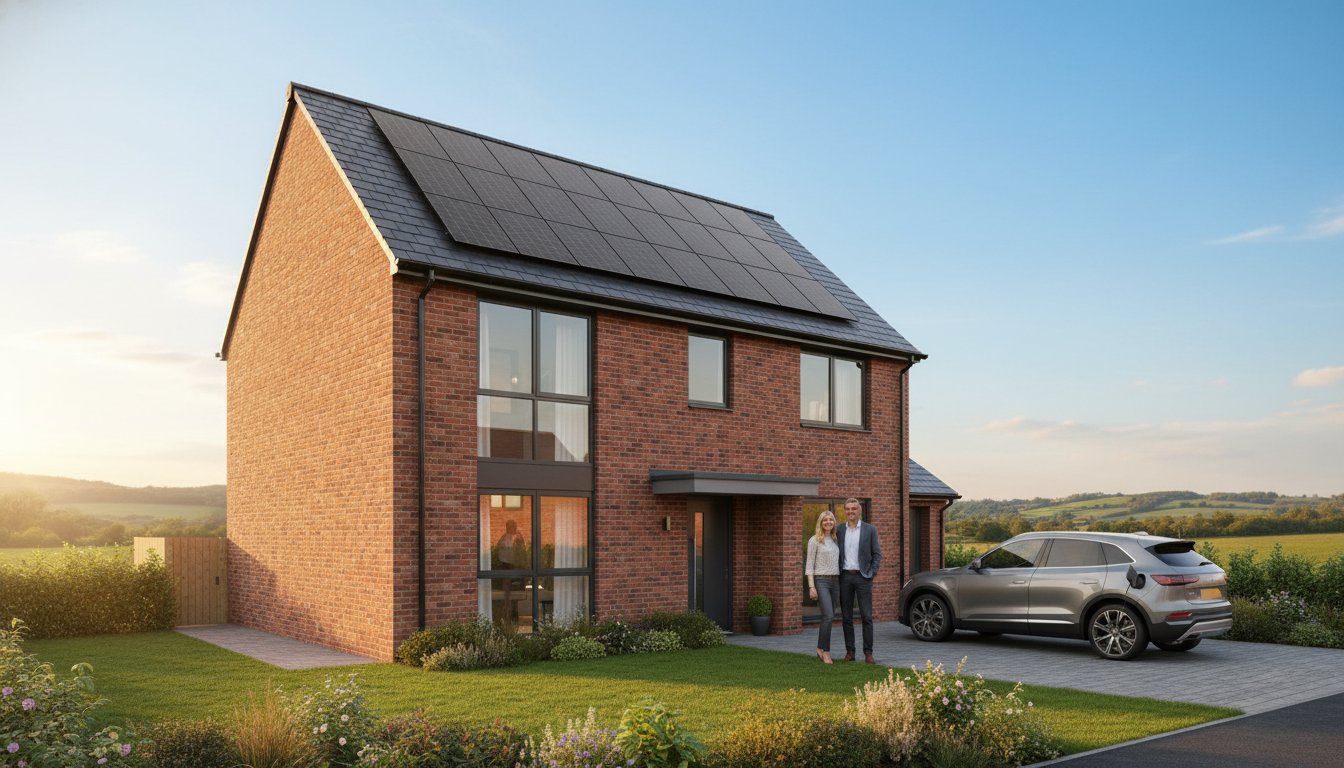
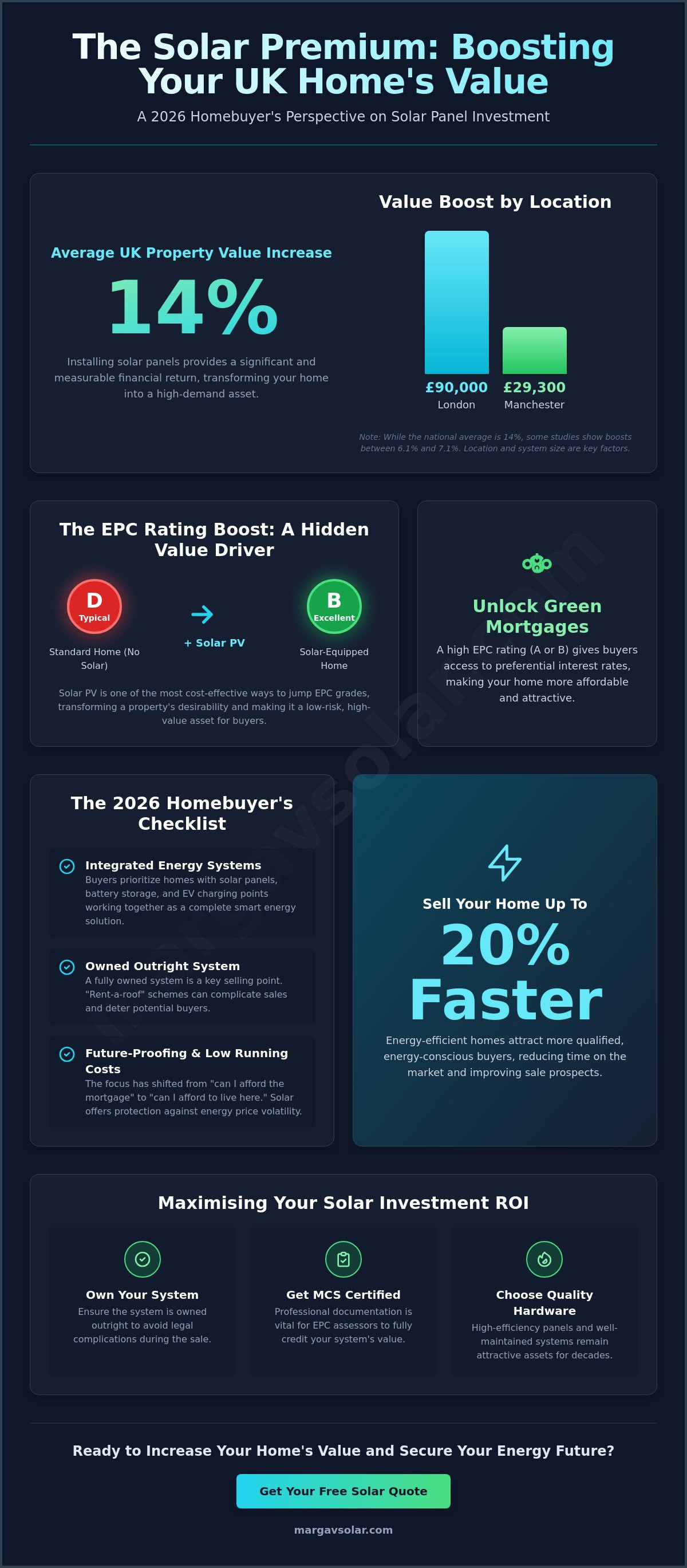
Did you know that installing solar panels can increase a UK home's value by an average of 14%? If you are asking, do solar panels add value to a house UK buyers in 2026 are now prioritizing energy efficiency and "smart readiness" over traditional cosmetic upgrades. In London, this value boost can reach as high as £90,000, while properties in Manchester see average increases of approximately £29,300 according to recent market data.
It's natural to worry that panels might impact your curb appeal or that the initial investment won't be recovered during a sale. You want to ensure your home remains competitive in a market that increasingly demands high EPC ratings and low running costs. This guide explains exactly how solar technology influences property prices and why the upcoming Home Energy Model changes in October 2026 make renewable energy a vital asset for property liquidity.
We will explore the specific percentage increases reported by recent studies, the role of battery storage in modern valuations, and how you can achieve a faster house sale by meeting the green demands of the 2026 homebuyer.
Key Takeaways
- Learn how the "Solar Premium" can increase your property's market price by an average of 14% depending on your location.
- Discover how improving your EPC rating through solar installation can unlock lower interest rates via specialized green mortgage products.
- Understand why 2026 buyers prioritize integrated systems, including battery storage and EV charging points, over standalone panel setups.
- If you are wondering do solar panels add value to a house UK experts agree that owning your system outright is critical for a smooth sale.
- Identify the specific hardware choices and maintenance steps that ensure your solar investment remains an attractive asset for future homeowners.
The Direct Impact: How Much Value Do Solar Panels Add in the UK?
The concept of a "Solar Premium" has moved from a theoretical benefit to a measurable financial asset in the 2026 housing market. When homeowners ask do solar panels add value to a house UK property experts point to data showing an average value increase of 14%. While some conservative studies, such as a 2024 report from Swansea University, suggest a boost between 6.1% and 7.1%, the consensus remains clear. A home that generates its own power is worth significantly more than one that relies solely on the grid.
This value is most pronounced when the homeowner owns the system outright. In the past, "rent-a-roof" schemes often complicated the selling process because buyers were wary of long-term leases they didn't control. Today, a fully owned residential solar PV system is viewed as a premium feature. Buyers are no longer focused on the aesthetics of panels; they are focused on the protection panels provide against utility price spikes. The history of Solar power in the United Kingdom shows a steady shift toward this mainstream acceptance, with rooftop installations now being a standard expectation for high-end listings.
Average Percentage Increases by Property Type
Detached homes typically see the highest absolute value gains because they often have larger roof spaces for bigger systems. However, semi-detached properties also benefit significantly, often moving up an entire EPC bracket. Unlike a new kitchen, which might go out of style in five years, solar panels provide a functional financial return that lasts for decades. Properties with solar installations often see improved "time-to-sell" metrics, as energy-conscious buyers are less likely to haggle over prices when they know their monthly bills will be hundreds of pounds lower.
The 2026 Perspective: Energy Independence as a Luxury
In 2026, energy independence has become a luxury status symbol. The "green premium" now accounts for a significant portion of a property's desirability, with 2026 market data indicating that energy-efficient homes can sell up to 20% faster than those with poor ratings. Buyers are shifting their mindset from "can I afford the mortgage" to "can I afford to live here." Solar panels transform a house into a self-sustaining asset that attracts the most qualified buyers in the market. This shift is particularly evident as utility volatility makes fixed energy costs a top priority for families looking to secure their financial future.
The EPC Rating Boost: A Hidden Value Driver
In 2026, your Energy Performance Certificate (EPC) is more than just a legal requirement; it's a critical financial gatekeeper. While earlier discussions focused on the direct percentage boost to property prices, the indirect impact of a higher EPC rating is equally powerful. When buyers ask, do solar panels add value to a house UK lenders and surveyors are increasingly looking at how that rating affects a property's long-term liquidity. A home that sits in the 'D' bracket is now viewed as a liability, whereas an 'A' or 'B' rating is the gold standard for the modern market.
A jump from a D to a B rating can transform a property's desirability overnight. This isn't just about environmental concerns. It's about cold, hard cash. In a competitive market, a high-rated home sells faster because it represents lower risk for the next owner. According to MoneySavingExpert's analysis, energy efficiency is a top consideration for homeowners looking to maximize their investment. The shift in buyer sentiment is palpable; they aren't just buying a house, they're buying a predictable energy budget.
How Solar PV Affects Your Energy Performance Certificate
Solar PV is a heavy hitter in SAP (Standard Assessment Procedure) calculations. It's often the most cost-effective way to jump an EPC grade compared to more invasive measures like external wall insulation. By generating your own electricity, you reduce the primary energy demand of the building. However, the quality of the installation matters. To ensure the EPC assessor can fully credit the system, you need professional documentation and MCS certification. A well-integrated system is a primary driver for hitting those high targets under the new Home Energy Model guidelines arriving in October 2026.
Green Mortgages and Buyer Incentive
This is where the hidden value truly lies. Most UK lenders now offer 'Green Mortgages' with preferential interest rates for homes with an EPC rating of A or B. If a buyer can secure a cheaper loan because your home has solar panels, your property becomes significantly more affordable to them. This effectively increases your home's value because the buyer has more purchasing power for your specific listing. For homeowners in areas like Staffordshire, installing residential solar PV systems is the most reliable way to future-proof a property. It makes your home a turnkey solution for buyers who want to avoid the hassle and expense of retrofitting energy upgrades themselves after they move in.
Beyond Panels: How Batteries and EV Chargers Amplify Value
In 2026, the question isn't just "do solar panels add value to a house UK" buyers are looking for; it's whether the property offers a complete, self-sustaining energy ecosystem. A standalone panel array is a fantastic start, but the real market premium comes when you include solar battery storage. This addition effectively doubles the perceived value by providing 24/7 power. Instead of exporting all excess energy during the day for a few pence, homeowners can store it for evening use. This self-sufficiency is a major psychological and financial draw for prospective buyers who want to avoid high grid prices after sunset.
The convenience of a "plug-and-play" sustainable home cannot be overstated. Buyers in 2026 are often willing to pay a higher upfront price to avoid the logistical challenge of retrofitting batteries or chargers later. By providing a complete, MCS-certified solution, you aren't just selling a house; you're selling a modern, low-carbon lifestyle. This ecosystem approach ensures your home remains at the top of the list for the growing demographic of eco-conscious and tech-savvy buyers.
The Rise of the 'Smart Home' Ecosystem
Modern buyers love data. Systems like the GivEnergy Cloud provide a transparent history of energy production and consumption. When you sell your home, showing a prospective buyer a year’s worth of low energy bills through a smart app is a powerful closing tool. It proves the system works. The upcoming "smart readiness" metric in the October 2026 EPC changes will further reward homes that integrate solar with smart energy management. A house that manages its own energy flow is no longer a futuristic dream; it's a 2026 market standard that provides tangible proof of ROI.
EV Charging: The New Standard for Driveways
As electric vehicle adoption continues to climb, EV charging points have become as essential as a driveway or a garage once was. A property that is already "EV-ready" saves the buyer the hassle of arranging their own installation. When this charger is integrated with a solar PV system, the value proposition becomes even stronger. It offers the buyer "free" fuel for their car. This integrated approach reduces future living costs for the new owner, making your property stand out in a crowded market. Having an MCS-certified charging solution pre-installed gives buyers confidence that the home is future-proofed and ready for the 2030s.
Common Concerns: Can Solar Ever Decrease a Home’s Value?
While the data points toward a clear "yes" when asking do solar panels add value to a house UK, there are specific scenarios where they can become a hurdle. The biggest red flag for surveyors and solicitors is the legacy "Rent-a-Roof" scheme. These leased systems, popular a decade ago, can complicate a sale because the roof space technically belongs to a third party. Today’s buyers want to own the asset outright. If your system is leased, it might actually decrease your property's liquidity unless you buy out the contract before listing.
Roof integrity is another common worry for prospective buyers. Concerns about leaks or structural damage often stem from poor DIY attempts or uncertified work. Regular solar panel maintenance ensures the system remains efficient and the roof stays watertight. Modern hardware is designed for a 25 to 30 year lifespan, meaning a system installed today will still be an asset for the next generation of homeowners. It isn't a temporary gadget; it's a long-term structural upgrade that provides security for decades.
Aesthetics and Kerb Appeal in 2026
Public perception has shifted dramatically. In the past, bulky blue cells with silver frames were sometimes seen as eyesores. In 2026, sleek all-black panels have become a badge of honour. These low-profile systems blend into the roofline, preserving the character of traditional Staffordshire homes while signalling that the property is modern and efficient. A professional solar panel installation protects the roof warranty by using approved mounting systems that don't compromise the tiles or shingles.
The Importance of Paperwork and Certification
When a sale reaches the legal stage, documentation is everything. Buyers and their solicitors will look for proof of MCS and NICEIC certification. Without these, you cannot prove the system meets safety standards or that the electricity generated is eligible for export payments. A lack of proper paperwork can stall a sale for weeks or even kill the deal entirely. Transferrable warranties on the panels and inverter provide the final layer of reassurance, giving the new owner peace of mind that they won't face unexpected repair costs.
If you want to ensure your system remains a selling point rather than a liability, you can book professional solar panel maintenance and cleaning to keep your investment in peak condition for the market.
Maximising Your Solar ROI: A Checklist for Staffordshire Homeowners
Securing the best return on your investment requires a strategic approach that goes beyond simply putting glass on a roof. When homeowners ask do solar panels add value to a house UK market experts highlight that the quality of the components and the professionalism of the installation are what truly drive the "Solar Premium." A system that looks like a DIY project will rarely command the same price boost as a sleek, integrated energy solution.
To ensure your property stands out to 2026 buyers, follow this checklist for maximising your resale value:
- Focus on Tier 1 Hardware: Buyers recognise quality. Opting for Tier 1 panels ensures you are installing hardware from manufacturers with proven reliability and long-term warranties that can be transferred to the new owner.
- Size for the Property, Not the Person: If you live alone in a four-bedroom house, don't just install a small system. Size the array for the property's potential occupancy to ensure a family of four can also enjoy the energy savings.
- Prioritise Smart Monitoring: Modern inverter upgrades allow you to show prospective buyers real-time data of what the house is saving. This transparency is a powerful tool during the negotiation phase.
- Maintain a Meticulous Log: Keep every service record and cleaning receipt. A documented history of professional maintenance proves the system is in peak health, which is vital during a home survey.
- Choose Local Expertise: An established installer in your region provides the long-term support that national "fly-by-night" companies cannot match.
The MarGav Solar Advantage
With over 20 years of expertise across Staffordshire and the Midlands, MarGav Solar understands the local property market. We don't just sell equipment; we provide end-to-end consultancy to ensure your residential solar PV system is a genuine financial asset. Our focus on high-quality hardware and professional NICEIC-certified installation means your system will meet the strict requirements of solicitors and surveyors during a house sale. We offer long-term maintenance and equipment warranties that provide the peace of mind buyers are looking for in 2026.
Ready to Add Value to Your Home?
The 2026 housing market has reached a tipping point where energy independence is no longer a luxury, it's an expectation. By investing in a complete energy ecosystem now, you protect yourself from utility volatility while building significant equity in your property. Whether you are looking to improve your EPC rating or simply want to future-proof your home for the next decade, professional guidance is the first step toward a successful installation. Book your free solar valuation and consultation with MarGav Solar today to discover how much value we can add to your Staffordshire property.
Secure Your Property’s Future in a Green Economy
The UK housing market has reached a definitive turning point where energy efficiency is no longer optional. As we have explored, the combination of a boosted EPC rating and the installation of integrated battery storage can significantly increase your home's liquidity and sale price. When you ask, do solar panels add value to a house UK buyers consistently answer with a premium for properties that offer lower running costs and smart energy readiness. By choosing a system that includes EV charging or battery storage, you ensure your home remains at the top of every buyer's shortlist.
Expertise matters when it comes to protecting your investment. MarGav Solar brings over 20 years of industry experience and a team of NICEIC and MCS certified installers to every project. As Staffordshire-based local experts, we understand how to design systems that meet the specific demands of the Midlands property market while ensuring all legal documentation is ready for your future sale.
Get a Fixed-Price Solar Installation Quote from MarGav Solar and take the first step toward a more valuable, self-sufficient home. It's time to turn your roof into your property’s greatest financial asset.
Frequently Asked Questions
How much exactly do solar panels add to UK house prices in 2026?
Solar panels add an average of 14% to property values across the UK as of 2026. In London, this can equate to a value boost of around £90,000, while properties in Manchester see average increases of approximately £29,300. Even conservative studies suggest a minimum increase of 6% to 7% for homes with high-quality, owned systems. The final figure depends on your local market and the system's overall capacity.
Do solar panels make a house harder to sell?
Owned solar panels typically make a house easier to sell by lowering running costs and improving the EPC rating. The only exception is older "rent-a-roof" or leased schemes, which can complicate the legal process for buyers. If you own your residential solar PV system outright, it's viewed as a premium asset that helps your home stand out against less efficient properties in the 2026 market.
Can I take my solar panels with me when I move house?
You can technically move your panels, but it's rarely a practical or cost-effective choice. The process requires professional removal, scaffolding, roof repairs, and re-installation at your new property, which often costs more than the equipment's remaining value. Most homeowners find it's better to leave the system in place to justify a higher asking price and install a new, modern system at their next home.
Will solar panels affect my mortgage eligibility?
Solar panels generally have a positive impact on mortgage eligibility by qualifying the home for "Green Mortgages" with lower interest rates. Many UK lenders now offer these preferential rates for properties with an EPC rating of A or B. If you're wondering do solar panels add value to a house UK banks certainly think so, as they view energy-efficient homes as lower-risk investments for their borrowers.
What happens to the Smart Export Guarantee (SEG) payments when I sell my house?
SEG payments don't automatically transfer to the new homeowner when the property is sold. Your existing contract will end on the date of the sale, and the buyer must apply for their own SEG tariff with their chosen energy supplier. To help this process, you should provide the buyer with the original MCS certificate, which is a mandatory requirement for them to start earning from exported energy.
Do I need planning permission for solar panels in Staffordshire?
Most solar installations in Staffordshire are considered "permitted development" and don't require formal planning permission. However, exceptions apply if your home is a listed building or located within a conservation area. It's always best to check with your local planning authority if the panels will be installed on a flat roof or if they will protrude significantly beyond the existing roof slope.
How do buyers feel about solar panels in the current UK market?
Buyers in 2026 view solar panels as a vital shield against energy price volatility. A property that generates its own electricity is now seen as a modern, future-proofed home rather than a niche experiment. Many buyers specifically look for listings that already include battery storage and EV charging points to avoid the logistical hassle and expense of arranging their own installations after moving in.
What is the most important document to have when selling a house with solar?
The MCS (Microgeneration Certification Scheme) certificate is the most important document to have ready for your solicitor. This certificate proves the system meets national safety and quality standards, which is essential for the buyer's peace of mind and mortgage approval. Without this paperwork, the new owner won't be able to register for Smart Export Guarantee payments, which could lead to them lowering their offer.


