
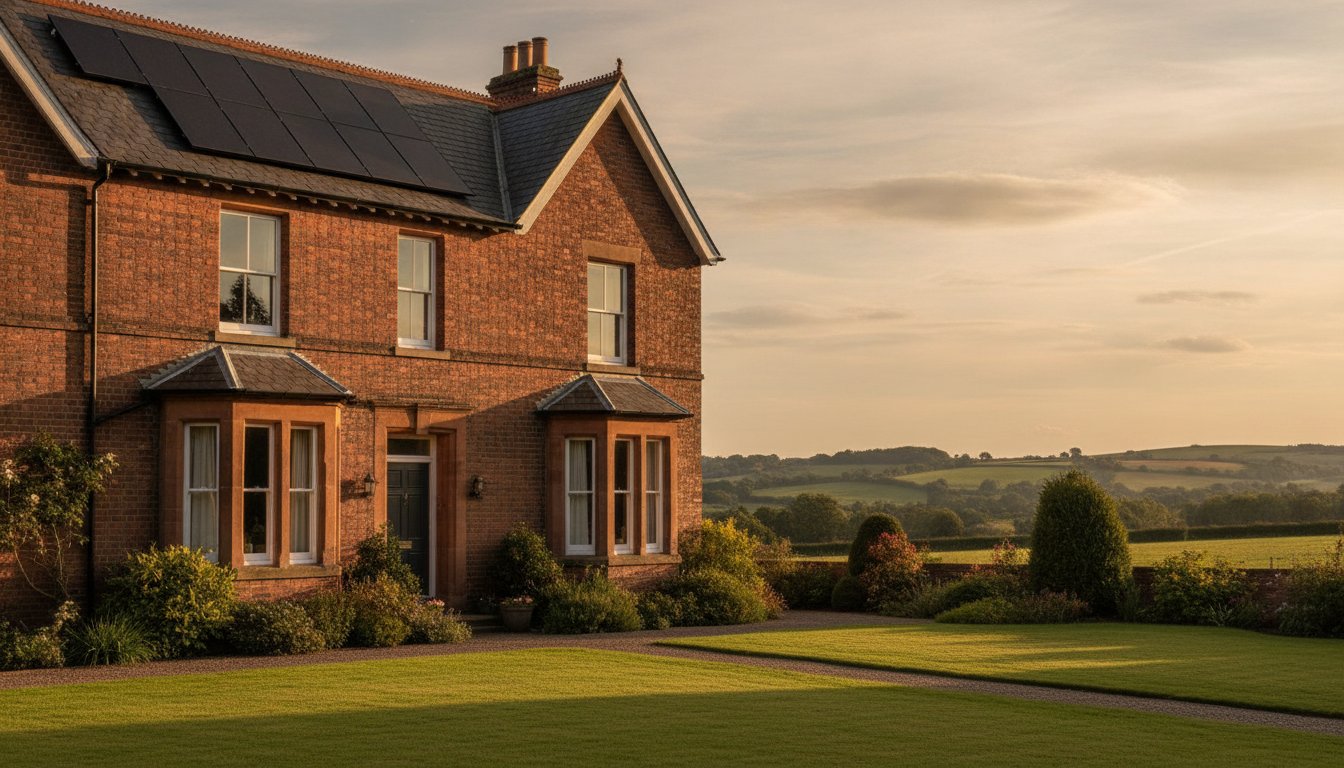
Can you really install high-efficiency solar technology on a heritage property without facing a council enforcement notice? Many homeowners in Stone, Eccleshall, and across South Staffordshire believe that living in a protected zone makes renewable energy impossible. It's a common frustration, especially when you're trying to balance rising energy costs with the strict aesthetic standards of your local neighborhood. However, the reality of installing conservation area solar panels Staffordshire wide has changed significantly as of June 2026. While Article 4 Directions in Stafford Borough mean you'll likely need a full planning application, local councils are becoming increasingly supportive of solar if you use the right design strategy.
This guide will show you how to navigate the latest 2026 planning regulations, including the April fee increases and the current 11 week validation delays in Stafford Borough. You'll learn which heritage-friendly options, like all-black panels or in-roof mounting, are most likely to win over planning officers. We'll provide a clear roadmap for your application, from understanding highway-facing restrictions to finding a local installer who understands Staffordshire's unique planning quirks. By the end, you'll have the knowledge to upgrade your home with a modern solar PV system that respects its history and avoids any risk of fines.
Key Takeaways
- Identify whether your home falls under an Article 4 Direction to determine if you can use Permitted Development rights or require a full planning application.
- Explore the latest "heritage-first" technology, such as all-black panels and low-profile mounting, to make your installation more acceptable to conservation officers.
- Master the application process for conservation area solar panels Staffordshire by learning how to draft a professional Design and Access Statement.
- Reduce the risk of rejection by seeking pre-application advice from your local council to address specific heritage concerns early in the project.
- Gain insights into why working with a local expert in residential solar PV systems is essential for navigating the unique planning quirks of Staffordshire's historic districts.
Understanding Conservation Areas in Staffordshire
Under the Planning (Listed Buildings and Conservation Areas) Act 1990, a conservation area is defined as a place of "special architectural or historic interest." In Staffordshire, this designation protects the unique aesthetic that makes our towns and villages distinct. Whether you're in the historic market town of Stone or the rural beauty of the Moorlands, these rules ensure that any changes to a building's exterior don't harm the local heritage. Understanding what a conservation area is helps you see why councils scrutinize solar projects so closely. It isn't about stopping progress; it's about preserving the "character and appearance" of the street.
By June 2026, we've seen a noticeable shift in how Staffordshire authorities view renewable energy. While preservation remains a priority, climate targets are pushing councils to be more flexible. They're looking for ways to integrate conservation area solar panels Staffordshire homeowners can actually use without ruining the skyline. Installing conservation area solar panels Staffordshire residents can be proud of requires a nuanced understanding of these local boundaries and the specific "character appraisals" that define each zone.
Is Your Property in a Designated Zone?
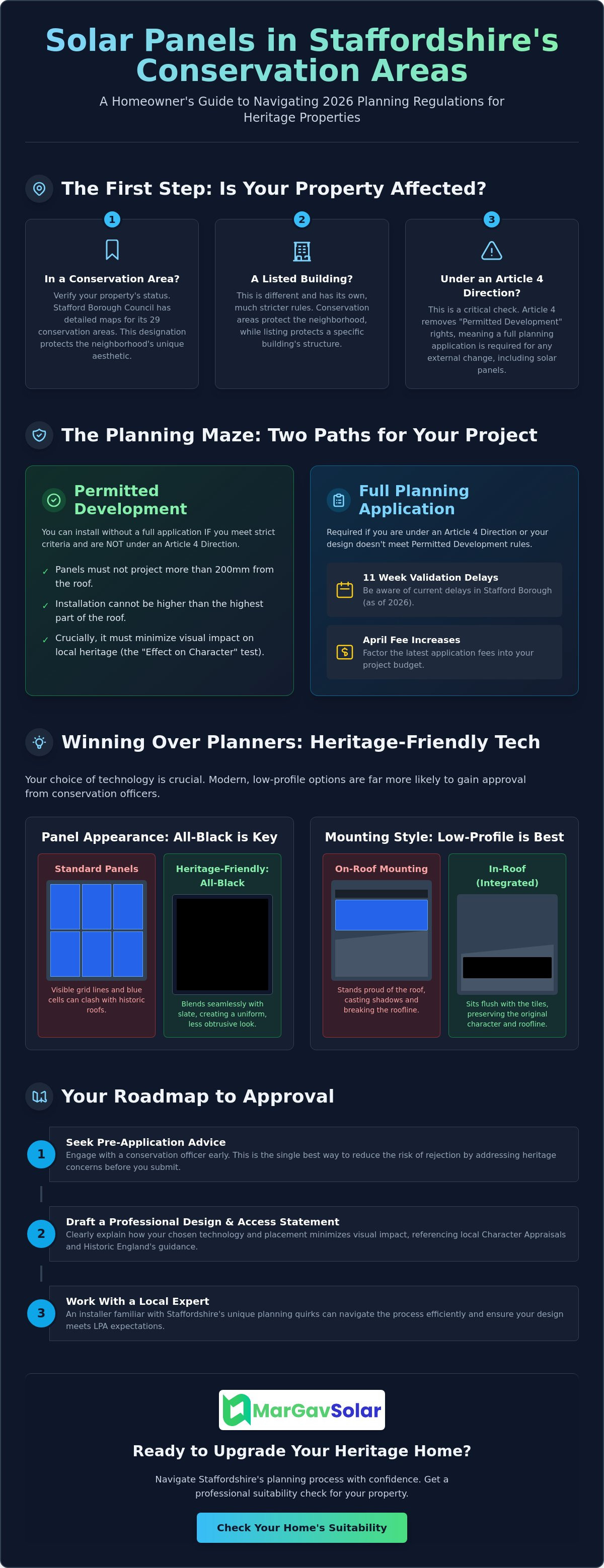
Before you start planning, you need to verify your property's status. Stafford Borough Council maintains detailed maps for its 29 conservation areas, ranging from the medieval layouts of Stafford town center to the Victorian charm of Burton Manor Village. It's vital to distinguish between a conservation area and a listed building. While a conservation area protects the whole neighborhood, a listed building has its own specific set of much stricter rules. In planning terms, these zones are often referred to as "Article 1(5) land," which restricts some of the freedoms you'd normally have under Permitted Development.
The Role of the Local Planning Authority (LPA)
Your Local Planning Authority, such as Stafford Borough Council or South Staffordshire Council, acts as the gatekeeper for all solar installations. They rely on "Character Appraisals" to decide what looks right in your specific area. A parish council might offer local insight, but the LPA makes the final call. Engaging with a conservation officer early in your project is a winning strategy. They can provide feedback on panel placement or material choices before you commit to a full application. This collaborative approach often leads to a smoother approval process for high-quality residential solar PV systems.
Planning Permission vs. Permitted Development in Staffordshire
Many homeowners assume that living in a protected zone automatically means a mountain of paperwork. In reality, Permitted Development (PD) rights do exist for solar installations, even within many conservation areas. These rights allow you to install panels without a full planning application, provided you meet strict criteria. For example, panels must not project more than 200mm from the roof surface and cannot be positioned higher than the highest part of the original roof. However, the "Effect on Character" test is where things get tricky. Staffordshire planners expect any installation to minimize the visual impact on the local heritage. If your project is deemed to harm the area's aesthetic, those PD rights can be challenged.
Navigating these rules requires a careful eye for detail. Following Historic England's installation guidance is a great way to ensure your design aligns with national best practices for sensitive buildings. If you aren't sure where to start, you can always check your home's suitability with a professional who understands the local landscape.
The Impact of Article 4 Directions
In certain parts of Staffordshire, the council has issued Article 4 Directions. These legal tools strip away Permitted Development rights to protect specific architectural features. In Stafford Borough, this is a major factor for residents in Stone, Eccleshall, and Burton Manor Village. If you live on a street covered by an Article 4 Direction, you'll need a full planning application for conservation area solar panels Staffordshire projects, regardless of how small they are. You can find out if your street is restricted by checking the interactive planning maps on your local council's website.
When Planning Permission is Mandatory
Even without an Article 4 Direction, planning permission is mandatory if your panels will be installed on a roof slope or wall that faces a highway. This is a common hurdle for terraced homes in historic Staffordshire town centers. Ground-mounted arrays or installations on outbuildings also frequently require a closer look from the council. Don't fall for the myth that rules are being "de-designated" or ignored. With planning fees having increased as of April 1, 2026, and validation times in Stafford Borough currently taking up to 11 weeks, getting your application right the first time is essential to avoid costly delays.
Aesthetic Solutions: Heritage-Friendly Solar Technology
For years, the biggest barrier to installing solar in protected zones was the visual impact of the hardware itself. Traditional panels with silver frames and blue cells often looked out of place against Staffordshire's classic red clay tiles or dark slate. Today, the "All-Black" revolution has changed how planners view these projects. Sleek, monochrome panels use black frames and backsheets to create a uniform, matte appearance. This technology allows conservation area solar panels Staffordshire homeowners to install modern energy solutions that blend seamlessly into the existing roofline, making them much more likely to receive council approval.
Choosing between in-roof and on-roof mounting is another critical decision for heritage properties. On-roof systems sit slightly above the tiles, whereas in-roof (or integrated) systems replace a section of the tiles entirely. Integrated panels sit flush with the roof surface, providing the lowest possible profile. This is often the preferred choice for conservation officers in areas like the Staffordshire Moorlands, where maintaining the historic silhouette of a building is paramount. Additionally, using non-reflective glass helps reduce glint and glare. This ensures your array doesn't become a distraction in sensitive village settings or narrow historic streets.
Smart siting strategies can also bypass many planning headaches. If your property has an internal roof valley or a rear elevation that isn't visible from the street, these are the ideal spots for an array. Placing panels where they can't be seen from the "public realm" significantly increases your chances of a successful application, even in the most restricted zones.
Discreet Mounting Systems
The details matter just as much as the panels. Using black mounting rails and matching clamps ensures that no silver metalwork catches the light. Low-profile brackets keep the entire system closer to the original tile line, avoiding the "bulky" look of older installations. A professional installer will also ensure all cabling and conduit are hidden within the roof space or behind downpipes. This prevents unsightly plastic trunking from ruining your home's historic brickwork or timber framing.
Maximising Efficiency with Battery Storage
Conservation rules often limit the number of panels you can install. When you have a smaller array, every kilowatt-hour counts. Integrating solar battery storage is the most effective way to make these restricted systems viable. By storing excess energy generated during the day, you can power your home after sunset without relying on the grid. To manage this effectively, many Staffordshire homeowners use the GivEnergy cloud to monitor their system's performance in real-time. Batteries can usually be tucked away in lofts, basements, or garages, providing all the benefits of renewable energy with zero external visual impact.
The Application Process for Staffordshire Homeowners
Securing approval for conservation area solar panels Staffordshire projects requires more than just filling out a form. The process is a structured dialogue between you and the local planning authority. Your first priority should be seeking pre-application advice. While this service often carries a small fee, it's a wise investment that can save hundreds of pounds in revised application costs. Planning officers in Stafford Borough or South Staffordshire can provide an initial view on whether your proposed panel placement is likely to be accepted. This early feedback allows you to adjust your design before you formally commit to the 2026 planning fee rates, which increased on April 1st.
Once you've refined your proposal, you'll need to submit your application via the national Planning Portal. Be prepared for a wait. As of March 2026, validation for planning applications in Stafford Borough is taking up to 11 weeks. Once validated, the typical householder planning decision takes around 8 weeks. To ensure your application isn't rejected during the validation stage, you must include professional site plans and roof elevations that clearly show the scale and position of the solar array. High-quality drawings are non-negotiable for heritage projects. You can book a technical site survey to ensure your plans meet these rigorous council standards.
Crafting a Winning Design & Access Statement
The Design and Access Statement (DAS) is your opportunity to justify your choice of technology. Don't just focus on energy bills. Instead, frame your argument around local climate emergency policies and the "minimal harm" your project will cause. Reference the heritage-friendly technology we discussed earlier, such as all-black panels that mimic the tone of historic roof tiles. If other homes in your Staffordshire village have successfully installed solar, mention these precedents to show that renewable energy can coexist with local character.
Working with Professional Installers
Your choice of installer directly impacts your planning credibility. Councils are more likely to trust a proposal backed by an MCS-certified firm using high-quality hardware. Understanding why NICEIC certification is vital for planning credibility will help you vet potential contractors. A professional team like MarGav Solar doesn't just install the hardware; they provide the technical data and drawings required for your DAS. This support ensures that your application for conservation area solar panels Staffordshire is robust, accurate, and aligned with the latest 2026 heritage guidelines.
Why MarGav Solar is the Choice for Staffordshire Heritage
MarGav Solar brings over 20 years of expertise to the Staffordshire renewable energy sector. We don't just fit panels; we design systems that respect the architectural integrity of your home. Period properties require a bespoke touch that national installers often overlook. By choosing a local, family-run specialist, you're gaining a partner who understands the specific visual standards required for conservation area solar panels Staffordshire projects. Our team has spent two decades refining the balance between maximum energy yield and minimal aesthetic disruption.
Our deep roots in the community give us a unique advantage when dealing with local planning authorities. We've navigated the specific quirks of Stafford Borough, South Staffordshire, and the Staffordshire Moorlands for years. We know exactly what conservation officers are looking for in a Design and Access Statement. This local insight helps us anticipate potential objections before they become hurdles. Whether your home is subject to an Article 4 Direction or simply requires a sensitive touch to match historic slate, our end-to-end support covers everything from the initial site survey to the final commissioning.
Our Heritage-First Approach
Every period home has a story. Our designs respect that history by utilizing high-efficiency, low-visual-impact technology. We specialize in solar panel installation for properties where "off-the-shelf" solutions won't work. By selecting all-black components and low-profile mounting systems, we ensure your array is a discreet addition rather than a dominant feature. Our track record includes numerous successful installs in some of Staffordshire's most restricted zones, proving that modern energy independence is possible even in a heritage setting.
Long-Term Support and Maintenance
A solar system is a long-term investment. Beyond the initial install, we provide comprehensive solar panel maintenance to ensure your system continues to perform at its peak for decades. Our warranty-backed installations give you peace of mind, knowing that a local team is always available for inverter upgrades or routine cleaning. We're proud to be a local business that stands by its work long after the scaffolding comes down. Ready to start your journey? Contact MarGav Solar for a heritage property consultation today and see how we can bring sustainable energy to your historic home.
Start Your Staffordshire Solar Journey Today
Living in a historic home shouldn't mean being left behind in the energy transition. You've seen that while Article 4 directions and highway-facing rules present hurdles, they aren't roadblocks. By choosing heritage-friendly technology and drafting a precise Design and Access Statement, you can successfully install conservation area solar panels Staffordshire wide. The key is combining the right hardware with a deep understanding of local planning quirks.
Don't let the complexity of heritage rules stall your progress. MarGav Solar provides the local expertise needed to handle every stage of your project. As a Staffordshire-based team with over 20 years of industry experience, we ensure your installation meets the highest standards. Our NICEIC and MCS certifications provide the planning credibility your application needs. We're here to help you balance modern efficiency with traditional aesthetics.
Ready to upgrade your period property with high-efficiency residential solar PV systems? Book Your Staffordshire Conservation Area Solar Assessment today. Let's build a sustainable future that honors our county's rich architectural past.
Frequently Asked Questions
Do I need planning permission for solar panels in a conservation area?
You'll need planning permission if the panels face a highway or if your property is subject to an Article 4 Direction. While some Permitted Development rights exist, they're often restricted in protected zones. Generally, panels must not project more than 200mm from the roof or exceed the highest part of the ridge. Always verify your specific street's status with the council before starting any work.
What is an Article 4 direction in Staffordshire?
An Article 4 direction is a legal order that removes your right to make certain changes without a full planning application. In Stafford Borough, these are active in historic areas like Stone, Eccleshall, and Burton Manor Village. This means that even minor upgrades, such as installing conservation area solar panels Staffordshire residents want, must undergo a formal review to ensure they don't harm the local heritage.
Can I put solar panels on a listed building in Stafford?
Yes, but you'll need Listed Building Consent in addition to standard planning permission. This process is much stricter than the rules for conservation areas. Planners typically prefer panels to be placed on modern outbuildings or completely hidden roof slopes. You must provide detailed evidence that the installation won't damage the building's historic fabric or significantly alter its character.
Are all-black solar panels better for conservation areas?
All-black panels are almost always the best choice for heritage properties. Their uniform, matte appearance blends more naturally with traditional slate or clay tiles than silver-framed blue cells. By using this discreet technology, you can demonstrate "minimal harm" to the area's aesthetic. This often makes the difference between a successful application and a rejection from a conservation officer.
How long does planning permission take for solar in Staffordshire?
You should plan for a timeline of roughly four to five months. As of March 2026, the validation process in Stafford Borough is taking up to 11 weeks due to high demand. Once your application is validated, the council typically takes another 8 weeks to issue a decision. Starting your project early helps you navigate these current administrative delays without rushing your installation.
Will solar panels reduce the value of my historic home?
Sensitive solar installations usually increase a property's appeal by significantly lowering its long-term running costs. The key is a professional, low-profile design that doesn't detract from the building's character. While a poorly planned system might worry some heritage buyers, a high-quality residential solar PV system is increasingly seen as a vital modern upgrade for period homes in Staffordshire.
Can the council force me to remove solar panels?
Yes, the council can issue an enforcement notice if you install panels without the necessary permissions. This notice could require you to remove the entire system at your own expense. To avoid this risk, it's essential to confirm whether your home falls under an Article 4 Direction. Getting the paperwork right at the start is always cheaper than dealing with legal disputes later.
Is there a specific fee for planning applications in South Staffordshire?
There's a standard national fee for householder planning applications in England. These fees were increased on April 1, 2026, to reflect rising administrative costs. While we don't quote specific council fees as they can vary by project type, you can find the current rates on the national Planning Portal. Remember to factor this cost into your overall budget for conservation area solar panels Staffordshire projects.


