
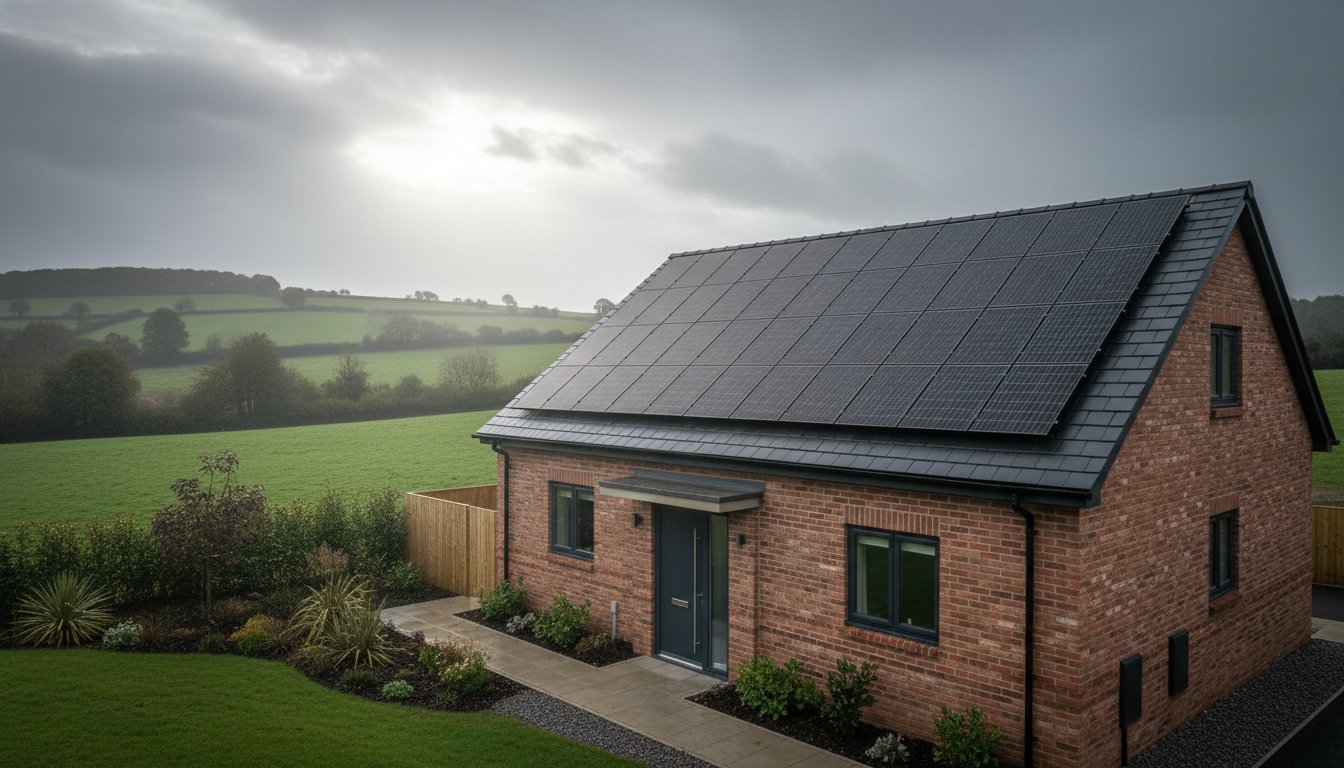
Why would you install a solar system tested for the Sahara when you live in the West Midlands? It's a common mistake to chase the highest lab efficiency rating only to find those panels underperform during a typical grey afternoon in Stafford or Cannock. You likely worry that a lack of direct sun will kill your ROI, or perhaps you're concerned about how Staffordshire's heavy rain and wind might impact your roof. It's a valid fear when the average 4kWp system costs between £6,000 and £8,000.
We believe the best solar panels for UK weather are those designed for diffuse light and low temperature coefficients, not just peak sunshine. This guide promises to show you which high-yield N-Type panels, such as the 26% efficient AIKO ABC Neostar, actually deliver in our climate. You'll discover how to maximize the 0% VAT incentive before it ends on March 31, 2027, and how to choose a system that turns our local overcast skies into consistent energy savings.
Key Takeaways
- Learn why N-Type silicon and TOPCon technology have become the 2026 standard for capturing energy from diffuse, cloudy light.
- Discover our shortlisted best solar panels for UK weather, focusing on brands that prioritize all-weather yield over simple lab-rated peak performance.
- Determine the specific wind load ratings and protective measures required to keep your installation secure in the exposed Staffordshire climate.
- Understand how high-efficiency inverters and battery storage work together to store "grey day" energy for use during peak evening hours.
- Identify local Staffordshire grant opportunities and government incentives that can help offset the cost of your residential solar installation.
Why UK Weather Requires a Different Type of Solar Panel
Many homeowners assume that solar panels only work when the sky is a perfect, cloudless blue. In Staffordshire, where we average around 1,400 hours of sunshine annually, waiting for the "perfect day" would result in a poor return on investment. The reality is that the best solar panels for UK weather are designed to thrive in diffuse light. This occurs when clouds scatter direct sunlight; a condition that accounts for a significant portion of the total Solar power in the United Kingdom.
Understanding the difference between peak power and energy yield is essential for local residents. Peak power is a lab measurement taken under 1,000 watts per square meter of light at 25°C. Energy yield, however, represents the actual electricity generated over a month or year in real-world conditions. For a property in Leek or Lichfield, you need high-sensitivity cells that harvest energy even when the sky is overcast. While a panel might have a high "nameplate" wattage, its ability to wake up early in the morning and stay active during a grey Tuesday in November determines your actual savings.
The Myth of the Sunny Day
Modern PV technology doesn't need direct "beaming" sun to generate a current. High-quality panels use advanced silicon layers to capture a broader spectrum of light, including the blue and violet wavelengths that penetrate through thick cloud cover during Staffordshire winters. Diffuse light performance is the primary metric for UK ROI. It ensures your system generates power from dawn until dusk, regardless of the weather forecast. When you choose the best solar panels for UK weather, you're investing in hardware that treats a cloudy sky as a viable fuel source rather than an obstacle.
Temperature Coefficients: Why Cooler is Better
It sounds counterintuitive, but solar panels are less efficient when they get too hot. Most systems are tested at a baseline of 25°C. For every degree the panel temperature rises above this mark, its efficiency typically drops by 0.25% to 0.40%. In scorching climates, panels can reach 65°C, causing a massive 15% power loss. Staffordshire's mild, breezy climate keeps panels closer to their optimal operating temperature. This natural cooling effect means a well-ventilated UK system often outperforms the same hardware installed in a desert environment, provided the panels have a low temperature coefficient to manage any rare summer heatwaves.
Decoding 2026 Solar Tech: What Works in Cloudy Conditions?
In 2021, P-Type PERC panels were the market leaders, but by May 2026, N-Type technology has become the definitive choice for the best solar panels for UK weather. The shift isn't just about raw efficiency; it's about how the silicon reacts to our specific environment. N-Type cells use phosphorus instead of boron, which eliminates the Light-Induced Degradation (LID) that plagued older systems. This means your panels don't just start stronger; they maintain their yield for decades without the steep performance drops seen in older models.
A key driver behind this performance is TOPCon (Tunnel Oxide Passivated Contact) technology. This involves adding a microscopic layer of oxide to the cell, which prevents electrons from recombining and wasting energy. For a Staffordshire homeowner, this translates to better low-light capture. When the sky is overcast, every photon counts. This Energy Saving Trust guide to solar panels highlights that choosing the right tech is vital for long-term savings, especially as energy prices remain a concern in 2026.
N-Type TOPCon: The New UK Standard
Modern N-Type panels offer a higher bifaciality factor, often reaching 80% or more. This means the back of the panel is more efficient at capturing light reflected off your roof or the ground. While older 2021-era P-Type panels might struggle to hit 20% efficiency in the field, 2026 N-Type models like the AIKO ABC Neostar regularly achieve 24% to 26% efficiency. This higher ceiling provides more "headroom" for generation on dark winter days, ensuring your battery storage system has enough power to get you through the evening.
Shingled Cells and Shading Resilience
Standard panels are often wired in strings. If a chimney or a stray branch from a Staffordshire oak tree shades one cell, the entire string's output can drop significantly. Shingled cell technology solves this by overlapping the cells and using conductive adhesives. This eliminates the need for busbars and ensures that if one section is shaded, the rest of the panel keeps working at full capacity. It's a game-changer for suburban homes where partial shading is almost unavoidable.
To maintain this shading resilience, you must keep the surface free from debris. Regular solar panel maintenance in Staffordshire ensures that bird droppings or lichen don't create permanent "hot spots" that bypass these clever circuit designs. If you want to see how these technologies fit your specific roof layout, our team can design bespoke residential solar PV systems tailored for local conditions.
The Best Solar Panels for UK Homes: 2026 Top Picks
Identifying the best solar panels for UK weather involves balancing raw power with the ability to perform when the clouds roll over the Staffordshire Moorlands. In May 2026, the market has split into two clear categories: ultra-high efficiency leaders and "all-weather" workhorses. While lab tests provide a baseline, our recommendations focus on field performance in the damp, overcast conditions typical of the West Midlands.
The AIKO Neostar Series currently leads the pack with efficiency ratings reaching 26%. It utilizes All-Back Contact (ABC) technology, which removes all metal grid lines from the front of the cell. This creates a sleek, pure-black aesthetic that satisfies local planning preferences in conservation areas like Lichfield while maximizing the surface area available for light absorption. For those with limited roof space, the SunPower Maxeon 7 remains the gold standard, offering a 40-year warranty that is unmatched in the industry. It's built to withstand extreme weather cycles without the micro-cracking often seen in budget alternatives.
For homeowners seeking a balance between cost and performance, the DMEGC Full Black and LONGi Hi-MO Series are the 2026 volume leaders. DMEGC panels have gained a reputation in the Midlands for their consistent yield in low-light environments. Meanwhile, the REC Alpha Pure-RX is the "all-weather" champion. It features a reinforced frame design capable of handling snow loads up to 7,000 Pascals, making it ideal for more exposed Staffordshire properties.
Premium Performance: AIKO vs. SunPower
Choosing between AIKO and SunPower often comes down to your long-term goals. If you want the absolute highest energy density to charge a large battery bank or an EV, AIKO’s 26% efficiency is hard to beat. However, SunPower Maxeon 7 panels are engineered with a solid copper foundation. This makes them nearly immune to the corrosion and thermal expansion that can occur during wet UK winters. On a typical Staffordshire semi-detached roof, both brands offer the "all-black" look that blends seamlessly with traditional slate or clay tiles.
The Best Value All-Rounders for 2026
DMEGC has become a staple for UK residential installs because they don't over-promise on "sunshine specs." Instead, they focus on spectral sensitivity, ensuring the panels stay active even under the heavy grey skies of a Staffordshire autumn. When paired with a high-efficiency inverter, these panels provide a faster ROI for many families. The following table compares the top 2026 contenders based on real-world UK criteria:
- AIKO Neostar: 26.0% Efficiency | Exceptional Low-Light Rating | 25-Year Warranty
- SunPower Maxeon 7: 24.7% Efficiency | High Low-Light Rating | 40-Year Warranty
- REC Alpha Pure-RX: 22.6% Efficiency | Very High Low-Light Rating | 25-Year Warranty
- DMEGC Full Black: 22.3% Efficiency | High Low-Light Rating | 25-Year Warranty
Our team at Margav Solar specializes in designing residential solar PV systems that match these specific panel strengths to your home's orientation and shading profile.
Planning for Staffordshire Conditions: Wind, Rain, and Shading
While light capture is vital, the best solar panels for UK weather must also survive the physical battering of a Staffordshire winter. Our local climate presents a specific challenge: high humidity and persistent dampness. Inland counties like Staffordshire often see humidity levels exceed 80% during the colder months. This moisture can penetrate poorly sealed panels, leading to Potential Induced Degradation (PID). This chemical process saps your system's power over time. Choosing panels with Salt Mist Severity 6 certification ensures the internal components remain hermetically sealed against our wet environment for decades.
Professional installation is the only way to guarantee these weather-seals remain intact. Uncertified contractors often overlook the subtle ways water can ingress through mounting points or poorly managed cabling. A system that isn't properly grounded or sealed becomes a liability during the heavy rainstorms we frequently see in the West Midlands. Ensuring your system is built to last requires a focus on mechanical strength as much as electrical efficiency.
Wind Loads and Mechanical Strength
In exposed areas like the Staffordshire Moorlands, wind pressure is a serious consideration for any roof-mounted system. You should look for panels with a minimum front-load rating of 5400 Pascals (Pa) and a rear-load rating of 2400 Pa. These numbers represent the panel's ability to resist the weight of heavy snow and the "uplift" caused by high winds. The strength of the panel is only half the battle; the rails and clamps used during solar panel installation in Staffordshire must be equally robust. Ensuring your installer holds NICEIC certification is vital for electrical safety, as it confirms they understand how to manage cable insulation and junction boxes in wet weather conditions.
Bird Proofing and Local Pests
Pigeons are a significant threat to UK solar ROI. The gap between your roof and the panels provides a warm, sheltered nesting site. Debris from nests blocks airflow, causing panels to overheat and lose efficiency. In extreme cases, bird droppings can cause permanent "hot spots" on the silicon cells. We recommend integrated bird mesh, which wraps around the perimeter of the array. It's essential to use specialized clips rather than screws for this, as drilling into the panel frame can void your manufacturer's warranty. If you want to protect your system from local pests and the elements, our team offers specialized solar panel maintenance and cleaning services to keep your yield at its peak.
Maximising Your Yield: The Role of Inverters and Batteries
Selecting the best solar panels for UK weather is only half the journey. To turn those photons into usable electricity for your Staffordshire home, you need a high-efficiency inverter and a robust storage solution. The inverter acts as the brain of your system, converting the DC power from your roof into AC power for your appliances. If your inverter is outdated or inefficient, you could lose up to 10% of the energy your panels worked so hard to harvest during those brief windows of Staffordshire sunshine.
Smart monitoring has become the standard for homeowners in May 2026. Platforms like the GivEnergy Cloud guide explain how you can track your generation in real-time. This visibility allows you to adjust your energy habits based on local weather patterns; you can choose to run heavy appliances like dishwashers when your generation is at its peak rather than drawing expensive power from the grid later in the day.
Hybrid Inverters and Smart Storage
Staffordshire's weather is notoriously unpredictable. You might experience a burst of high generation at 11:00 AM followed by a dark, rainy afternoon. Without solar battery storage, that surplus energy is exported back to the grid for a small payment, only for you to buy it back at a much higher price in the evening. A battery allows you to capture every watt of "grey day" energy for use when the sun goes down.
If you have an existing system that feels underpowered, inverter upgrades can breathe new life into your setup. Modern hybrid inverters from brands like GivEnergy are specifically designed for the UK's dual-fuel economy. They allow for seamless integration with off-peak energy tariffs and EV charging points, making them the best solar panels for UK weather companions available today.
The Final Step: Professional Installation
The complexity of UK roof types, from Victorian slate to modern clay tiles, requires a seasoned hand. MarGav Solar brings 20 years of experience to every project, ensuring that your system is balanced for the specific wind and shading profiles of your property. We don't just bolt panels to a roof; we engineer a complete energy solution that stands up to the damp Midlands climate.
Safety and compliance are non-negotiable for any residential project. Our NICEIC certification provides peace of mind that your installation meets the highest UK safety standards. This is essential for your home insurance and for accessing the Smart Export Guarantee (SEG). Ready to take the next step? Get a tailored solar quote for your Staffordshire home from MarGav Solar and start maximizing your energy independence today.
Start Generating Clean Energy Regardless of the Forecast
Choosing the right system means looking beyond the peak sunshine hours of summer. You now understand that N-Type TOPCon cells and high-yield inverters are the true drivers of energy independence in the West Midlands. By prioritizing panels with high diffuse light sensitivity and robust wind load ratings, you ensure your investment survives the Staffordshire moorlands while delivering a consistent return. The best solar panels for UK weather are only as effective as the team that installs them.
MarGav Solar brings over 20 years of solar expertise specifically to residential projects across Staffordshire. Our NICEIC-certified installers specialize in creating bespoke systems that handle everything from local bird populations to the damp humidity of a British winter. Don't leave your energy future to chance or generic lab specs. Request a Professional Solar Consultation with MarGav Solar today to see how we can optimize your roof for 2026 and beyond. It's time to turn those grey skies into a powerful asset for your home.
Frequently Asked Questions
Do solar panels work on cloudy days in the UK?
Yes, solar panels generate electricity on cloudy days by capturing diffuse radiation. While output is lower than in direct sunlight, modern cells can still produce between 10% and 25% of their rated capacity under heavy overcast skies. This ensures your home continues to receive a steady stream of power throughout a typical British afternoon.
Which solar panel has the best low-light performance in 2026?
N-Type TOPCon technology currently offers the best low-light performance in 2026. These cells are designed to be more sensitive to the blue and violet light spectrums that penetrate clouds. This makes them the best solar panels for UK weather because they start generating power earlier in the morning and continue later into the evening than older P-Type models.
How much electricity will solar panels produce in a UK winter?
A typical UK system produces about 20% of its total annual energy during the six months between October and March. Shorter daylight hours and lower sun angles reduce the daily yield. However, a 4kWp system can still generate enough to cover base loads like fridges and standby devices during a clear winter day, especially when paired with battery storage.
What is the most efficient solar panel available in the UK right now?
As of May 2026, the AIKO ABC Neostar and the Perlight Black Grid are the most efficient panels available, reaching ratings of up to 26%. This high efficiency allows you to generate more power from a smaller roof area. It's a significant jump from the 20% efficiency ratings that were common just a few years ago, making them ideal for smaller Staffordshire roofs.
Are solar panels worth it in Staffordshire with our weather?
Solar installations are highly effective in Staffordshire, with typical 4kWp systems saving households between £500 and £800 annually on electricity bills. Since 2019, the Staffordshire Warmer Homes initiative has helped over 1,000 residents improve their energy efficiency. With 0% VAT available until March 31, 2027, the financial case for local homeowners remains very strong regardless of the cloud cover.
What happens to solar panels during a UK storm or high winds?
Quality solar panels are engineered to withstand wind loads of up to 5400 Pascals, which is equivalent to 130mph winds. This is well above the typical storm speeds recorded in the Midlands. The mounting system is just as important as the panels. Professional installers ensure the rails are bolted securely to the roof rafters to prevent any movement during high winds.
How long do solar panels last in the UK climate?
Most modern solar panels are designed to last between 25 and 30 years in the UK climate. Premium models like the SunPower Maxeon series now carry 40-year warranties. While the panels will continue to work after this period, their output will slowly degrade by about 0.4% to 0.5% per year. This long lifespan ensures the system pays for itself multiple times over.
Do I need to clean my solar panels because of UK rain?
While UK rain provides a basic level of rinsing, it isn't a substitute for professional cleaning. Rainwater often leaves behind dust and mineral streaks that can block light. Over time, bird droppings and lichen can build up, creating "hot spots" that reduce your total yield. Experts recommend a professional clean every 12 to 24 months to maintain your warranty and performance.


