
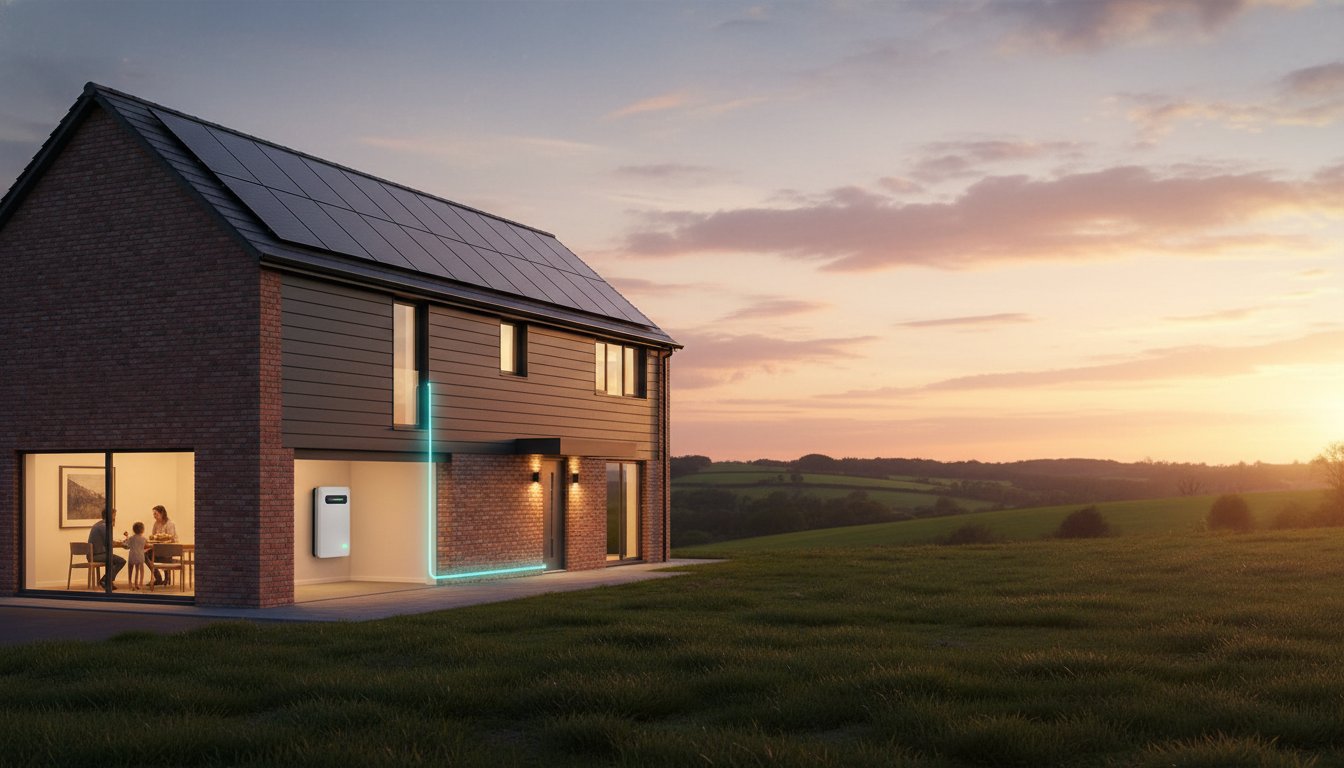
What if the secret to a profitable solar panel investment UK isn't actually the panels themselves, but how you store and manage the energy they produce? In 2026, the conversation has shifted. It's no longer just about sticking glass on your roof; it's about building a smart energy ecosystem that protects you from volatile grid prices.
It's natural to feel hesitant when faced with high initial costs or the confusing maze of Smart Export Guarantee (SEG) rates. You want to be certain that your money is working as hard as possible. We understand that choosing the right path, and ensuring you work with a certified installer, feels like a high-stakes decision for your home and your future finances.
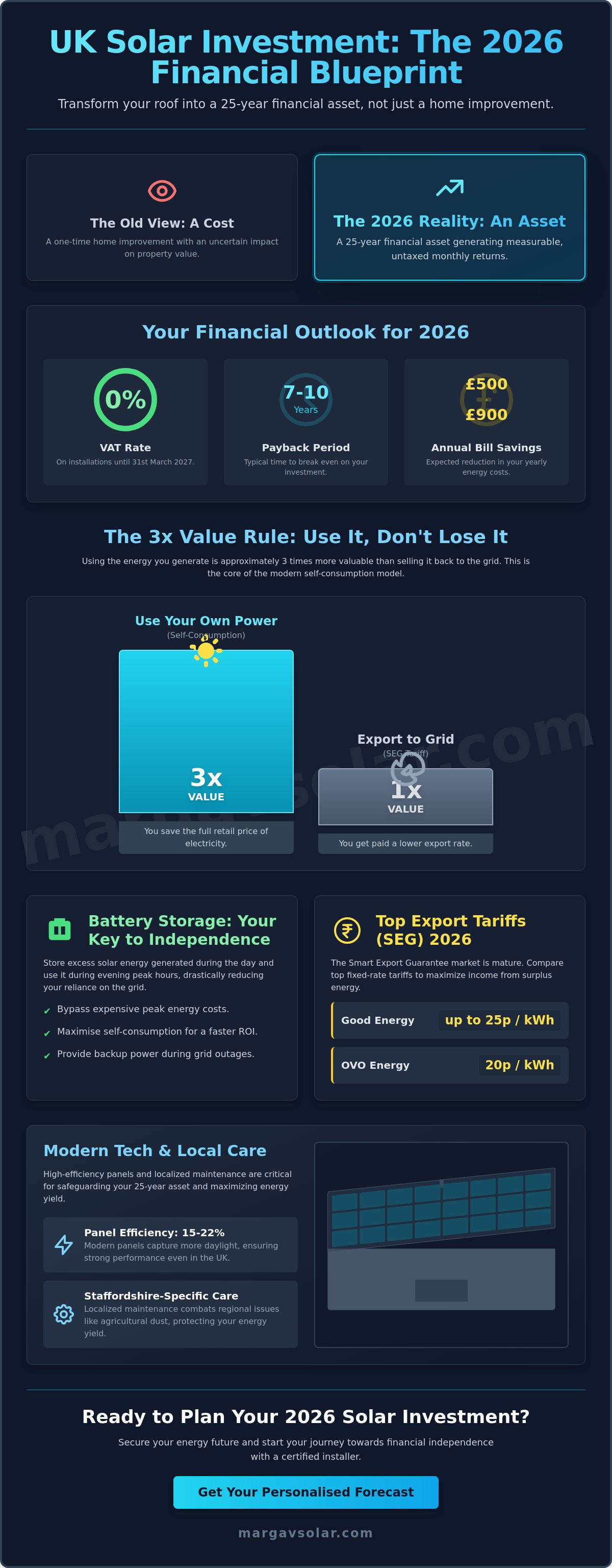
This guide reveals the 2026 financial reality for homeowners, specifically looking at how you can achieve a 10 to 15 year financial forecast and significantly reduce your monthly outgoings. You'll discover current tax benefits like the 0% VAT rate available until 31st March 2027, the impact of battery storage on your ROI, and how to ensure your Staffordshire property is primed for maximum energy independence and increased value.
Key Takeaways
- Understand why shifting your perspective from a simple home improvement to a 25-year financial asset is the first step toward long-term energy independence.
- Learn how to accurately forecast your solar panel investment UK by calculating the combined impact of grid savings and the latest export tariffs.
- Explore how modern battery technology and smart tariffs allow you to bypass peak energy costs and significantly accelerate your break-even point.
- Discover why localized maintenance is the only way to safeguard your energy yield against Staffordshire’s specific environmental conditions like agricultural dust.
- Access a streamlined roadmap for your installation journey that addresses common concerns about property resale and future equipment upgrades.
The Financial Landscape of Solar Panel Investment in the UK for 2026
Thinking of a solar panel investment UK as a simple home improvement is a mistake. In 2026, it's more accurate to view it as a 25-year financial asset. Unlike a new kitchen or a conservatory, solar panels generate a measurable monthly yield by lowering your overheads. While property trends fluctuate, the ability to produce your own power remains a tangible benefit that appeals to future buyers and protects your own bank balance.
Energy independence is no longer a buzzword. It's a strategic hedge against market volatility. By generating your own electricity, you create a buffer against the price spikes that have become common in the mid-2020s. Contrast this with traditional savings accounts. While interest rates might look attractive, those returns are often taxable and can be eroded by inflation. The savings you make on your energy bills are effectively an untaxed return on your capital. Every kilowatt-hour you don't buy from the grid is money that stays in your pocket, regardless of what happens to the pound.
The history of Solar power in the United Kingdom shows a steady move toward decentralized energy. This shift has turned residential roofs into micro-power plants. For many, the goal has shifted from simply helping the environment to securing a predictable financial future in an unpredictable energy market.
Why 2026 is a Turning Point for UK Solar
Several factors make 2026 a unique window for investment. The Smart Export Guarantee (SEG) market has matured, with providers like Good Energy offering up to 25p/kWh and OVO Energy at 20p/kWh for exported power. Additionally, the 0% VAT rate on installations remains in effect until 31st March 2027. This provides a significant saving on the initial outlay before the rate is scheduled to return to 5%. We've also seen a total shift from the old "feed-in" mindset to a self-consumption model. Modern systems focus on using as much of your own energy as possible, rather than just selling it back to the grid for a pittance.
Understanding the ROI Timeline
Most homeowners want to know when they'll see a profit. For a modern residential system, the typical payback period now sits between 7 and 10 years. This timeline depends on variables like your roof orientation and how much electricity you use during daylight hours. High-efficiency panels, which now reach 15-22% efficiency, help accelerate this process. It's also worth considering that the quality of your solar panel installation plays a huge role in performance. Shading from trees or chimneys can drag down your ROI, so a professional assessment is vital to ensure your 2026 investment delivers the expected £500 to £900 in annual bill savings.
Calculating the Real Return: Beyond the Upfront Cost
Determining the true value of a solar panel investment UK requires looking past the initial invoice. Most homeowners focus on the upfront cost, but the real financial story is told through three distinct streams: immediate bill reduction, export revenue, and the long-term appreciation of your home's value. There's also an invisible cost to consider: the opportunity cost. Every month you delay installation is another month your household remains fully exposed to the fluctuations of the national grid energy prices.
Don't be misled by the common myth that the UK's weather isn't suitable for solar. Even in the Midlands, modern panels are designed to capture daylight, not just direct sunshine. While the South East enjoys over 1,600 annual sunlight hours, Staffordshire's consistent daylight levels provide more than enough energy to drive a strong return. This reliability is why the UK Government's Solar Roadmap continues to emphasize residential solar as a pillar of the nation's energy strategy. By generating your own power, you're effectively locking in your electricity rates for the next two decades.
Direct Savings vs. Export Income
Using the energy you generate is roughly three times more valuable than selling it back. When you use your own solar power, you save the full retail price per unit. If you export it, you receive the Smart Export Guarantee (SEG) rate, which is currently lower. To maximize your return, you should compare the best rates available in 2026. Current competitive fixed-rate tariffs include:
- Good Energy: 25p/kWh
- OVO Energy: 20p/kWh
- EDF: 18p/kWh
- E.ON Next: 17.5p/kWh
Keep in mind that some of the highest rates may require you to have your system installed by the energy provider, so it's vital to check the specific terms of each tariff.
The "Green Premium" on UK Property Value
Your solar system isn't just an energy tool; it's a major selling point. In 2026, an improved Energy Performance Certificate (EPC) rating is a key factor for buyers looking to avoid high running costs. Houses with solar installations in Staffordshire often see faster sale times because they offer built-in protection against future energy crises. Buyer confidence relies heavily on the quality of the work. Ensuring your system has the correct NICEIC certification is crucial for proving the safety and longevity of the installation during a property survey. If you're ready to see how these factors apply to your specific roof, you can explore our residential solar solutions to get started. High-quality components and transferable warranties mean your investment remains a valuable asset for the next owner.
Maximising ROI with Battery Storage and Smart Technology
In 2026, a solar panel investment UK is no longer just about the panels on your roof. It's about how you manage that energy once it's generated. If you're relying on panels alone, you're likely only using about 30% of your generated power. The rest gets sent back to the grid for a lower rate than what you pay to buy it back later. Adding a battery changes that dynamic entirely. It's often the difference between a lengthy payback period and hitting your break-even point in just 7 to 10 years.
Smart technology has turned static systems into dynamic financial assets. With "Time of Use" tariffs, your battery can intelligently charge from the grid when prices are at their lowest, such as the middle of the night. You then use that cheap power during expensive peak hours. This synergy becomes even more powerful when you integrate EV charging points. By fueling your vehicle with excess solar or cheap off-peak grid power, you're effectively eliminating one of your largest household expenses. According to UK government data on solar installations, this integrated approach is why adoption continues to climb despite shifting economic landscapes.
The Battery Storage Multiplier
The impact of solar battery storage on your ROI is massive. By storing power for evening use, you can increase your self-consumption from 30% to over 80%. Modern lithium-ion batteries are built to last, typically offering a lifespan of 10 to 15 years, which far outpaces older lead-acid technology. To truly master your savings, platforms like GivEnergy Cloud provide real-time data. This allows you to track every penny saved and adjust your usage patterns to ensure your investment is performing at its peak.
Smart Inverters and Future-Proofing
Your inverter is the brain of the entire operation. It converts raw solar energy into usable power and dictates how your battery and EV charger interact. While panels can last 25 years, you should budget for inverter upgrades around the 12-year mark to keep your system efficient. Modern smart inverters now use AI to manage home energy loads automatically, offering several benefits:
- Weather Integration: Systems can pre-charge batteries if a cloudy day is forecast.
- Load Balancing: Automatically prioritizing high-drain appliances when solar generation is at its peak.
- Grid Response: Selling energy back to the grid during "peak events" when export rates are highest.
This level of automation ensures your home is always running on the most cost-effective energy source without you having to lift a finger. It moves solar from a passive "fit and forget" technology to an active tool for wealth protection.
Protecting Your Asset: The Importance of Maintenance and Local Expertise
Building a solar panel investment UK is only half the battle. To ensure that your 25-year asset actually pays off, you have to treat it like a high-performance vehicle rather than a "fit and forget" appliance. You wouldn't ignore a drop in your pension's value, so you shouldn't ignore a drop in your solar yield. Dust, grime, and bird droppings act like a physical barrier between your panels and the sun. In rural areas across Staffordshire, agricultural dust from seasonal harvests can settle on your system, creating a film that blocks light and eats into your profits. If you don't address this buildup, you're essentially throwing away a portion of the £500 to £900 in annual savings your system is designed to provide.
Staffordshire homeowners often face specific environmental challenges. Bird fouling is more than just an eyesore; the high acidity in droppings can cause permanent "hot spots" on solar cells. These hot spots lead to premature degradation and can eventually cause a panel to fail. A dormant fault in a single string of panels can go unnoticed for months if you aren't checking your monitoring app daily. This silence is expensive. Every week a fault remains unresolved is a week of lost generation that you'll have to replace with expensive grid electricity. Professionals can spot these issues during a routine health check before they become costly repairs.
The ROI of Professional Cleaning
Many people assume a quick spray with a garden hose is sufficient. It's not. DIY cleaning often leads to micro-scratches on the glass or the use of harsh chemicals that strip away specialized anti-reflective coatings. These mistakes can void your manufacturer warranties and permanently lower your system's efficiency. Industry data suggests that heavily soiled panels can lose between 15% and 25% of their generating capacity. Investing in regular solar panel maintenance ensures your glass remains pristine and your electrical connections stay secure. If you want to keep your system running at peak performance, you can book a professional maintenance service to protect your long-term yield.
Choosing a Staffordshire Expert
Local knowledge is a major factor in the longevity of your investment. An installer with 20+ years of experience understands the specific grid constraints and planning nuances within the Staffordshire area. They'll know which mounting systems stand up best to local wind loads and how to navigate "permitted development" rights for listed buildings or conservation areas. When verifying an installer, always check for NICEIC and MCS credentials. These certifications aren't just badges; they're your guarantee that the work meets the strict safety standards required for insurance and Smart Export Guarantee eligibility. A local expert won't just install your panels; they'll ensure the entire system is optimized for your specific roof and local climate.
Next Steps: Planning Your Solar Investment for 2026
Once you understand the financial benefits and the role of technology, the final stage is moving from theory to reality. A successful solar panel investment UK requires a structured approach to ensure the hardware matches your specific household needs. You shouldn't view this as a series of separate purchases. Instead, planning a "whole system" that includes panels, battery storage, and EV charging points from the outset ensures all components communicate correctly. This integrated approach maximizes your efficiency from day one and prevents the technical bottlenecks often found in piecemeal upgrades.
The process of going solar in Staffordshire is more streamlined than many homeowners realize. Most residential installations fall under "permitted development" rights, meaning you likely won't need full planning permission. The key conditions are that panels must not protrude more than 200mm from the roof surface and cannot be higher than the highest point of the roof. If you live in a conservation area or a listed building, different rules apply. This is where local expertise becomes vital during the planning phase to ensure your system is compliant and your investment is secure.
From Consultation to Installation
Your journey to energy independence follows a clear five-step roadmap designed to eliminate guesswork and ensure technical accuracy:
- Step 1: Desktop Survey: Using high-resolution satellite imagery to perform a detailed shade analysis and assess your roof's orientation.
- Step 2: Bespoke Design: Creating a system that balances Solar PV with Battery Storage and EV Charging based on your actual annual consumption patterns.
- Step 3: Contract Review: Reviewing fixed-price quotes and ensuring the installer holds the necessary MCS and NICEIC certifications for SEG eligibility.
- Step 4: Professional Installation: Fitting the physical hardware and configuring the smart monitoring software for real-time tracking.
- Step 5: Commissioning: Final testing and system handover so you can begin tracking your first energy bill savings immediately.
Securing Your Energy Future
A common concern for homeowners is what happens if they decide to move house. You don't lose your investment. A solar system is a permanent fixture that increases property value, and all equipment warranties are typically tied to the property, not the individual owner. This means the long-term performance guarantees on your panels and the coverage on your battery and inverter remain valid for the next occupant. This transferability makes solar an even more attractive asset for those who might move before the 25-year lifespan of the panels is complete.
With the 0% VAT rate on solar and battery installations scheduled to expire on 31st March 2027, now is the ideal window to lock in your costs. Ongoing support and maintenance contracts are also available to ensure your system continues to deliver the expected yield for decades to come. If you're ready to move away from grid dependency and secure your financial future, you can contact MarGav Solar for a bespoke 2026 ROI forecast. Taking a proactive approach today ensures your home remains efficient, valuable, and protected against future energy market shifts.
Securing Your Energy Independence for the Decades Ahead
A solar panel investment UK has evolved into much more than just a way to lower your carbon footprint. In 2026, it represents a robust financial strategy that combines immediate bill savings, export revenue, and increased property value. By integrating battery storage and smart monitoring, you can bypass peak grid prices and hit your break-even point faster than ever before. The longevity of this asset depends on professional maintenance and choosing experts who understand the unique environmental factors in Staffordshire.
Don't leave your financial future to the whims of the energy market. As a Staffordshire local specialist with 20+ years of industry expertise, our NICEIC certified installers are here to help you navigate the transition to clean energy. Whether you're looking for a full residential PV system or an upgrade to your existing setup, we provide the technical knowledge needed to maximize your returns. Take the first step toward a more predictable energy bill today. Get Your Bespoke Solar ROI Quote from MarGav Solar and discover the true potential of your roof.
Frequently Asked Questions
How much does a typical solar panel investment cost in the UK in 2026?
The total cost of a solar panel investment UK depends on several variables including the number of panels required, the capacity of your battery storage, and the complexity of your roof. While every home is different, the 0% VAT rate on installations remains a major financial incentive until 31st March 2027. It's best to consult with a specialist to determine the specific hardware needed to meet your household energy demands.
How long is the average payback period for solar panels in Staffordshire?
Most residential systems in Staffordshire now achieve a full return on investment within 7 to 10 years when paired with battery storage. This timeframe has shortened in recent years because of the rising cost of grid electricity and the higher efficiency of modern PV cells. By maximizing your self-consumption, you can significantly accelerate your break-even point and begin generating a pure profit sooner.
Do I need planning permission for solar panels in the UK?
Planning permission is usually not required for residential solar installations as they are typically covered under permitted development rights. To qualify, panels must not protrude more than 200mm from the roof surface and cannot be installed above the highest point of the roofline. Different rules apply to listed buildings, conservation areas, or ground-mounted arrays exceeding 9 square meters, so you should always verify local restrictions first.
Can I still make money from solar panels without a battery?
You can still generate a financial return without a battery by using the Smart Export Guarantee (SEG) to sell excess power back to the grid. In 2026, some providers offer competitive fixed rates as high as 25p per kilowatt-hour for exported energy. However, you'll generally see a higher ROI by using a battery to store that power for evening use rather than selling it at a lower export rate.
Will solar panels really increase my property value in 2026?
Solar installations are a significant asset in the current property market, often increasing a home's desirability by improving its Energy Performance Certificate (EPC) rating. Buyers are increasingly looking for homes with "green" infrastructure that offers protection against volatile energy prices. A professionally installed system with a clear maintenance history provides tangible evidence of lower future running costs, which can help justify a higher asking price.
What happens to my solar investment if I decide to move house?
The solar system and its associated financial benefits stay with the property and typically transfer to the new owner. All remaining equipment warranties for the panels, battery, and inverter are usually tied to the hardware rather than the individual. This adds to your home's equity and ensures that the next occupant can continue to enjoy reduced energy bills and export payments from the day they move in.
How often do solar panels need professional maintenance to maintain ROI?
Professional cleaning and technical inspections are recommended at least once every 12 months to ensure your system continues to perform at its peak. Dirty panels can lose between 15% and 25% of their generating efficiency, which directly impacts your monthly savings. An annual health check also allows technicians to identify potential inverter issues or electrical faults before they lead to a complete system shutdown or expensive repairs.
Is the UK weather efficient enough for a high-yield solar investment?
Modern technology ensures that a solar panel investment UK is highly efficient, as panels generate electricity from daylight rather than just direct heat. Even in the Midlands, a correctly oriented system can save a household between £500 and £900 on annual electricity bills. While the South East enjoys the most sunlight hours, Staffordshire's daylight levels are more than sufficient to drive a profitable and reliable energy yield year-round.


