

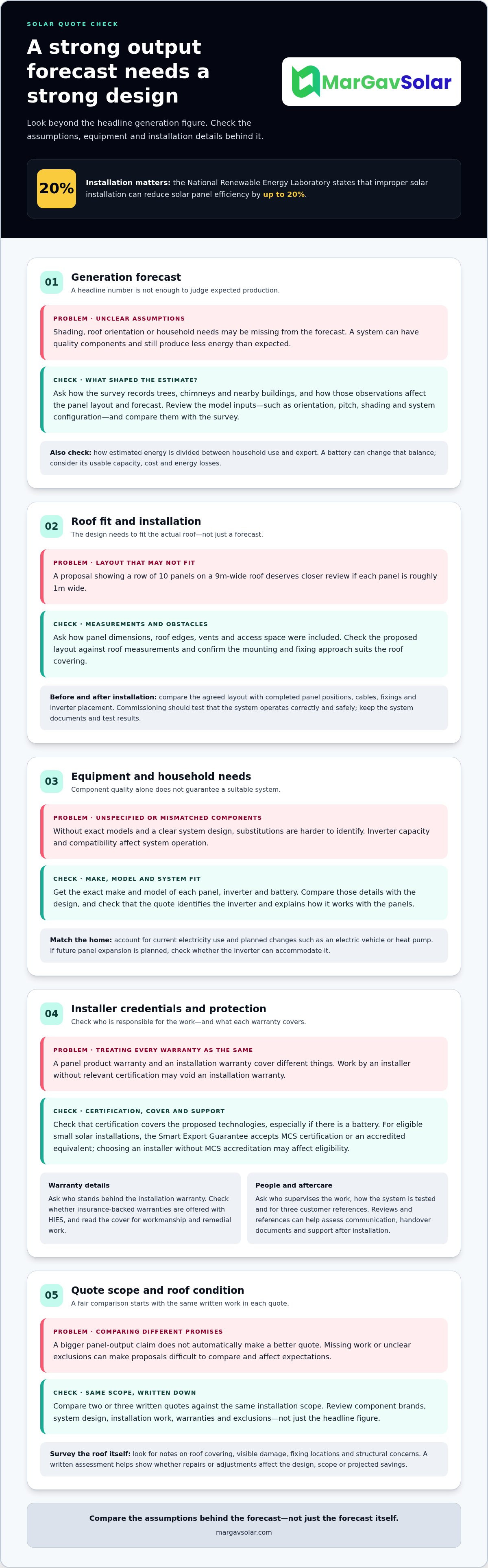
A bigger panel-output claim doesn’t automatically make a better solar quote. To reduce the risks of choosing the wrong solar installer, compare two or three written quotes on the same installation scope, then look beyond the headline figure. Check the component brands, system design, installation work, warranties and exclusions.
It is understandable to focus on how much electricity a system is forecast to produce, but that figure depends on more than the panels. A weak roof assessment, unclear assumptions or work missing from the quote can leave you with a system that does not meet expectations.
This guide explains how to assess panel output and spot claims that do not add up. Learn what to look for in equipment and workmanship, how shading and household needs affect system design, and how to compare quotes fairly, including the written installation scope.
Key Takeaways
- Compare the brands, warranties and support behind each system, not just the panel-output claim.
- Look for signs that the proposed layout fits the roof and that installation details have been properly considered.
- Check how shading, roof orientation and household energy use shape the generation forecast.
- Compare quotes against the same written scope so exclusions and missing work are easier to spot.
1. Checking component brands and installation quality
Start with the exact make and model of each panel, inverter and battery in the quote. Matching these details against the system design makes substitutions easier to spot. Check the manufacturers’ warranty terms and whether replacement support seems practical over the system’s working life. Consider whether each manufacturer is likely to remain in business in 20 years, when support may still matter.
Accreditation matters beyond the badge on a website. For eligible small solar installations, the Smart Export Guarantee accepts MCS certification or an accredited equivalent. Choosing an installer without MCS accreditation may affect eligibility. Check that the installer’s certification covers the technologies proposed, especially if the system includes a battery.
Ask how the installation warranty works and who stands behind it. Work carried out by an installer without relevant certification may void an installation warranty. Check whether the installer offers insurance-backed warranties with HIES, and read what the guarantee covers, including workmanship and remedial work. A panel product warranty and an installation warranty cover different things.
Online reviews can reveal patterns in communication, punctuality and aftercare, rather than proving a system’s performance by themselves. Read detailed reviews and case studies, noting whether customers describe support after installation. Before signing, ask for three customer references. Ask each reference about the finished work, handover documents and how issues were handled.
Experience should match the equipment and roof type in your proposal. Ask who supervises the work, what safety practices the installation team follows and how the completed system is tested. Poorly trained roof work can expose people to falls, electric shock and fire risks. A professional installation includes testing to confirm the system operates correctly and safely.
Check that the survey covers the roof itself, not just panel placement. Look for notes on the roof covering, visible damage, fixing locations and structural concerns. A written assessment helps you understand whether repairs or adjustments affect the design, installation scope or projected savings. These checks help distinguish a credible quote from claims that overlook the property’s condition.
2. Poor installation and reduced solar panel efficiency
Poor workmanship can reduce the energy a system produces, even when its panels have strong specifications. The National Renewable Energy Laboratory states that improper solar installation can reduce solar panel efficiency by up to 20%. That makes the installation method, panel placement and electrical connections important parts of the performance claim, not minor details.
Check the proposed panel layout against actual roof measurements. For example, a plan showing a row of 10 panels on a roof measuring 9m wide deserves a closer look if each panel is roughly 1m wide. Ask how the installer accounted for panel dimensions, roof edges, vents and access space. A layout that cannot physically fit may signal rushed measurements or unrealistic output estimates.
Compare the panel and inverter specifications in the quote with the equipment proposed. The inverter converts the panels’ electricity for household use, so its capacity and compatibility affect system operation. The quote should identify both components and explain how they work together. Check that the mounting and fixing approach suits the roof covering, as poor positioning or insecure fixings can affect performance and roof integrity.
Planning requirements for solar panels can depend on the property and its location. Planning requirements can depend on a property's status and location, so check what applies before installation. The property’s status therefore matters before installation planning is finalised. A proposal should account for the roof’s location and the physical arrangement of the equipment.
Before work starts, compare the agreed layout with the completed installation. Check that panel positions match the design and that cables, fixings and inverter placement are consistent with the documented plan. Commissioning should include tests to confirm the system operates correctly and safely. Keep the system documents and test results so you can compare later performance with the original design.
3. Poor system design and reduced energy production
A solar system can use quality components and still produce less energy than expected if its design ignores the property. Trees, chimneys, nearby buildings and roof orientation all affect generation. Ask how the site survey records shading and how those observations inform the panel layout and forecast. Optimisers or microinverters can help with some designs, but they cannot eliminate physical shade.
Look for a forecast that explains its assumptions, not just a headline generation figure. If the proposal uses PV*SOL, review the model inputs, including roof orientation, pitch, shading and system configuration. Compare those assumptions with the survey and ask how the estimated energy is divided between household use and export. A battery can change that balance, but its usable capacity, cost and energy losses also matter.
The system should reflect household needs as well as roof potential. Check whether the design accounts for current electricity use and planned changes, such as adding an electric vehicle or heat pump. An inverter that can accommodate future expansion may suit a household planning to add panels later. Without these considerations, a system may waste available energy or fail to meet the home’s needs.
How much can poor installation reduce output or increase repair costs? The National Renewable Energy Laboratory states that improper solar installation can reduce panel efficiency by up to 20%. Repair costs depend on the fault and the work needed, such as correcting wiring, fixings or inverter issues.
For UK installations, understand the separate protections before agreeing to a design. Panel and inverter product warranties cover equipment, while an installation warranty covers workmanship; work by an uncertified installer may void an installation warranty. Check whether an insurance-backed warranty is available through HIES, and read its terms. Solar PV is a long-term investment intended to save money for a minimum of 25 years, so clear warranty coverage and a forecast grounded in the site matter throughout its operating life.
4. Comparing quotations and installation scope
Compare two or three written quotes line by line, using the same panel capacity and installation scope. This makes unusual exclusions, missing work and claims that don’t match the proposed equipment easier to spot.
Check that each quote names the panels, inverter, mounting system, electrical protection, scaffolding, monitoring and commissioning. Compare the assumptions behind estimated electricity savings too, including household use and export. A lower total may exclude scaffolding or other work, so review every exclusion before comparing prices. Ask for unclear items to be explained in writing, and do not sign under pressure.
Read the contract alongside the quote. It should make clear what work is included, who is responsible for supervision, and how safe access, cable routes and roof weatherproofing will be handled. Subcontracting alone doesn’t prove poor workmanship; the key issues are competence, supervision, accountability and the written scope. Compare warranty terms too: the Energy Market Authority recommends checking warranty details across providers to help avoid unexpected costs.
Planning permission can affect the project scope. In the UK, it is generally not needed for solar panels, but it is needed if a house is listed or within the boundary of a listed building. Make sure the proposal reflects the property’s status and identifies relevant exclusions, rather than assuming every home follows the same route.
To compare performance claims fairly, check that each proposal uses consistent assumptions for future energy prices. Check that each quote uses the same assumptions for generation, self-consumption and export, then compare the resulting estimates rather than headline savings alone. A different forecast basis can make otherwise similar offers appear far apart. Keep the final scope and agreed changes with the signed contract, so you can match delivered work against the written proposal.
MarGav Solar: Residential Solar PV Systems
MarGav Solar provides residential solar PV systems for homeowners in Staffordshire planning an installation or considering how solar could suit their property. Its consultancy and professional installation help turn roof conditions, household electricity use and future energy needs into a proposed system. If you are considering storage, battery solutions can also be part of the plan. EV charging points are another option for households planning to charge an electric vehicle at home.
Use these checks to compare the proposed equipment, generation assumptions, installation scope and warranty terms. Clear answers make it easier to understand what the system is designed to do and what work is included. MarGav Solar also offers solar panel maintenance and cleaning to help care for your system.
Contact MarGav Solar to discuss a residential solar PV system, or visit margavsolar.com.
Make your next solar decision with confidence
Connect the system you are considering with how your household uses energy now and may use it in future. This gives you a clearer basis for deciding what matters most, from generation goals to storage and home charging.
The risks of choosing the wrong solar installer can go beyond disappointing output; unclear responsibilities can also make decisions harder after installation. Keep your priorities in view as you review proposals, and choose a system scope you can understand and assess against your needs.
MarGav Solar offers Residential Solar PV Systems, Battery Storage Solutions and EV Charging Points. If you’re exploring how those options could fit your home, contact MarGav Solar to discuss your options.
A considered decision can help you move forward with greater clarity and confidence.
Frequently Asked Questions
How can I avoid misleading sales claims?
Ask for the assumptions behind each promised outcome and compare equivalent scenarios. Check whether savings estimates reflect your household use, export arrangements and electricity tariff, then get those assumptions in writing. Treat guaranteed bill reductions cautiously: the contract should define what is guaranteed, the conditions attached and the remedy if the stated outcome is missed.
What certifications should I check?
Check that the installer’s current certification covers the technology in your proposal, rather than relying on a general badge. For eligible small solar installations, the Smart Export Guarantee accepts MCS certification or an accredited equivalent. Match the certificate holder’s name to the business named in your paperwork, and check that the certification scope covers the proposed solar and battery equipment.
What are the most common risks of hiring an unqualified solar panel installer in the UK?
Common risks include unsafe roof or electrical work, poor system performance, remedial repairs, warranty problems and difficulty meeting export-payment eligibility conditions. An incomplete handover can also leave you without documents needed for post-installation registration. These are practical risks of choosing the wrong solar installer, with potential consequences for safety, system operation and access to future support.
How can I check whether a UK solar installer is MCS certified and TrustMark registered?
Search the exact business name in the official MCS and TrustMark registers, then compare the listed business with the name on your proposal. Check the current status and whether certification covers the technologies being installed. For eligible small solar systems, MCS certification or an accredited equivalent is accepted for Smart Export Guarantee eligibility. Keep a record of the details you checked.
What are typical UK costs to fix or replace a badly installed solar panel system?
Repair costs depend on the fault, roof access, replacement components and remedial work required. Correcting a wiring issue differs from replacing an inverter or removing and refitting panels. The cost depends on the work involved and is set out in a quote. A written assessment should describe the work needed and separate repairs from component replacements.
What insurance, certifications and electrical qualifications should a UK solar installer have?
Check that the installer has appropriate insurance and current certification covering the proposed solar technologies. Ask for evidence of relevant electrical competence and how the installation team follows electrical safety standards. Clarify who is responsible for electrical work, testing and commissioning, and keep the completion documents. In Staffordshire, match the installer’s exact business name on your paperwork to its certification and insurance details.


