
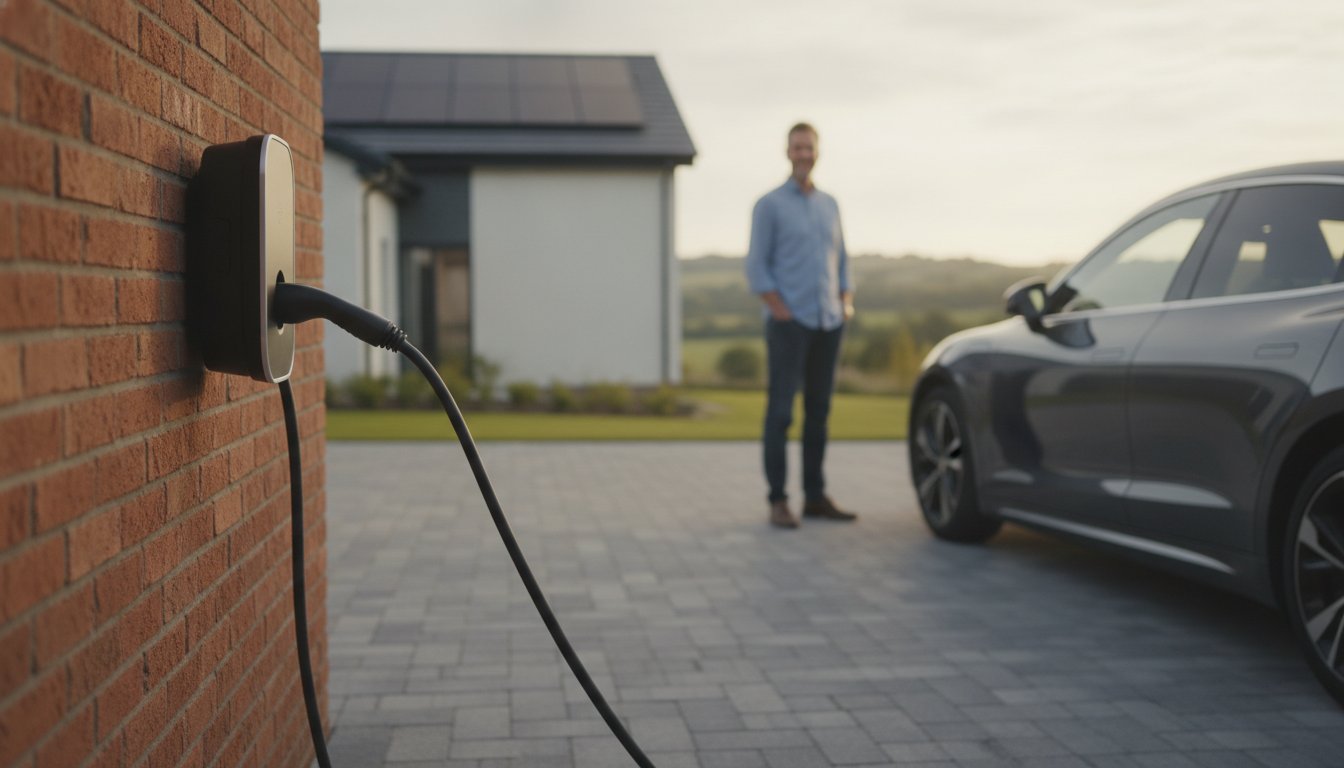
What if the biggest expense of your new electric vehicle isn't the car itself, but the hidden fees lurking behind your garage wall? Most homeowners feel a mix of excitement and anxiety when switching to electric, especially when trying to pin down a definitive EV charger installation cost UK. It's frustrating to see a simple estimate online only to worry that your specific home needs a costly consumer unit upgrade or complex cabling that wasn't mentioned in the initial quote.
We understand that you want a clear, honest breakdown without the technical jargon. This guide promises to reveal the real-world costs of home charging in 2026, including the updated OZEV grant criteria that came into effect on April 1st. You'll learn exactly who qualifies for the increased £500 subsidy and how to spot the requirements that often drive prices up unexpectedly.
We'll also explore why the most cost-effective way to power your car involves looking at your roof, not just your driveway. From navigating grid constraints in Staffordshire to integrating battery storage, this overview of the 2026 landscape ensures you can invest in your home's infrastructure with total confidence.
Key Takeaways
- Budget effectively by breaking down the hardware and labor fees that define the EV charger installation cost UK for the current year.
- Clarify your eligibility for the £500 OZEV grant and learn how the 2026 criteria differ for homeowners, renters, and businesses.
- Identify potential "non-standard" installation triggers, like fuse box upgrades or long cable runs, before you request a quote.
- Discover how combining your charge point with solar PV and battery storage maximizes your return on investment and lowers your price per mile.
- Understand why NICEIC certification and local Staffordshire expertise are vital for a safe, compliant, and well-supported home charging setup.
Average EV Charger Installation Cost in the UK for 2026
Finding the definitive EV charger installation cost UK homeowners can expect in 2026 requires looking at both the hardware and the specialized labour involved. For a standard 7.4kW smart home charger, most people see a total bill between £800 and £1,200. This price typically covers a standard installation where the charger is positioned close to the consumer unit. While it's tempting to stick with a standard 3-pin "granny cable," it's a false economy. These cables charge at a fraction of the speed and lack the smart features required to access cheaper off-peak electricity tariffs. A dedicated 7.4kW wallbox is roughly three times faster, adding 25 to 30 miles of range per hour.
Hardware vs. Labour: Where Your Money Goes
Your investment is split between the physical unit and the expertise required to install it safely. Hardware prices fluctuate based on whether you choose an untethered unit, which requires you to provide your own cable, or a premium tethered model with built-in leads and advanced app controls. High-end units often include load-balancing technology. This feature prevents your car from tripping the house's main fuse when high-energy appliances like the oven or shower are running at the same time. Professional labour accounts for a significant portion of the cost, with the average day rate for a qualified electrician reaching approximately £400 in 2026.
The history of EV incentives in the UK highlights how government support has evolved to meet changing infrastructure needs. In 2026, the OZEV grant offers up to £500, or 75% of the total cost, for eligible renters, flat owners, and landlords. For those who qualify, this subsidy brings the out-of-pocket expense down considerably. However, homeowners in single-unit properties usually pay the full market rate, making it even more important to choose an installer who offers a fixed-price contract for peace of mind.
Total Cost Estimates for 2026
Total project costs vary based on the sophistication of the technology you choose. Entry-level units focus on basic safety and scheduling, often sitting at the lower end of the £800 to £1,200 range. Premium systems that offer seamless integration with solar panels or battery storage solutions sit at the top of the price bracket. These units are specifically designed for homeowners who want to charge their vehicles using self-generated energy, which drastically reduces long-term running costs. Regional variations also persist. While London prices remain high due to increased overheads, local Staffordshire installers often provide more competitive rates while maintaining the same NICEIC-certified standards.
Standard vs. Non-Standard Installation: Avoiding Hidden Fees
Many homeowners are surprised when their final quote exceeds the "starting from" prices seen in advertisements. This discrepancy usually happens because most advertised rates only cover a "standard installation." If your home requires extra work to meet safety regulations or if the charger is located far from your electrical board, the total EV charger installation cost UK providers charge will naturally increase. Understanding these variables before you book a survey helps prevent budget shocks and ensures you aren't paying for unnecessary extras.
What Qualifies as a Standard Install?
A standard installation assumes your home is already "EV ready" in its basic layout. This typically means the charger will be mounted on a main wall within 10 metres of your consumer unit. The installer also expects to find a spare "way" or slot in your existing fuse box to accommodate the new circuit. Your home's earthing arrangement also plays a role; older TT earthing systems often require additional protective equipment to comply with modern EV safety regulations. If the job requires drilling through standard brickwork and running a simple cable along a wall, it stays within the basic price bracket. However, if you have a period property with thick stone walls or require the cable to be hidden under floorboards, the labour time increases quickly.
Common 'Extra' Costs Explained
The most frequent reason for a price hike is an outdated consumer unit. If your electrical board doesn't meet current safety standards or lacks capacity, a full upgrade might be necessary before any charging point can be added. Groundworks are another major factor. If you want your charger on a pedestal at the end of a long driveway rather than on the house wall, trenching is required to bury the cables safely. This involves manual labour and specialized materials that aren't included in a basic package. Additionally, homes with high electrical demand, such as those with electric heating or hot tubs, might need load management devices. These smart sensors ensure your car doesn't overload your main fuse, protecting your home's infrastructure.
Choosing a professional team for your EV charging point installation ensures you receive a thorough site survey. This step is vital for identifying these hidden requirements early. By working with a local expert who offers fixed-price contracts, you can accurately plan your total EV charger installation cost UK and ensure your electrical system is safe for the long term.
UK EV Chargepoint Grants and Incentives in 2026
Government support for electric vehicle infrastructure has shifted focus significantly over the last few years. While the basic EV charger installation cost UK homeowners face is no longer subsidized for those in detached or semi-detached houses, specific groups can still access substantial financial help. As of April 1, 2026, the OZEV EV Chargepoint Grant provides up to £500 or 75% of the total purchase and installation cost, whichever is lower. This is an increase from the previous £350 limit, reflecting the government's push to support those in more complex living situations.
The application process is designed to be relatively hands-off for the applicant. You don't apply for the funds directly; instead, your OZEV-approved installer claims the grant on your behalf and deducts it from your final invoice. It's vital to confirm your eligibility before the work begins, as the current funding cycle is confirmed to run only until March 31, 2027. Missing this window could mean paying the full market rate for your hardware and labour.
Grants for Renters and Flat Owners
Renters and owners of flats with dedicated off-street parking are the primary beneficiaries of the current residential grant scheme. To qualify, you must live in the property and own or lease an eligible electric vehicle. If you're a tenant, you'll need to provide formal documentation of consent from your landlord or the property management company. The 2026 rules also extended support to households requiring cross-pavement charging solutions, ensuring that those without traditional driveways aren't left behind. This targeted funding helps bridge the gap for residents who face more technical hurdles during installation.
Workplace and Landlord Incentives
Staffordshire businesses and residential landlords can also tap into dedicated funding streams. The Workplace Charging Scheme (WCS) is particularly generous for local companies looking to support their employees or transition their own fleets. This grant offers up to 75% of the cost, capped at £500 per socket for up to 40 sockets. For residential landlords, grants are available per property, making it more affordable to add value to rental units. Beyond direct grants, businesses should consider the tax advantages. Benefit-in-Kind (BIK) rates for electric company cars remain highly competitive, and capital allowances allow firms to write off the cost of the charging equipment against their taxable profits.

Maximising ROI: Integrating EV Charging with Solar and Batteries
While the upfront EV charger installation cost UK might seem like a standalone expense, the real value lies in how it interacts with your broader home energy ecosystem. Relying solely on the grid means you're still tied to fluctuating energy prices. By investing in a professional solar panel installation, you can effectively fuel your car for free. During sunny days, your panels generate electricity that can be fed directly into your vehicle's battery, bringing your fuel cost down to zero pence per mile. This integration transforms your car from a monthly expense into a mobile energy storage unit.
The Power of Solar Diversion
Modern smart chargers offer a specific feature known as solar diversion. This technology monitors your home's energy usage in real time. When your solar panels produce more electricity than your appliances need, the charger automatically diverts that excess green energy into your car rather than letting it spill back into the national grid for a lower export rate. Solar diversion is the ultimate way to future-proof home energy. This approach significantly reduces your reliance on the grid during peak evening hours when electricity prices are at their highest. It ensures that every kilowatt your roof produces stays within your property, maximizing your return on investment.
GivEnergy and EV Synergy
To truly master your long-term savings, pairing a charger with solar battery storage is the gold standard. A battery allows you to capture solar energy during the day and hold it until you return home at night. Using the GivEnergy Cloud, you can monitor exactly how much power your home consumes versus how much your car requires. You can set smart rules to ensure your home battery prioritizes your vehicle's charge or maintains enough reserve to power your lights and heating until sunrise. This holistic strategy beats a standalone charger install because it treats your car as part of a smart, self-sustaining loop.
When you compare grid-only charging to a solar-integrated setup, the long-term savings are stark. Even with the best off-peak tariffs, grid charging still carries an ongoing cost that adds up over thousands of miles. Solar-integrated systems pay for themselves much faster by eliminating that daily expense entirely. If you're ready to see how these systems work together in your own home, you can request a bespoke energy assessment from our Staffordshire team to get an accurate picture of your potential savings.
Choosing an Installer in Staffordshire: Why Local Expertise Matters
Staffordshire homeowners often face a choice between massive national energy brands and local specialists. While big names offer familiarity, they frequently rely on vast networks of sub-contractors to fulfill their orders. This approach can lead to a lack of accountability if you need follow-up support or technical advice six months down the line. Choosing a local expert ensures you have access to engineers who actually know your property and the specific nuances of the Midlands electrical grid. These local insights help ensure your EV charger installation cost UK remains predictable, as a local team can often anticipate regional grid constraints before they become expensive problems.
Local knowledge is particularly valuable when dealing with the Distribution Network Operator (DNO). In Staffordshire, your installer must notify the DNO to ensure the local substation can handle the additional load of a high-powered charger. A specialist who works in the area daily understands these communication channels intimately, preventing administrative delays that can stall your project for weeks. This regional expertise, combined with a commitment to the community, provides a level of security that national call centres simply can't match.
NICEIC and Safety Standards
Safety should always be the priority when adding a high-voltage circuit to your home. Verifying that your installer holds NICEIC certification is non-negotiable for several reasons:
- Insurance Compliance: Most home insurance providers require electrical work to be signed off by a certified professional to maintain your coverage.
- Part P Regulations: Certified installers ensure every aspect of the job complies with the latest building regulations for domestic electrical safety.
- DNO Notification: Professional installers handle the legal requirement of informing the grid operator about your new equipment.
- Future-Proofing: A correctly installed system is less likely to suffer from overheating or circuit failures during heavy use.
By choosing an accredited professional, you're protecting your home and ensuring that your EV charger installation cost UK reflects a high-quality, lasting investment rather than a quick, potentially dangerous fix.
The MarGav Advantage in Staffordshire
MarGav Solar brings over 20 years of renewable energy experience to every project. Unlike national installers who often push a "one-size-fits-all" hardware package, we take a consultancy-led approach. We look at your home's total energy profile, from your fuse box capacity to your potential for solar integration. This ensures your charger isn't just an add-on, but a core part of a smart energy system. We believe in transparency, which is why we provide fixed-price contracts to give you total peace of mind before any work begins.
Our team specializes in creating high-performance setups, particularly for those looking to integrate their charging points with GivEnergy battery systems. From the initial site survey through to long-term maintenance, you'll deal with the same expert team. If you're ready to move away from grid dependency and start charging your vehicle more efficiently, get a fixed-price EV charger quote from MarGav Solar today. We'll help you navigate the 2026 regulations and ensure your home is ready for the future of transport.
Future-Proof Your Home Energy Today
Transitioning to an electric vehicle is a significant step toward a more sustainable lifestyle, but it's essential to get the infrastructure right from day one. By understanding the variables that influence the EV charger installation cost UK, you can avoid unexpected fees and ensure your home's electrical system is safe and compliant. Remember to check your eligibility for the £500 OZEV grant before the March 2027 cutoff. You should also consider how solar integration can turn your car into a truly zero-emission vehicle.
At MarGav Solar, we combine over 20 years of local Staffordshire expertise with a specialized, NICEIC-certified team to deliver installations that last. We focus on creating holistic systems that integrate seamlessly with solar PV and battery storage, providing you with long-term security. If you're ready to take control of your home's energy future, you can Request a Professional EV Charger Installation Quote from our team today. Investing in quality hardware now pays off. It ensures your driveway is ready for the years of innovation ahead.
Frequently Asked Questions
How much does a standard EV charger installation cost in the UK?
A standard installation for a 7kW smart home charger typically costs between £800 and £1,200 in 2026. This price includes the charging unit itself and the professional labour required to connect it to your home's electrical supply. This range represents the baseline EV charger installation cost UK homeowners should budget for when the charger is located close to the consumer unit.
Can I get a grant for an EV charger in 2026?
Yes, the OZEV EV Chargepoint Grant is available for renters, flat owners, and residential landlords until March 31, 2027. As of April 2026, the grant provides up to £500 or 75% of the total cost, whichever is lower. Homeowners in detached or semi-detached houses with private driveways are generally no longer eligible for this specific residential subsidy.
How long does it take to install a home EV charging point?
A standard installation usually takes between 2 and 4 hours to complete. This timeframe includes mounting the wallbox, running the necessary cabling, and performing safety tests to ensure everything is grounded correctly. If your project requires complex groundworks or a consumer unit upgrade, the installation might take a full day of work.
Do I need to upgrade my fuse box for an EV charger?
You'll only need to upgrade your fuse box if it's an older model that doesn't meet current safety standards or lacks a spare "way" for the new circuit. If a consumer unit upgrade is necessary, it can add between £300 and £600 to your total EV charger installation cost UK. We identify these requirements during our initial site survey to avoid surprises.
Can I install an EV charger myself to save money?
No, you shouldn't attempt to install a charger yourself as it involves high-voltage electrical work that must comply with strict building regulations. It's a legal requirement to have the work signed off by a qualified professional. Furthermore, using a non-certified installer will void your equipment warranty and make you ineligible for any government grants.
What is the difference between a tethered and untethered charger?
A tethered charger has the charging cable permanently attached to the unit, while an untethered charger has a socket that requires you to plug in your own cable. Tethered units offer more convenience for daily use because you don't have to retrieve a cable from your boot. Untethered units look neater on the wall and offer more flexibility if you change car brands.
How much can I save by charging my EV with solar panels?
You can reduce your "per mile" fuel cost to 0p by using solar panels and a charger with diversion technology. By capturing excess solar energy that would otherwise be exported to the grid, you effectively fuel your car for free. This integration significantly increases your return on investment compared to relying on even the cheapest off-peak grid tariffs.
Does an EV charger add value to my home in Staffordshire?
Yes, a professionally installed EV charger is a highly desirable feature for modern homebuyers in Staffordshire. It demonstrates that the property's electrical infrastructure is modern and future-proofed. As EV adoption continues to grow locally, having a high-quality charging point can make your home stand out in the competitive Midlands property market, much like how specialized lenders like Morgan Financial recognize the importance of modern, energy-efficient features in the homes they finance.


