

Reducing reliance on the national grid means using more electricity generated or stored at home instead of relying entirely on the network. Solar panels generate power, batteries store surplus electricity, and smart controls can help coordinate energy use with an electric vehicle or heat pump.
Solar panels are often the first consideration, but how technologies work together matters too. An electric vehicle and a heat pump add electrical demand, while solar generation and battery storage can help meet some of it at home. Fuel cells can also generate electricity, depending on their fuel and system setup.
This article explains how these technologies can help, what connected home energy means in practice, and how storage can balance generation and demand. It also covers the limits: reducing grid use does not mean every home can operate independently of the network. The result depends on how generation, storage and household use fit together.
Key Takeaways
- Coordinate EV charging and heat-pump demand with renewable generation to make better use of electricity produced at home.
- Understand how battery storage can shift surplus solar power to later use, while recognising that it cannot solve wider grid transmission constraints.
- Estimate the contribution solar panels and batteries could make by considering household usage, generation patterns and when electricity is needed.
- Choose solar and battery capacity around the home’s energy needs, then explore professional installation options that fit the system.
Connecting electric vehicles, heat pumps and renewable generation
As homes adopt electric vehicles and heat pumps, electricity demand grows. Solar generation can supply some power locally, and coordinating when electricity is generated and used can reduce household imports from the grid.
Household Solar Generation and Grid Use
Solar panels convert daylight into electricity for household use, reducing grid imports when generation and demand coincide. The benefit depends on when the home uses power. An electric vehicle charging during daylight can use solar electricity directly, while evening demand may still require grid power or stored energy.
Heat pumps add electrical demand, so their operation should be considered alongside solar generation. Smart energy systems can help align use with available renewable electricity, but they do not eliminate the need for the grid. Using renewable power locally also avoids transmitting that electricity over longer distances.
Power purchase agreements arrange renewable electricity purchases between generators and buyers, while rooftop solar generates electricity at the property. They serve different purposes: one supports renewable electricity purchasing, and the other produces power on site.
Rules, Incentives and Risks for Home Energy Systems
UK installation requirements depend on the property, equipment and connection, so solar panels, batteries and other home energy systems must be planned around those factors. Home solar and battery systems are advertised with a 0% VAT rate until 31 March 2027. Surplus electricity may be exported, but the payment depends on the export arrangement rather than the amount generated alone.
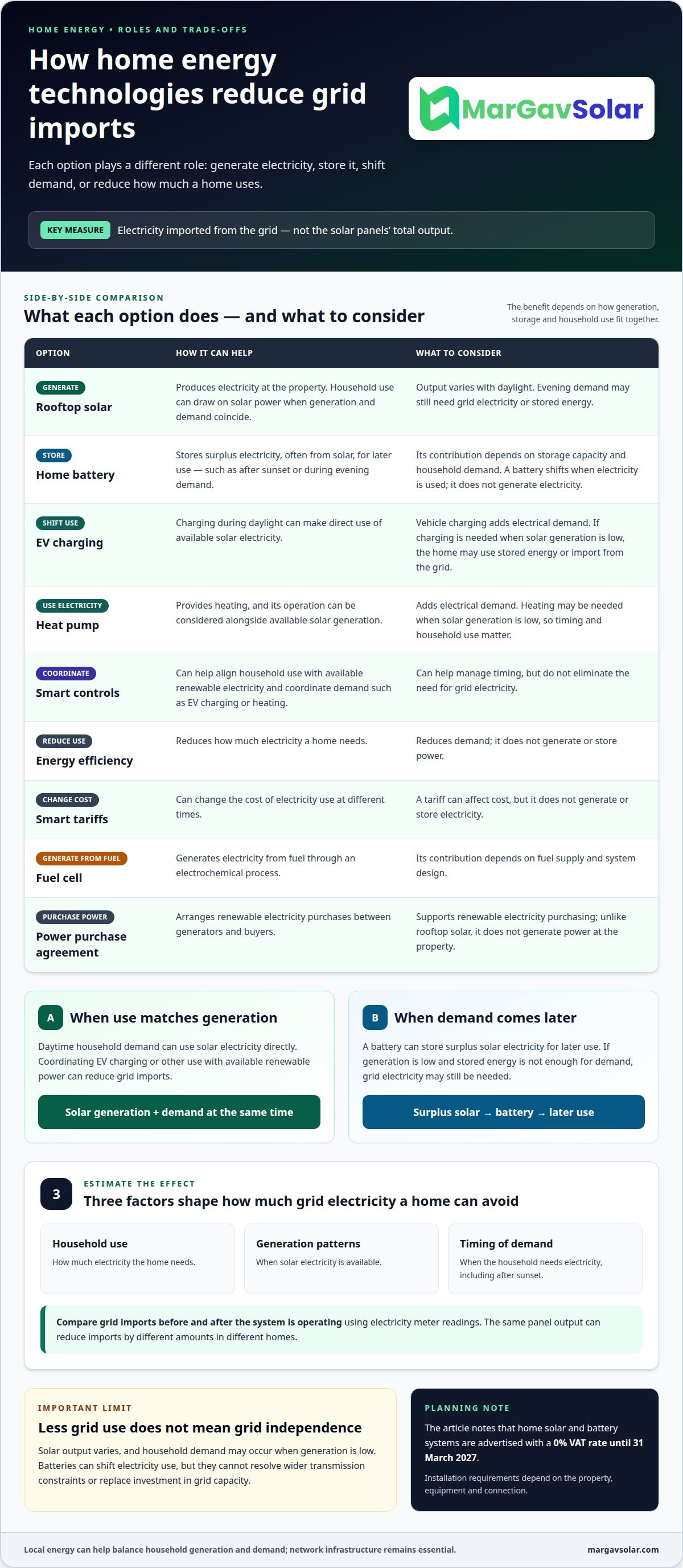
The main limitation is timing: solar output varies, while vehicle charging and heating may be needed when generation is low. Batteries can store surplus renewable electricity, but they cannot resolve wider transmission constraints or guarantee that a home can operate independently of the grid. Grid upgrades address a separate challenge.
Electricity Market Reform also concerns security of supply. The Energy Act 2013 introduced the legislative framework for Contracts for Difference and a Capacity Market. These measures support investment in generation and available capacity, complementing household technologies rather than replacing network infrastructure. Coordinating local demand, renewable sources and investment helps the electricity system accommodate electrification while supporting climate targets.
Battery storage and fuel-cell technology
Home batteries shift stored electricity to the hours a household needs it, while fuel cells generate electricity from fuel. Their roles are different, so the right combination depends on supply patterns and household needs.
Home Battery Storage
A home battery stores electricity, often surplus solar generation, for use later. It can reduce grid imports when panels produce little, such as after sunset. Its contribution depends on storage capacity and household demand. For Britain’s transition towards net zero, batteries can add flexibility, but they cannot move electricity across a constrained network or replace wider investment in the electricity grid.
Batteries and Demand Flexibility
Demand flexibility means shifting electricity use or supply to better match system conditions. A battery can charge when renewable electricity is available and discharge later, helping balance local demand. The system operator still needs enough generation and network capacity, because household storage cannot resolve transmission bottlenecks. CPRE recommends flexible solutions, including batteries, long-duration storage and smart systems, to balance supply and demand.
Comparing Batteries with Other Grid-Reduction Options
Solar batteries store electricity, while heat pumps use it for heating. Energy efficiency reduces how much a home needs, and smart tariffs can change the cost of electricity use, but neither generates or stores power. Pairing a battery with solar can shift some daytime generation to evening use. Each option can help reduce grid imports in a different way.
Choosing a Solar and Battery System Size
There’s no single battery size for every UK household. An estimate should reflect electricity use, solar generation and when demand occurs. A household using more power after dark may value storage differently from one able to use daytime generation directly. Fuel cells convert fuel into electricity through an electrochemical process; their contribution depends on fuel supply and system design. Explore battery storage solutions in relation to household generation and use.
How much can solar panels and batteries reduce grid electricity use in the UK?
There is no single percentage that applies to every UK household: the reduction depends on generation, consumption and timing. Solar panels supply electricity while they are generating, allowing daytime appliances to use power directly. A battery can store surplus for later, such as evening lighting or cooking. The key measure is electricity imported from the grid, not the panels’ total output.
To assess the effect, compare household grid imports before and after the system is operating, using electricity meter readings. Then consider when the household uses power. A home with daytime demand can use more solar generation directly, while one with most demand after sunset may depend more on stored electricity. The same panel output can therefore reduce grid imports by different amounts in different homes.
A battery changes when electricity is used, not how much is generated. It can charge from surplus solar power and discharge when panels produce less, but the result depends on storage capacity and household demand. In brighter periods, generation may cover daytime use and leave surplus to store. In darker periods, lower generation can mean less electricity available later. Grid imports may still be needed when demand exceeds generation and stored supply.
Assess reducing reliance on the national grid across changing seasons, not from one sunny day. Track imported electricity and solar generation over comparable periods, and note whether the battery charged from the panels or the grid. This helps show how much household demand renewable generation actually met. Exported surplus is not the same as electricity used at home, and storage cannot resolve wider network transmission constraints.
What size solar and battery system is suitable for a typical UK household?
There is no standard system size suited to every UK household. Solar capacity should match the roof’s usable area and the home’s electricity demand. An assessment considers roof orientation, shading, available installation space and household energy-use patterns. A partly shaded roof, for example, offers a different amount of suitable panel space from an unobstructed one.
Start by reviewing electricity consumption, then consider when appliances use power. A household that uses electricity during daylight can use more solar generation directly. An evening-heavy routine creates a different balance between panel output and storage needs. Include planned changes too: adding an electric vehicle or heat pump can alter future demand and affect system design.
Battery capacity should reflect how much surplus generation is available to store and when the household needs electricity later. A battery that is too small may not hold all available surplus, while a larger one may offer more capacity than the household can regularly use. The design should also account for the inverter, which converts electricity from the panels into a form household equipment can use.
A practical assessment considers these factors together rather than sizing panels and storage separately. It takes into account roof space, expected generation, household demand, future electrical loads and likely surplus. Seasonal variation matters: generation and household use change throughout the year, so one day’s output does not define the right capacity. The aim is a system suited to the property and its occupants’ electricity use, not an assumed national average.
For a design based on your roof and household needs, request a solar and battery system assessment.
MarGav Solar
MarGav Solar helps households plan how to use more locally generated electricity and reduce grid imports. Its residential solar PV systems and battery storage solutions can be planned together, taking account of roof space, household demand and when electricity is used.
For homes adding electric vehicle charging, an EV charging point can form part of a wider energy plan. MarGav Solar also provides solar panel maintenance and cleaning to help care for existing systems. These services can support both a new installation and better use of existing solar generation.
Contact MarGav Solar to discuss your home’s energy needs and possible next steps.
Make your next energy decision count
Treat reducing reliance on the national grid as an ongoing home-energy goal, not a one-off installation decision. Household routines, heating choices and transport needs can change, so a useful plan considers future needs as well as current electricity use. This helps keep energy choices connected, rather than treating each technology as a separate purchase.
A useful next step is to discuss your home, priorities and possible system options. MarGav Solar can help you explore an approach suited to your circumstances and plans for using energy at home.
Contact MarGav Solar to discuss your options, and take a considered step towards a home-energy setup that works for you.
Frequently Asked Questions
What are the main ways UK homes and businesses can reduce reliance on the national grid?
Homes and businesses can combine on-site renewable generation, battery storage and flexible electricity use. A business, for example, can schedule suitable equipment to run while its solar panels are generating, while a household can time appliance use to match available power. Improving energy efficiency also reduces demand. The right combination depends on the property’s roof, energy-use patterns and whether its main loads occur during daylight or in the evening.
Can UK homes use off-grid or backup power systems, and what equipment is needed?
A home can be designed for off-grid operation or fitted with backup power, but these are different arrangements. An off-grid setup needs local generation, suitable energy storage and equipment designed to manage supply when generation is low. Backup power instead supports selected household circuits during an interruption. System design needs to account for which appliances need power, how long they may need it and how supply is managed safely.
How does UK location, roof direction and weather affect solar generation and energy independence?
Solar output depends on local conditions, roof orientation, shading and weather. In Staffordshire, as elsewhere in the UK, cloudy periods can reduce generation, and shaded roof sections may produce less than unobstructed areas. Roof direction affects when panels receive sunlight, influencing how much electricity a household can use directly. A property assessment can consider these conditions alongside household demand to set realistic expectations for generation and storage.
What are the UK rules for installing solar panels, batteries and home energy systems?
UK installation requirements depend on the property, equipment and connection, so these factors need to be considered when planning solar panels, batteries and other home energy systems. Home solar and battery systems are advertised with a 0% VAT rate until 31 March 2027.


