

Solar can power agricultural equipment, including irrigation, refrigeration, lighting, ventilation and processing systems. UK farms can reduce their reliance on grid electricity by up to 70% through on-site generation. The potential for reducing farm operating costs with solar depends on how much of that electricity the farm can use instead of buying it.
For farms with substantial daytime energy use, that can make solar a practical way to manage running costs. UK farm solar installations typically have payback periods of 3-6 years, although the return depends on factors such as energy use and how well generation matches demand. This article explains how solar can support farm equipment and irrigation, how battery storage can help make more of the electricity generated available later, and what affects savings and payback over time.
Key Takeaways
- Identify which farm operations use the most electricity during daylight, when solar generation can directly offset grid purchases.
- Consider how irrigation schedules and water pumping needs align with solar output to make energy use more efficient.
- Battery storage can help match daytime generation with farm demand later in the day.
- Assess payback by looking at electricity use, the share of solar power used on-site and the system’s long-term operating costs.
Can solar panels power agricultural equipment?
Yes. Farm solar can supply electricity for essential equipment, with the right system matched to operating patterns and site conditions.
Energy Needs Across Farm Operations
Dairy farms use electricity for milking equipment, refrigeration, ventilation and lighting; poultry buildings also need lighting and ventilation. Cold storage draws power to chill produce or other goods, while irrigation systems need energy to pump and distribute water. These different demands affect how much solar electricity a farm can use directly.
Greenhouses can use solar electricity for equipment and lighting, and farm-generated power can also supply electric fencing. Replacing some grid electricity with on-site generation can reduce exposure to changing energy prices and support more sustainable operations. Start by identifying which equipment must keep running, particularly during outages or extreme weather, rather than treating every electrical load as equally critical.
Farm Solar Installation and Management Choices
Rooftop panels can suit farms with suitable building space; ground-mounted installations can work where land is available, while solar carports may use parking areas. The best fit depends on site layout, usable roof or land, and where electricity is needed. According to UK Government, ground-mounted solar installations exceeding 9 square metres require planning permission from Local Planning Authorities.
In the UK, systems up to 16 amperes per phase are treated as microgeneration. The stated threshold is about 3.68 kilowatts for single-phase systems and 11 kilowatts for three-phase systems. Connection arrangements matter as system capacity and the farm’s electrical setup affect how generation can be used. A professional can assess loads and size battery storage to hold surplus daytime electricity for later demand, improving self-consumption.
Solar panels need relatively little maintenance, but monitoring can help identify performance issues, and cleaning may be needed. Dust from machinery and agricultural work can affect panels, so maintenance should suit the farm’s conditions. Pairing generation with critical loads and suitable battery storage can improve resilience and reduce reliance on grid electricity.
How much can a farm save with solar panels?
Solar can lower a UK farm’s electricity bills by replacing some grid purchases with power generated on site. The savings depend on how much solar electricity the farm uses directly and how much it exports.
Savings from On-Site Solar Generation
On-site generation means solar panels produce electricity for the farm to use, reducing the amount bought from the grid. The benefit is greatest when farm operations use power while the panels are generating, because direct use offsets grid electricity.
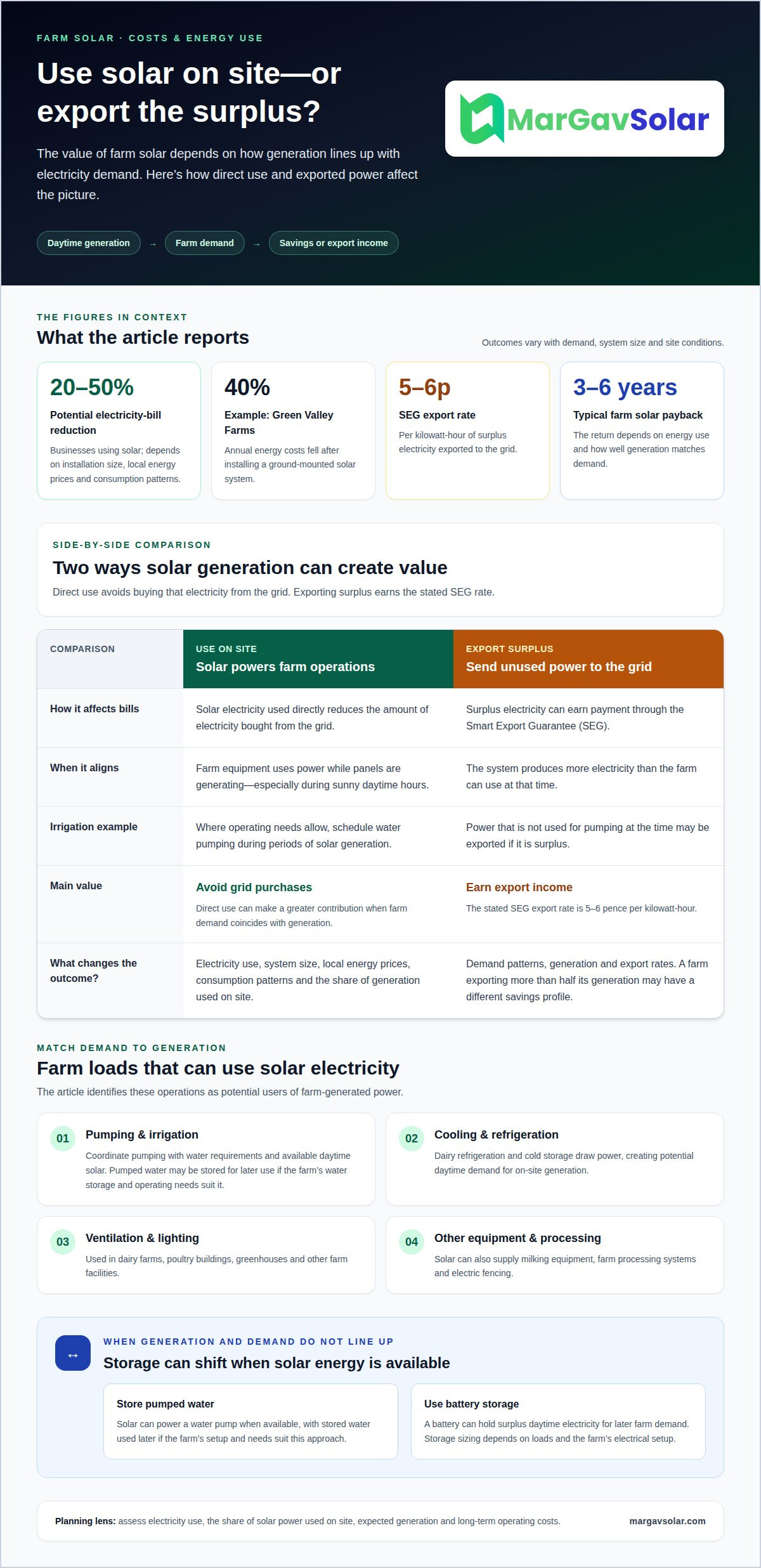
Businesses can reduce electricity bills by 20% to 50% with solar, depending on installation size, local energy prices and consumption patterns. Green Valley Farms reduced its annual energy costs by 40% after installing a ground-mounted solar system. These examples show why the relationship between generation and demand matters: a farm using electricity during sunny hours can make direct use of more solar power.
For example, where operational needs allow, a farm can schedule electricity-intensive work, such as pumping water, during periods of solar generation. Savings also depend on system size and the farm’s energy use. If the system produces more electricity than the site can use at that time, the surplus may be exported.
Income from Surplus Electricity
The Smart Export Guarantee (SEG) allows UK farmers to receive payment for surplus electricity exported to the grid. The stated export rate is 5-6 pence per kilowatt-hour, so exported solar power can provide an additional income stream.
Using electricity on site and exporting it affect bills differently. Direct use avoids buying that electricity from the grid, while exported power earns the SEG rate. A farm that exports more than half its generation may have a different savings profile from one that uses most of its power on site. Demand patterns, generation and export rates all shape the overall value.
Reviewing the farm’s electricity use alongside expected solar generation helps clarify this balance. Solar system planning can help assess how generation and usage may align.
Solar for agricultural irrigation and equipment
Solar can support agricultural irrigation by supplying electricity to water pumps, while also serving other farm facilities. For farmers, the value depends on whether pumping schedules and water demand align with solar generation. That connection can shape energy independence and help manage the environmental impact of routine farm operations.
Solar-powered water pumps can reduce the need for diesel generators and minimise fuel costs. A farm that uses a generator to draw water may use solar electricity when available, then store pumped water for later. This can separate irrigation timing from solar generation hours if the farm’s water storage and operating needs suit the approach.
Solar-powered irrigation can also support efficient water use. The key is to coordinate pumping with the farm’s water requirements, rather than run equipment without regard to demand. For example, plan pumping around expected irrigation needs and the solar power available during the day. Because weather affects generation, a resilient plan accounts for periods of lower solar output.
Solar electricity can support livestock watering as well as irrigation. Pumps can move water to livestock facilities, while solar energy can supply equipment in greenhouses and farm buildings. This allows one installation to serve several energy needs across an agricultural site, not just crop watering.
Farmers can make better use of solar generation by matching it to pumps and other daytime loads. If irrigation demand extends beyond sunny periods, battery storage can make surplus electricity available later. The right balance depends on pumping schedules, equipment demand, weather patterns and how much electricity the farm can use directly.
Solar-powered irrigation can contribute to more sustainable farm operations while reducing reliance on grid electricity or diesel-powered pumping. It is most practical when the system’s generation, the farm’s water storage and its irrigation routine work together, rather than treating solar panels and water systems as separate investments.
Farm solar payback periods and return on investment
UK farm solar installations typically have payback periods of 3-6 years. Solar PV systems have a lifespan of 25-30 years, so the years after payback can continue delivering value through reduced grid purchases and exported electricity. For farms focused on reducing farm operating costs with solar, the key question is how much generated power the business can use.
Payback depends on the relationship between system investment and annual benefits. Using solar electricity directly reduces the amount bought from the grid, while exporting surplus can add income. Production patterns matter: a dairy farm with daytime refrigeration and milking loads may use solar generation differently from a livestock business with more evening demand. The closer solar output matches electricity use, the more value the farm can gain from its own generation.
To assess return, account for more than the initial investment. Compare expected savings and export income against ongoing maintenance and future component costs. Inverters typically need replacement every 12-15 years, while panels can remain in service across a 25-30-year system lifespan. These different lifecycles affect the value of renewable energy over time, so a forecast should include maintenance and replacement needs alongside expected production.
Use a simple planning sequence: estimate annual electricity use, identify loads that overlap with solar generation, then compare expected bill savings and export income with the system’s total costs. This makes assumptions clear and shows which operating patterns matter most. Solar delivers the greatest benefit when the system suits the farm’s actual energy demand, not just its maximum production capacity.
Discuss your farm’s solar investment to explore the factors shaping its potential payback.
MarGav Solar
MarGav Solar can help you consider how solar generation and storage could fit your property’s electricity needs. If your farm is looking to use more of its own power, discuss its energy demand, operating patterns and the role battery storage could play.
Solar PV Systems and Battery Storage Solutions can be considered alongside other energy needs, such as EV charging. For an existing system, Solar Panel Maintenance & Cleaning can support ongoing upkeep. The right combination depends on the property and how electricity is used, so focus the discussion on the practical requirements of your farm.
For help exploring solar options for your energy needs, contact MarGav Solar.
Make your farm’s next energy decision
A practical route to reducing farm operating costs with solar starts with an energy plan based on how the farm runs. Consider how demand may change with production, seasonal workloads and future equipment. This gives the next discussion a clear focus: how a solar system could fit the property and support its longer-term operating plans.
MarGav Solar offers Residential Solar PV Systems, Battery Storage Solutions and EV Charging Points. These options can be considered in light of your farm’s energy needs, whether you’re planning an installation or considering how storage could complement solar generation. Start with a conversation about your property, energy use and priorities, rather than a one-size-fits-all answer.
Contact MarGav Solar about farm solar to discuss your plans and explore a suitable way forward for your operation.
Frequently Asked Questions
Are solar panels suitable for farms?
Yes, solar can suit farms with usable building roofs, suitable ground space or daytime electricity demand. A Staffordshire farm with several buildings, for example, may have varying roof orientations and electrical needs across the site. A professional assessment can consider the layout, the condition of potential installation areas and how farm operations use electricity, helping identify an arrangement that fits the holding.
Final Thoughts: Can Solar Help Protect Farms from Rising Costs?
Solar can reduce exposure to changing electricity prices by generating some power on the farm instead of buying all electricity from the grid. It won’t remove every energy cost: farms still need grid electricity when generation does not meet demand. Treat solar as part of a wider energy plan that considers operating priorities and future production needs.
As a landholder, what’s in it for me?
If you use electricity on your holding, on-site solar can turn suitable roofs or land into a source of power for your operations. Hosting a separate solar project is a different arrangement, and any income depends on the terms agreed for that project. Owning agricultural land alone does not guarantee payment from a solar developer.
Can I get tax credits or financing to install solar energy?
In the UK, solar panels qualify as plant and machinery for capital allowances, which may be relevant to a farming business’s tax position. MarGav Solar also states that up to 50% funding is available towards commercial solar panel installations. These are distinct considerations: capital allowances relate to tax treatment, while funding relates to installation support. A farm’s circumstances determine how each applies.
How Can Solar Panels Reduce Industry Operating Costs?
Solar panels can reduce operating costs by supplying electricity a business would otherwise buy. On a farm, that could mean powering a workshop, milking operation or refrigeration during working hours. The financial effect depends on how generation matches demand, so start by identifying which operations use electricity and when.
How can a professional help you start the process of adding solar to your farm?
MarGav Solar starts with a consultation, then assesses the property and prepares a quotation and custom energy plan. For a Staffordshire farm, this provides a structured way to consider the site and its energy priorities before installation. MarGav Solar also provides professional installation and after-care support, linking the initial assessment with the system’s ongoing operation.


