
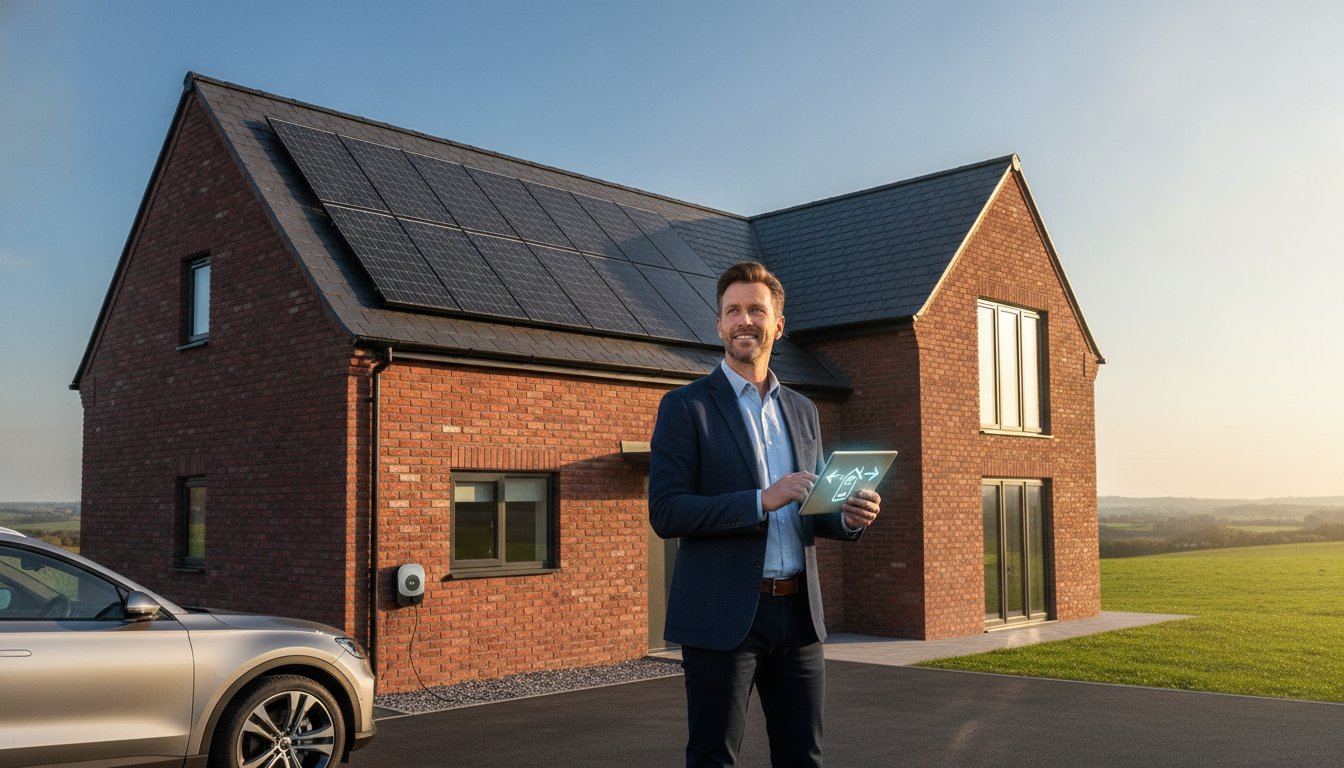
What if the biggest barrier to your solar energy transition isn't the cost of the panels, but the condition of your fuse box or the orientation of your rafters? Most homeowners feel a mix of excitement and anxiety when they start researching renewable energy. You want the lower bills and the 0% VAT benefits available through March 2027, but you're likely worried about hidden structural issues or outdated wiring causing expensive delays. It's completely normal to feel overwhelmed when preparing my home for solar panels, especially with evolving 2026 regulations and grant schemes like the Warm Homes Plan.
This guide will give you total clarity by showing you exactly how to audit your roof, loft, and electrical system to ensure a seamless and efficient installation. You'll discover how to identify potential roadblocks before an installer even arrives on-site. We'll walk through a practical checklist of home improvements and future-proofing options, such as battery storage and EV charging integration, that turn technical headaches into a smooth path toward energy independence. By the end, you'll have the confidence to move forward with your project while avoiding the fear of unexpected costs or installation hurdles.
Key Takeaways
- Learn to evaluate your home's "Golden Triangle" of orientation, shading, and surface area to determine if your property is truly solar-ready.
- Understand why a structural roof survey and clearing your loft space are essential steps when preparing my home for solar panels to ensure a smooth installation.
- Identify the necessary upgrades for your consumer unit and why an SMETS2 smart meter is vital for accessing the best 2026 Smart Export Guarantee (SEG) rates.
- Discover how to size your system today to accommodate future battery storage solutions and EV charging points for long-term energy independence.
- Recognise the importance of partnering with a local Staffordshire expert to navigate regional planning and ensure ongoing performance through professional maintenance.
Is Your Home Ready? The Core Viability Assessment
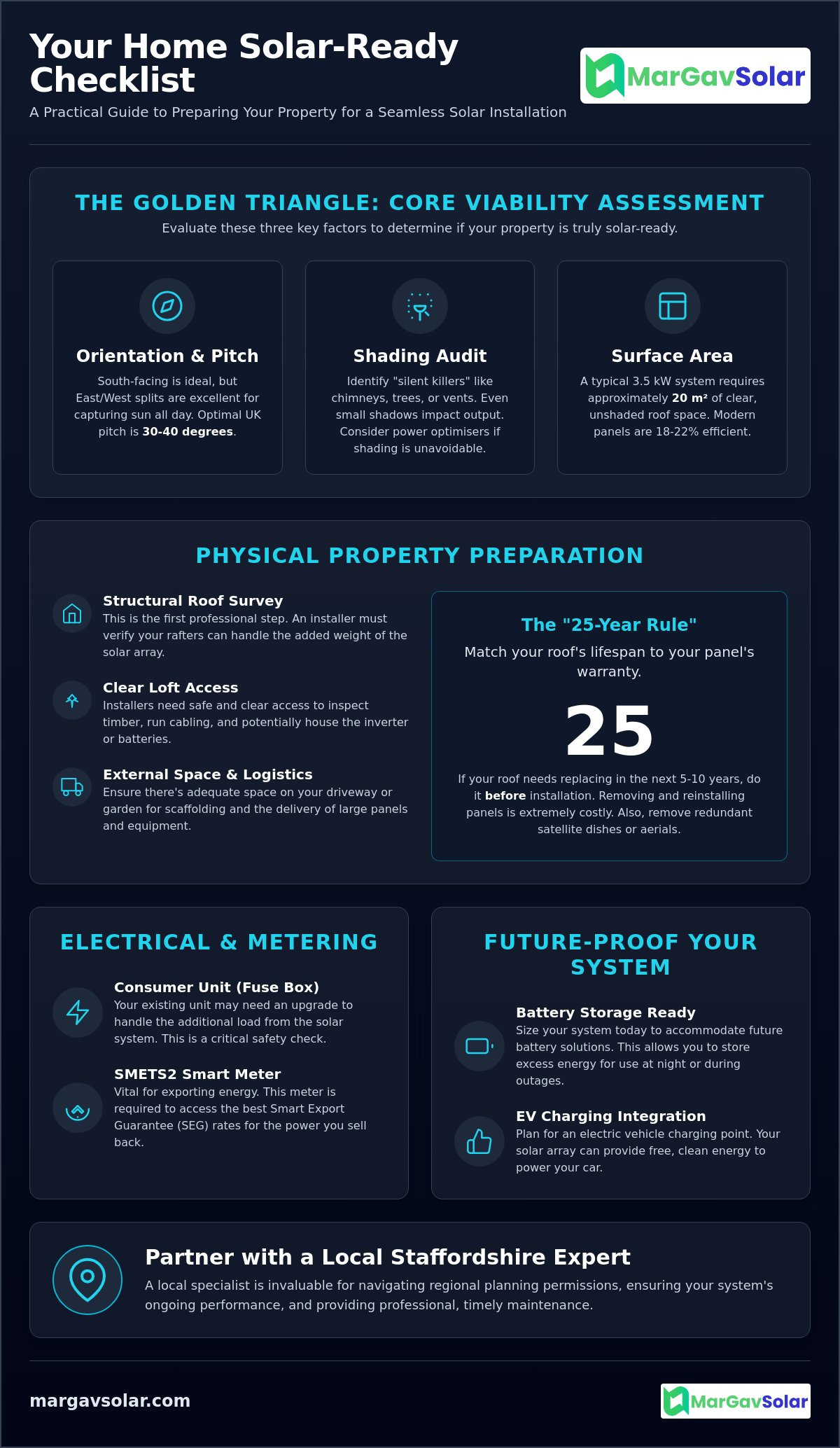
Solar readiness isn't just a matter of desire; it's a technical audit of your property's physical and electrical limits. When you start preparing my home for solar panels, you need to look at your house as a mini power station. A successful rooftop solar power system relies on what we call the "Golden Triangle": orientation, shading, and surface area. In 2026, modern monocrystalline panels reach efficiencies of 18-22%. This means even smaller roofs can generate significant power, provided the structural integrity and electrical capacity are there to support the equipment.
Before calling in the experts, you can perform a quick viability check yourself. Ask these four questions to see if your home is a prime candidate for a 2026 installation:
- Is your roof in good repair? If your roof tiles or structure need replacing in the next five years, it's cheaper to do that work before the panels go on.
- Do you have enough space? A typical 3.5 kW system needs roughly 20 square metres of clear, unshaded roof.
- Is your loft accessible? Installers need to inspect rafters and potentially house the inverter or battery storage nearby.
- Are there local obstructions? Look for chimneys, tall trees, or neighbouring gables that might block the sun during peak hours.
Roof Orientation and Pitch: Beyond South-Facing
South-facing roofs are the traditional gold standard, but the 2026 energy market has shifted the focus toward East/West split systems. These are excellent for households with high energy demands in the morning and evening. By placing panels on both sides of the roof, you capture the sun's path across the entire day. For those in Staffordshire, the optimal pitch for UK latitudes is usually between 30 and 40 degrees. Even on overcast days, your system will still work thanks to diffuse radiation. This is solar energy that has been scattered by clouds and particles in the atmosphere, allowing panels to generate electricity even when the sky is grey.
The Shading Audit: Identifying Hidden Obstructions
Shading is the silent killer of solar return on investment. Even a small shadow from a chimney, a vent pipe, or a distant tree can disproportionately drop the output of an entire string of panels. When preparing my home for solar panels, you must identify these "hard" shadows early. If your roof has unavoidable obstructions, we often suggest using power optimisers. These devices ensure that if one panel is covered by a shadow, the rest of the system continues to perform at its peak. Don't forget about wildlife, either. Professional bird proofing is a vital part of preparation because nesting debris can cause "hot spots" and permanent efficiency drops if left unchecked.
While you must keep your roof clear of obstructions, you can still enjoy a shaded garden. Installing bespoke sail shades UK provides a flexible way to protect your outdoor seating areas from the sun without impacting the efficiency of your solar energy system.
Physical Property Preparation: Roof, Loft, and Space
Physical preparation is where your project moves from theory to reality. When you begin preparing my home for solar panels, the first professional step is always a structural roof survey. Modern solar arrays add weight to your property, and a qualified installer must ensure your rafters can handle the load without bowing. Beyond the roof tiles, your installer will need clear access to your loft space. This isn't just for checking the timber; it's where much of the cabling and potentially the inverter will be housed. Clearing out old boxes and ensuring a safe path to the eaves will save hours on installation day and prevent accidental damage to your belongings.
Don't forget the external logistics. Solar panels are large, and scaffolding is a legal requirement for safe working at height. You'll need to ensure there is enough space on your driveway or garden for the scaffolding poles and the delivery of the panels and mounting rails. Consulting a Consumer Guide to Solar Power can help you understand the standard safety protocols and equipment handling you should expect from a reputable team. Proper access ensures the crew can work efficiently without obstructing your neighbours or blocking local access roads.
Roof Repairs and Longevity
Allocating Space for the Inverter and Battery
Your system needs a brain (the inverter) and potentially a heart (the battery). Identifying the right location for solar battery storage is a critical part of your preparation. These units require a cool, dry, and well-ventilated space to operate efficiently over their lifespan. While lofts are common, garages are often better for heavy battery units due to weight limits and easier access for future upgrades. You'll need enough wall space to mount these components, ideally close to your consumer unit to minimize energy loss through long cable runs. If you're unsure about the best layout for your specific property, the experts at MarGav Solar can provide a technical audit to find the most efficient spot in your home.
Electrical System and Metering Requirements
While the roof provides the surface, your electrical system is the engine that drives your energy savings. Preparing my home for solar panels requires a deep dive into your fuse box and metering setup. If your home's wiring hasn't been touched in decades, this is often where the most critical prep work happens. You need to ensure your system can handle the bidirectional flow of electricity, both taking power from the grid and pushing it back. This electrical "heart" must be healthy enough to sustain the increased load and the sophisticated communication between your panels, inverter, and the wider network.
Upgrading Your Consumer Unit
Your consumer unit, often called the fuse box, must have enough physical space for the new solar circuit. These spaces are known as "spare ways." Modern safety standards for 2026 require RCD (Residual Current Device) protection to instantly cut power if a fault is detected. If your current board is full or outdated, an installer might fit a mini-consumer unit specifically for the solar array. This is a technical task that demands NICEIC certification to guarantee the work meets current UK building regulations and safety protocols.
Smart Meters and Exporting Energy
To benefit from the Smart Export Guarantee (SEG), you must have a smart meter capable of half-hourly export readings. As of July 2026, a second-generation (SMETS2) meter is the industry standard for ensuring you're paid accurately for every kilowatt-hour you don't use. When preparing my home for solar panels, check if your current meter can track exported electricity. Some suppliers currently offer rates as high as 25p/kWh for their own installation customers, making the right meter essential for your ROI. Your MCS certificate is the essential document that proves your system is high-quality, acting as your "golden ticket" to apply for these export tariffs once the installation is complete.
Your home’s earthing and bonding must also be verified. This ensures that in the event of an electrical surge, the energy is safely diverted into the ground. Additionally, your installer will manage the notification to your Distribution Network Operator (DNO), which in Staffordshire is typically National Grid or Western Power. This paperwork informs the grid that a new generation source is being connected to the local network. It's a vital step that keeps the infrastructure stable and ensures your installation is fully compliant with national energy standards.
Future-Proofing: Planning for Batteries and EV Charging
In 2026, true energy independence relies on storage rather than just generation. When you are preparing my home for solar panels, you should view your property as a complete energy ecosystem. Generating power during the day is only half the battle; the real savings come from using that energy when the sun isn't shining. By planning for future upgrades now, you create a "solar-ready" electrical layout that prevents expensive remedial work later. This approach allows you to integrate smart monitoring systems that track your return on investment in real-time, giving you total control over how and when you use your clean energy.
Sizing your system correctly today is vital if you plan to buy an electric vehicle or install a heat pump in the next few years. A system that covers your current electricity bill might struggle to charge a car overnight. It's much more cost-effective to install a slightly larger array now than to try and add individual panels later. If you want to see how a future-proofed system can transform your energy bills, you can request a custom solar and storage design from our technical team.
Preparing for Battery Storage
Choosing the right inverter is the first step in battery preparation. Hybrid inverters are popular for new installations because they manage both your solar panels and your battery storage in a single unit. If you're interested in advanced monitoring and GivEnergy cloud integration, you'll need to ensure your garage or utility room has a stable internet connection. You should also consider the physical footprint of your storage. While wall-mounted batteries save floor space, larger capacity units are often floor-standing due to their weight. Ensure your chosen location is ventilated and clear of obstructions before the installers arrive.
Integrating EV Charging Points
Installing EV charging points alongside your solar array is a strategic move that significantly reduces labour costs. Since the electricians are already on-site and working on your consumer unit, adding the dedicated circuit for a 7kW charger is relatively straightforward. Load management is a critical part of this preparation. Your system must be configured to ensure your home can handle car charging and solar generation simultaneously without tripping your main fuse. Proper cabling for high-speed home chargers requires specific thickness and routing, so identifying your preferred charging spot early in the prep phase is essential for a tidy, efficient finish.
Partnering with a Staffordshire Solar Expert
Selecting the right installation partner is the final, most critical step in preparing my home for solar panels. While the technical checks we've discussed are essential, having a local expert who understands the specific geographical and regulatory landscape of Staffordshire makes the process significantly smoother. Local knowledge is vital when dealing with the Distribution Network Operator (DNO), which for our region is typically National Grid or Western Power. These organisations have strict rules about how much energy a residential system can export to the local grid. An experienced installer will handle all the necessary notifications and permissions on your behalf, removing the administrative burden from your shoulders.
MarGav Solar brings over 20 years of industry expertise to every project, providing a level of continuity that national companies often struggle to match. Our approach is built on end-to-end support, starting with a comprehensive home audit and extending through the decades with professional solar panel maintenance. When you choose a local partner with a long-standing legacy, you gain the peace of mind that your warranties and after-care are backed by NICEIC-certified installers who are part of your community. This long-term relationship is what ensures your system continues to deliver a high return on investment for its entire 25-year lifespan.
Local Planning and Conservation Areas
Staffordshire is home to many beautiful conservation areas and sections of the Area of Outstanding Natural Beauty (AONB). While solar panels generally fall under "permitted development" rights and don't require planning permission, these protected zones often have specific aesthetic requirements or restrictions. If your home is a listed building or located in a sensitive area, you may need council approval before work begins. We assist with all local authority paperwork, helping you navigate the nuances of Stafford Borough Council or Staffordshire County Council regulations. Our team ensures that your system meets all legal standards while maximising your energy generation potential.
Your Installation Timeline
The journey from your initial enquiry to the moment you flip the switch to "Power On" is a structured process. After your professional consultation, we provide a detailed proposal and a fixed-price contract. This is a crucial safeguard when preparing my home for solar panels, as it eliminates the risk of hidden costs or "prep-phase" surprises. Once the scaffolding is up, the physical installation typically takes just one to two days. We then provide all the necessary certifications, including your MCS and NICEIC documents, which you'll need to apply for the latest 2026 Smart Export Guarantee (SEG) rates. Ready to start your journey? Book your Staffordshire home solar audit with MarGav Solar today.
Your Path to Energy Independence in 2026
Transitioning to renewable energy is one of the most rewarding home improvements you can make. By focusing on the structural integrity of your roof and the capacity of your electrical system, you've already handled the most complex parts of the process. Remember that successful solar integration isn't just about today's savings; it's about future-proofing your property for battery storage and electric vehicles. When you're preparing my home for solar panels, taking these proactive steps ensures a smooth installation and maximises your long-term return on investment.
As a Staffordshire-based family business with over 20 years of renewable energy expertise, MarGav Solar is here to handle the technical details for you. Our NICEIC and MCS accredited installers provide end-to-end support, from the initial viability audit to long-term maintenance. You don't have to navigate the regulations or technical requirements alone. Take the first step toward a cleaner, cheaper energy future today.
Get a Fixed-Price Solar Installation Quote for Your Staffordshire Home
Frequently Asked Questions
Do I need a new roof before installing solar panels?
You don't necessarily need a new roof, but it should have at least 25 years of life remaining to match the lifespan of the panels. If your tiles are crumbling or the underlying structure shows signs of rot, it's cheaper to replace the roof before the array is fitted. Removing and reinstalling panels later to fix a leak is a significant and avoidable expense.
How much space do I need in my loft for the solar equipment?
You typically need about one square metre of wall or floor space for the inverter and its associated switchgear. If you're adding battery storage, the footprint will increase depending on the capacity you choose. Ensure the area is well-ventilated and has enough clearance for an engineer to perform future maintenance or upgrades comfortably.
Will my current fuse box work with a solar PV system?
Your current fuse box will work if it has spare "ways" and modern RCD protection, but many older units require an upgrade. If your board is full, an installer can often fit a mini-consumer unit specifically for the solar circuit. This technical check is a vital part of preparing my home for solar panels to ensure total electrical safety.
Do I need planning permission for solar panels in Staffordshire?
Most Staffordshire homeowners don't need planning permission because solar panels are usually considered "permitted development." However, you should check with your local council if you live in a listed building or a conservation area. In these specific cases, there are often restrictions on where panels can be placed to preserve the character of the property and its surroundings.
Can I install solar panels if my roof is shaded by trees?
Yes, you can still install solar panels on a shaded roof by using power optimisers or micro-inverters. These devices allow each panel to operate independently, so a shadow on one panel doesn't drag down the performance of the entire system. It's also worth considering professional tree pruning to increase your direct sunlight hours and improve your overall energy yield.
How do I know if my smart meter is compatible with solar export?
You can identify a compatible meter by looking for the SMETS2 label, which indicates a second-generation smart meter. These units are designed to track both the energy you import and the electricity you export back to the grid. If you have an older SMETS1 meter, you might need an upgrade from your energy supplier to access the best 2026 export tariffs.
What is the best way to clear my loft for the installers?
Create a clear and safe path from the loft hatch to the specific area where the inverter or battery will be mounted. Move all boxes, suitcases, and stored items at least two metres away from the rafters and the equipment site. This provides the installers with the physical room they need to work safely and prevents accidental damage to your personal belongings.
Should I get a battery at the same time as my solar panels?
Installing a battery alongside your panels is the most cost-effective way to maximise your self-consumption and long-term savings. Doing both at once saves on separate labour costs and ensures your system is perfectly balanced from the start. Preparing my home for solar panels with integrated storage is the most efficient path toward total energy independence in 2026.


