
Did you know that your solar battery could be doing more than just sitting in your garage; it could be actively earning you up to 25p per kWh while you sleep? Many UK homeowners view their storage system as a passive backup, but maximising solar battery efficiency in 2026 requires a more proactive strategy. With the 0% VAT rate on installations confirmed to run until March 31, 2027, there's a critical window to ensure your energy setup is fully optimised before the tax landscape changes.
It's natural to feel frustrated by confusing smart export tariffs or worried about how your battery might struggle during a damp, cold UK winter. This guide promises to help you master the technical settings, smart tariffs, and maintenance habits required to squeeze every penny of value from your storage system. We'll explore how to navigate the latest LiFePO4 technology and time-of-use tariffs to lower your monthly bills, extend your equipment's lifespan, and achieve true energy independence.
Key Takeaways
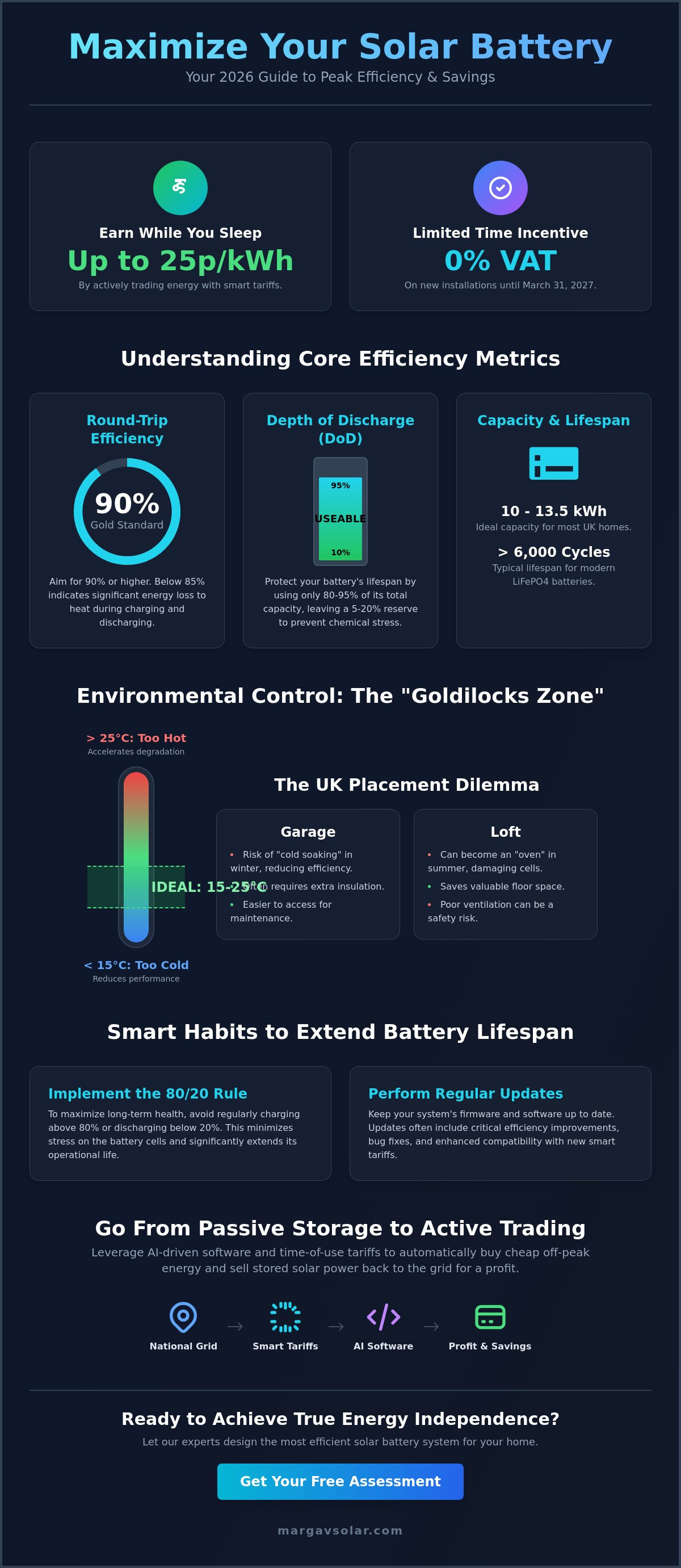
- Learn why 90% round-trip efficiency is the industry gold standard and how to identify energy loss in your system.
- Discover the ideal "Goldilocks Zone" for temperature control to prevent harsh UK winters from draining your battery’s performance.
- Master the transition from passive storage to active trading by leveraging smart tariffs and AI-driven software for maximising solar battery efficiency.
- Implement the 80/20 charging rule and regular firmware updates to significantly extend your battery’s operational lifespan and warranty protection.
- Understand how local expertise in Staffordshire can help you navigate specific grid constraints for a more reliable home energy setup.
Understanding the Core Metrics of Solar Battery Efficiency
Before you can master the art of maximising solar battery efficiency, you need to understand the numbers that define your system's performance. Many homeowners focus solely on the total storage size, but the real value lies in how effectively that energy is captured and released. Efficiency isn't just a static number; it's a dynamic measurement of how well your hardware handles the daily grind of charging and discharging.
Think of your battery like a garden water tank. Power, measured in kilowatts (kW), is the width of the tap; it determines how many appliances you can run at once. Capacity, measured in kilowatt-hours (kWh), is the size of the tank itself. In 2026, most UK households find that a 10 kWh to 13.5 kWh capacity offers the best balance for daily needs. However, efficiency isn't static. Over a typical 10-year period, chemical degradation naturally reduces how much energy a cell can hold. While modern Lithium Iron Phosphate (LiFePO4) batteries are rated for over 6,000 cycles, you'll still see a gradual decline in total capacity as the years pass.
Round-Trip Efficiency and Energy Loss
Every time you move electricity into or out of your battery, you pay a small energy tax. This loss happens because heat is the primary enemy of energy conversion. When your inverter converts DC power from your panels into AC power for your home, some energy escapes as heat. In the solar industry, we define the round-trip efficiency as the ratio of energy retrieved from storage compared to the energy put in. While 100% efficiency is physically impossible, high-quality systems in 2026 aim for 90% as the gold standard. If your system drops below 85%, you're losing significant value to heat waste during every cycle.
Depth of Discharge (DoD) vs. Useable Capacity
A battery's total capacity isn't the same as its useable capacity. Draining a lithium-ion battery to 0% creates massive chemical stress, which can significantly shorten its lifespan. Most top-tier units are designed with a Depth of Discharge (DoD) limit, typically between 80% and 95%. By setting a 10-20% reserve, you protect the internal chemistry and ensure the system remains stable for the long haul. This small buffer is a key secret to maximising solar battery efficiency over a decade or more of use. It also ensures you stay within the strict terms of your manufacturer's warranty, which often requires specific discharge limits to remain valid.
Environmental Factors: Placement and Temperature Control
Location is everything. While solar panels thrive on light, batteries are far more sensitive to their surroundings. Maximising solar battery efficiency depends heavily on keeping your system within the "Goldilocks Zone" between 15°C and 25°C. When temperatures drop below this range, the chemical reactions inside the cells slow down. This increases internal resistance and saps your useable power before it even reaches your appliances.
In regions like Staffordshire, damp and cold winters present a specific challenge known as "cold soaking." This happens when a battery sits in a freezing garage for days, causing it to lose significant performance during discharge cycles. By 2026, active thermal management has become a standard feature in high-end units to combat this. These systems use internal heaters to maintain an ideal temperature, ensuring your investment doesn't stall during a January frost. If you're planning an upgrade, checking the UK government's Warm Homes Plan can provide context on broader support for energy efficiency improvements that might complement your storage goals.
Garage vs. Loft: The UK Placement Dilemma
Choosing where to install your system often involves a trade-off. Lofts are popular because they save floor space, but they become sweltering ovens in the summer. Excessive heat is even more damaging than cold; it accelerates chemical degradation and can potentially shorten the life of your cells. Conversely, garages are easier to access but often require additional insulation to keep the unit above the efficiency-loss threshold. For a deeper look at local considerations, see our guide on Solar Battery Storage in Staffordshire. If you're unsure about your home's layout, a professional assessment of your battery storage solutions can identify the safest, most efficient spot.
Ventilation and Fire Safety Standards
Airflow isn't just about cooling; it's a critical safety requirement. UK building regulations in 2026 mandate specific clearance zones around battery units to prevent thermal throttling. When a battery works hard, it generates heat. If that heat can't escape, the system will automatically slow down to protect itself, which drastically reduces your efficiency. Professional installers ensure your unit is positioned to meet these safety standards while maintaining the steady airflow needed for peak performance. This keeps the internal chemistry stable and ensures you're squeezing every watt out of your system.
Smart Tariffs and Software: The 2026 Efficiency Secret
In 2026, the definition of a high-performance system has shifted from hardware alone to the intelligence of the software managing it. Maximising solar battery efficiency now requires moving from passive storage to active trading. Instead of just holding energy for later use, your system should interact with the smart grid to capitalise on price fluctuations. This transition turns your battery from a simple storage tank into a dynamic financial asset that works for you 24 hours a day.
Modern battery software uses AI-driven forecasting to analyse the next 24 hours of weather data. If the forecast predicts a cloudless, sunny day in Staffordshire, your battery will intelligently decide not to top up from the grid overnight. This leaves maximum capacity for free solar energy. Conversely, if a winter storm is approaching, the software can trigger a "force charge" during cheap off-peak windows to ensure you aren't buying expensive electricity during peak hours. These smart integrations are essential for homeowners looking to reach their ROI milestones faster, a sentiment echoed by industry bodies like Solar Energy UK.
The Smart Export Guarantee (SEG) has also evolved. While standard rates might offer as little as 2p per kWh, certain suppliers in 2026 now offer up to 25p per kWh for customers with both solar and battery storage. By timing your exports when the grid is under pressure, you can significantly boost your annual savings. Efficiency is no longer just about how many kWh you store; it's about the financial value you extract from every single cycle.
Maximising the GivEnergy Cloud
Monitoring your system's performance is easier than ever with remote management tools. By using a cloud interface, you can spot subtle efficiency dips or hardware issues before they impact your monthly bill. Setting specific charging windows allows you to fill your cells when grid prices are at their lowest, often during the night. For a deeper dive into these features, check out our GivEnergy Cloud Guide.
The Rise of Agile Tariffs in 2026
Agile and "time-of-use" tariffs have changed how we value energy. You can now practice "load shifting" by purchasing grid electricity at 5p per kWh and avoiding the 35p peaks. Automation tools now sync your battery directly with wholesale prices, ensuring you're always on the right side of the market. This type of active management ensures that maximising solar battery efficiency translates directly into lower bills and increased energy independence.
Maintenance Habits to Extend Lifespan and Output
Many homeowners assume lithium batteries are "fit and forget" technology. They aren't. While modern systems require far less attention than older lead-acid counterparts, neglecting basic care is a common mistake that leads to premature degradation. Maximising solar battery efficiency involves a combination of smart software settings and simple physical upkeep. One of the most effective habits you can adopt is the "80/20 Rule." By adjusting your settings so the battery typically stays between 20% and 80% capacity, you significantly reduce the chemical stress on the internal cells. This habit alone can extend the functional life of your system by several years.
Firmware updates are perhaps the most overlooked tool in your efficiency toolkit. Manufacturers frequently release software patches that refine charging algorithms and improve thermal management. If your system is running on outdated firmware, you might be missing out on minor hardware optimisations that add up to major savings over time. Additionally, your battery health is directly tied to the condition of your roof. If your panels are covered in grime, they won't provide the steady, high-voltage current required for an efficient charge cycle. This forces the battery to cycle more frequently, which can sap long-term performance.
The Inverter Connection
The inverter acts as the gateway for your energy system, but an aging or undersized unit can act as a bottleneck. If your inverter is struggling to manage the DC-to-AC conversion, your battery has to work harder to compensate for the loss. Signs of this often appear in your monitoring app as unexpected heat spikes or "clipping" in your energy production graphs. If your system is more than eight years old, you might benefit from Inverter Upgrades in Staffordshire to ensure your storage isn't being held back by outdated conversion hardware.
Physical Care and Dust Management
UK homes can be surprisingly dusty, especially if your battery is installed in a garage or utility room. Over time, dust buildup on the casing or ventilation fans can cause the unit to run hotter than intended. Since heat is the primary cause of energy loss, a simple wipe-down and a visual check for terminal corrosion can make a huge difference. We recommend pairing this with regular Solar Panel Maintenance in Staffordshire to ensure the entire energy chain is operating at peak performance. For a comprehensive review of your system's health, consider booking a professional Solar Panel Maintenance & Cleaning service to protect your long-term investment.
Professional Support: Why Local Expertise Matters for Efficiency
While mastering your software settings and maintenance habits is vital, the foundation of a high-performance system is professional installation and ongoing local support. Maximising solar battery efficiency begins long before the first charge cycle; it starts with a design that respects the specific electrical environment of your home. MarGav Solar brings over 20 years of experience to Staffordshire homeowners, ensuring that every system is built to handle local grid constraints and environmental conditions. A poorly configured system might look fine on paper but can suffer from hidden bottlenecks that bleed value every single day.
Choosing a local expert also means you aren't left to navigate technical hurdles alone. From NICEIC-certified installations to complex inverter repairs, having a partner who understands the local landscape is invaluable. We ensure your system is commissioned correctly from day one, with smart software specifically calibrated for your household's unique energy habits. This professional touch ensures your equipment operates within its peak efficiency range, protecting your investment and ensuring you meet the requirements for manufacturer warranties and the Smart Export Guarantee.
Custom System Design vs. Off-the-Shelf Kits
The most common cause of wasted energy is a battery that doesn't match the household load. Sizing your storage is the single most important factor in maximising solar battery efficiency. An oversized battery will never pay for itself, while an undersized one will leave you buying expensive grid power during peak hours. MarGav Solar calculates your unique energy profile during our consultation process to find the perfect balance. We look at your peak draw, typical solar yield, and future needs, such as adding an EV charger, to create a system that works in harmony with your lifestyle.
Long-Term Warranty and Maintenance Support
Efficiency "creep" is a real problem where small, unnoticed losses from dust, software bugs, or minor wiring issues gradually add up to a significant financial drain. Regular professional inspections prevent this. By partnering with a local firm, you gain a dedicated team to help you navigate manufacturer warranties and provide rapid support if a component underperforms. Don't let your system's performance slide over time. To ensure your hardware is still delivering peak results, you can Book a Solar Battery Health Check with MarGav Solar and protect your energy independence for the next decade.
Take Control of Your Energy Future
Success with home energy storage isn't about luck; it's about strategy. By mastering the "Goldilocks Zone" for temperature control and embracing the automation of 2026 smart tariffs, you can turn a passive battery into a high-performance asset. Remember that simple maintenance habits, like the 80/20 charging rule and regular firmware updates, are the foundation of a long-lasting system. Achieving the highest possible return on your investment depends on maximising solar battery efficiency through a combination of technical settings and expert installation.
If you're ready to stop guessing and start saving, our team is here to help. With 20+ years of local Staffordshire expertise, MarGav Solar provides the professional support you need. As NICEIC Certified Installers and GivEnergy Advanced Partners, we ensure your system is designed for peak output from day one. Maximise your home's energy potential with MarGav Solar and enjoy the peace of mind that comes with a truly independent home.
Frequently Asked Questions
What is the most efficient temperature for a solar battery in the UK?
The most efficient temperature range for a lithium solar battery in the UK is between 15°C and 25°C. Operating within this "Goldilocks Zone" ensures the internal chemical reactions occur with minimal resistance. If temperatures drop below this, your battery may struggle to discharge at full power, while excessive heat in a loft can speed up chemical degradation.
Does charging my battery to 100% every day damage it?
Charging your battery to 100% every single day can lead to increased chemical stress and faster degradation over time. Implementing the 80/20 rule, where you keep the charge between these percentages for daily use, is a proven strategy for maximising solar battery efficiency over its 10-year lifespan. Most modern systems allow you to set these limits easily within their management apps.
How much efficiency is lost during the conversion from DC to AC?
You typically lose between 5% and 15% of your energy during the conversion from DC to AC. This energy loss happens at the inverter and is mostly released as heat. High-quality modern inverters aim for the lower end of this range, ensuring that more of the power stored in your battery actually reaches your home appliances instead of being wasted.
Can smart tariffs like Octopus Agile really improve battery ROI?
Smart tariffs can significantly improve your ROI by allowing you to buy electricity when prices are at their lowest. Your battery can be programmed to "force charge" during these cheap windows, which are often overnight. This strategy allows you to avoid expensive peak rates and turns your storage system into a proactive asset that pays for itself much faster.
How often should I update my solar battery's firmware?
You should check for firmware updates at least once a month, though many modern systems now offer automatic updates. These software patches often contain critical optimisations for thermal management and charging algorithms. Staying up to date ensures your hardware is always running the most efficient version of its operating software, which protects your long-term battery health.
Does a dirty solar panel affect how efficiently my battery charges?
Yes, dirty solar panels directly impact battery charging efficiency by reducing the voltage and current reaching the system. If your panels are covered in grime or bird droppings, the battery may take longer to charge or fail to reach a full state during short winter days. Regular cleaning ensures a steady energy flow for optimal storage performance throughout the year.
What is 'Round-Trip Efficiency' and why does it matter?
Round-trip efficiency is the ratio of energy you can retrieve from your battery compared to the amount of energy it took to charge it. It's a vital metric because it accounts for the losses that occur during the entire storage cycle. In 2026, a round-trip efficiency of 90% is considered the industry gold standard for high-quality residential storage systems.
Is it more efficient to install a battery in the loft or the garage?
A garage is generally more efficient than a loft because it offers a more stable temperature environment for the battery cells. Lofts tend to reach extreme temperatures in the summer, which can cause the battery to throttle its performance to prevent overheating. A garage installation keeps the unit closer to its ideal operating temperature, especially during the peak of summer.


