

A battery’s lifespan and its blackout runtime are different things. Most modern home batteries last 10-15 years before their capacity starts to reduce, while home battery backup near Cannock can provide 8-12 hours of power. During an outage, the battery won’t necessarily supply every circuit in the property.
It’s understandable to want clear answers before investing in home battery backup near Cannock, especially when weighing long-term performance against what happens in a power cut. This guide explains how battery warranties work, what affects how long stored electricity can run essential appliances, and why backup needs to be designed around the circuits you want to keep powered.
A battery stores electricity and supplies it when your home needs it. Understanding that distinction helps you assess capacity figures, set realistic backup expectations and ask the right questions when comparing a system for your home.
Key Takeaways
- Match battery capacity to when your household uses electricity, using half-hourly or smart-meter data where available to understand your pattern.
- Compare a battery’s warranty conditions and charge-cycle rating to understand what its coverage says about long-term use.
- Separate energy capacity from the loads a system can run: the appliances you want powered depend on the system’s design, not capacity alone.
- MarGav Solar’s residential solar and battery storage solutions can help households plan how to generate, store and use electricity at home.
Why Add Battery Storage in Cannock?
In Cannock, a home battery can store electricity for evening use and provide backup when the system is designed for that purpose. Savings and energy independence depend on when your household uses electricity and how the battery is charged.
Household Savings and Evening Use
Solar panels can charge a battery during the day, allowing your household to use stored electricity in the evening instead of buying as much from the grid. Compare daytime generation with evening demand, including cooking, lighting and EV charging, before choosing capacity. A solar battery stores electricity, while a standby generator produces it from fuel, so they work differently. Battery storage can also form part of a commercial system designed for backup.
Battery Storage Costs in Cannock
The cost of home battery storage depends on factors such as capacity, equipment and installation requirements. A larger battery may suit a home with higher evening demand, while a smaller one may fit more modest use. A quote should reflect the property and system design, with capacity, equipment and installation requirements all shaping the cost.
Grants, VAT Relief and Incentives
For England, HM Revenue & Customs says domestic solar and battery storage are zero-rated for VAT until 31 March 2027. This VAT treatment is separate from grant support or payments for exported electricity. Any such support follows its own scheme terms, so compare those terms with your planned system and household energy use rather than treating them as guaranteed savings.
Permissions, Safety and Maintenance
Planning permission and building regulations are separate matters; the property and proposed work determine which requirements apply to a Cannock installation. For electrical safety, battery installation work should be designed and carried out in accordance with BS 7671 requirements, according to the British Standards Institution. Keep the battery accessible and follow the manufacturer’s maintenance instructions. These steps help ensure the system’s design, installation and upkeep are considered together.
Battery backup during power cuts
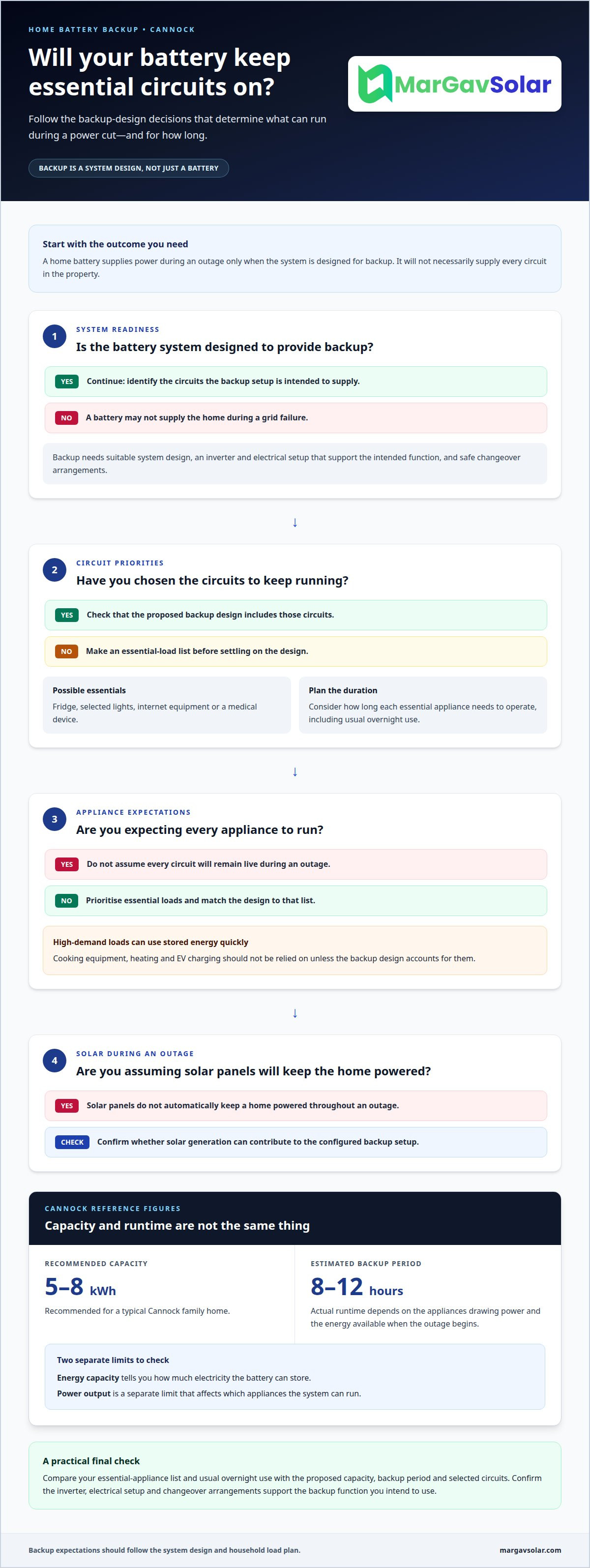
A home battery can supply electricity during a power cut only when the system is designed for backup. A typical Cannock family home is recommended a battery capacity of 5-8 kWh, while the estimated backup period is 8-12 hours. Actual runtime depends on the appliances drawing power and how much energy is available when the outage begins.
Plan for essential use rather than expecting a battery to run every appliance. List what matters most during an outage, such as the fridge, selected lights, internet equipment or a medical device, then consider how long each needs to operate. Don’t rely on high-demand appliances unless the backup design accounts for them. A battery’s stored energy and the power it can deliver are separate limits.
Backup requires more than adding a battery. The system needs suitable design, careful selection of the circuits to keep running, and safe changeover arrangements. Without these, a battery may not supply the home during a grid failure. The inverter and electrical setup must support the intended backup function, and everyone in the household should understand which circuits are included.
Solar panels don’t automatically keep a home powered throughout an outage. Ask how the battery system is configured to supply selected circuits and whether solar generation can contribute to that backup setup. Don’t assume every circuit will remain live: cooking equipment, heating and EV charging can quickly use stored energy.
Before settling on a design, list essential appliances and their usual overnight use. Compare that list with the proposed capacity and backup period, then decide which circuits take priority. For home battery backup near Cannock, this practical load plan helps align outage protection with everyday savings instead of sizing storage around appliances you rarely need during a power cut.
Battery lifespan and manufacturer warranties
Most modern home batteries last 10-15 years before their capacity starts to reduce. Fox ESS and Solax lithium batteries are typically rated for more than 6,000 charge cycles. These figures describe different things: years indicate expected service life, while cycles describe charging and discharging use. Neither figure alone tells a household how much usable capacity remains over time.
Battery lifespan depends partly on how the system is used. Charging from solar energy and drawing power later creates a different cycling pattern from charging with grid electricity. Household generation, evening demand and tariffs all influence when storage charges and discharges. Reviewing your usage, including available half-hourly or smart-meter data, can help match capacity to your actual routine.
Read the manufacturer’s warranty alongside the battery’s cycle rating. Check the stated coverage period, any conditions, and what remedy the manufacturer provides if a covered issue occurs. See whether the warranty addresses performance or capacity, and note any requirements for installation, operation or maintenance. Keep the warranty document and system records together so you can refer to the relevant terms later.
Capacity matters to long-term value: a battery’s starting size affects how much energy it can store, while its remaining capacity affects future use. Compare the warranty terms with your expected ownership period and household energy pattern, not just the headline cycle count. For home battery backup near Cannock, this helps distinguish a battery suited to evening solar use from one selected mainly for its warranty headline.
How home batteries store and supply electricity
A home battery stores electricity for later use, but its capacity and power output answer different questions. A 10 kWh battery indicates how much energy it can hold; that figure alone doesn’t determine which appliances it can run. Think of capacity as the amount available, and the inverter and system design as factors governing how electricity reaches household circuits.
In a solar setup, panels generate electricity during daylight. The home uses available generation first, while surplus can charge the battery. Later, the battery discharges stored electricity to supply the home. If generation is low or household demand is high, grid electricity may also be needed. That’s why both annual generation and daily household use matter when planning storage.
Consider a Staffordshire household that wants to run a kettle, fridge and lights at the same time. The battery’s energy capacity alone doesn’t show whether those appliances can operate together. The system’s output capability and the circuits connected to it matter too. List the appliances you expect to use simultaneously, then compare their demand with the proposed system design.
Charging patterns also shape how useful storage feels. A household that exports surplus solar electricity during the day may value evening discharge; another may prioritise charging at different times under its tariff. Ask how the system decides when to charge and supply electricity, and how those settings relate to your usage. This clarifies the battery’s role beyond its capacity alone.
For a practical review, compare three factors: usable stored energy, the loads the system can supply, and your household’s generation pattern. Revisit those assumptions when energy use changes, such as when adding an EV charging point. Keep system documents, including warranties, together, and compare annual electricity use with the original plan. This helps show whether the installed storage still suits your home.
MarGav Solar: Residential Solar PV Systems
MarGav Solar can help you plan solar generation alongside home battery storage, or consider storage for an existing system. Its residential solar PV systems and battery storage solutions help bring together how a home generates, stores and uses electricity. If you’re adding an EV charging point, include its expected use in your household energy plan so the system design reflects your priorities.
Before discussing a project, note your typical electricity use, when demand is highest, and which circuits you’d want powered during an outage. These details help shape a conversation about system design and backup needs. To explore your options, contact MarGav Solar or visit margavsolar.com.
Make Your Next Energy Decision With Confidence
Start by deciding what you want your home energy setup to achieve over time. Is your priority greater control over electricity use, resilience during outages, or preparing for changing household needs? Ranking these goals gives you a clearer basis for discussing a system than choosing equipment by capacity alone.
For home battery backup near Cannock, bring your priority list to a conversation about your property and electricity use. The right design should connect your goals with your home’s energy patterns and how you expect to use stored power. If your plans change later, those priorities can also guide future decisions.
MarGav Solar can discuss your requirements and the options that fit your home. Contact MarGav Solar about battery backup to take the next step towards an energy plan shaped around your priorities.
Frequently Asked Questions
How long do solar batteries last?
Most modern home batteries last 10-15 years before their capacity starts to reduce. For a useful comparison, look at the warranty terms alongside the expected operating life, not just the headline cycle rating. A household planning to stay in its home can also consider whether the battery’s future capacity will still suit its likely electricity use and solar generation.
Need this doing in Cannock or nearby?
MarGav Solar serves Staffordshire, where Cannock households can explore battery storage for their home energy projects. The company also installs residential solar PV systems and EV charging points. If your home already has solar panels, consider how storage could fit the existing setup. If you’re planning a new system, outline your household’s energy priorities and backup needs.
Which home battery backup installers serve Cannock and nearby areas?
MarGav Solar serves Staffordshire households considering battery storage and residential solar PV systems. To make a project discussion more useful, prepare recent electricity bills, details of any existing solar equipment, and a list of appliances you’d want available during an outage. This gives the installer a clearer picture of your home’s energy needs and intended use.
How much does a home battery storage system cost in Cannock, UK?
The cost depends on battery capacity, equipment and installation requirements, so a quote should reflect the property and proposed system. MarGav Solar doesn’t publish a battery-storage price in the information provided here. To make a quote more relevant, share whether you have solar panels already, when your household uses most electricity, and whether backup during outages is a priority.
What are typical battery capacities and prices for home backup systems in the UK?
Many UK households choose batteries between 5 and 10 kWh, while smaller homes or modest users may suit 5-7 kWh. Homes with higher demand may consider 12 kWh or more. Prices depend on capacity, brand and installation requirements, so they vary by project. For backup, choose capacity around essential loads, not simply the whole home’s daily consumption.
Which home batteries provide backup power during a grid outage?
A battery provides power during an outage only when the complete system is designed for backup, with appropriate circuit selection and safe changeover arrangements. Don’t assume a standard battery installation will keep the home powered when the grid fails. Ask which circuits the design supplies, how the system operates during an outage, and whether critical equipment has a suitable power supply.


