
What if you discovered that
Key Takeaways
- Discover how Staffordshire homeowners are reducing energy bills by up to 70% whilst contributing to the West Midlands' growing renewable energy movement.
- Learn the essential criteria for selecting high-efficiency solar panels and finding reputable local installers when searching for "solar energy near me" in your area.
- Understand the true cost-benefit analysis of solar installations, including realistic ROI timelines and factors that maximise your long-term savings in pounds.
- Navigate Staffordshire's specific planning permissions and discover local incentives that can significantly reduce your initial investment costs.
- Explore how MarGav Solar's two decades of expertise delivers comprehensive solar solutions tailored to your home's unique requirements.
Why Consider Solar Energy in Staffordshire?
As the demand for renewable energy sources grows, Staffordshire stands out as a region ripe for solar energy adoption. Homeowners are increasingly recognising the environmental and financial benefits of solar energy. This shift is particularly evident in Staffordshire, where local initiatives and government incentives make solar energy solutions more accessible and appealing.
Local Climate and Solar Efficiency
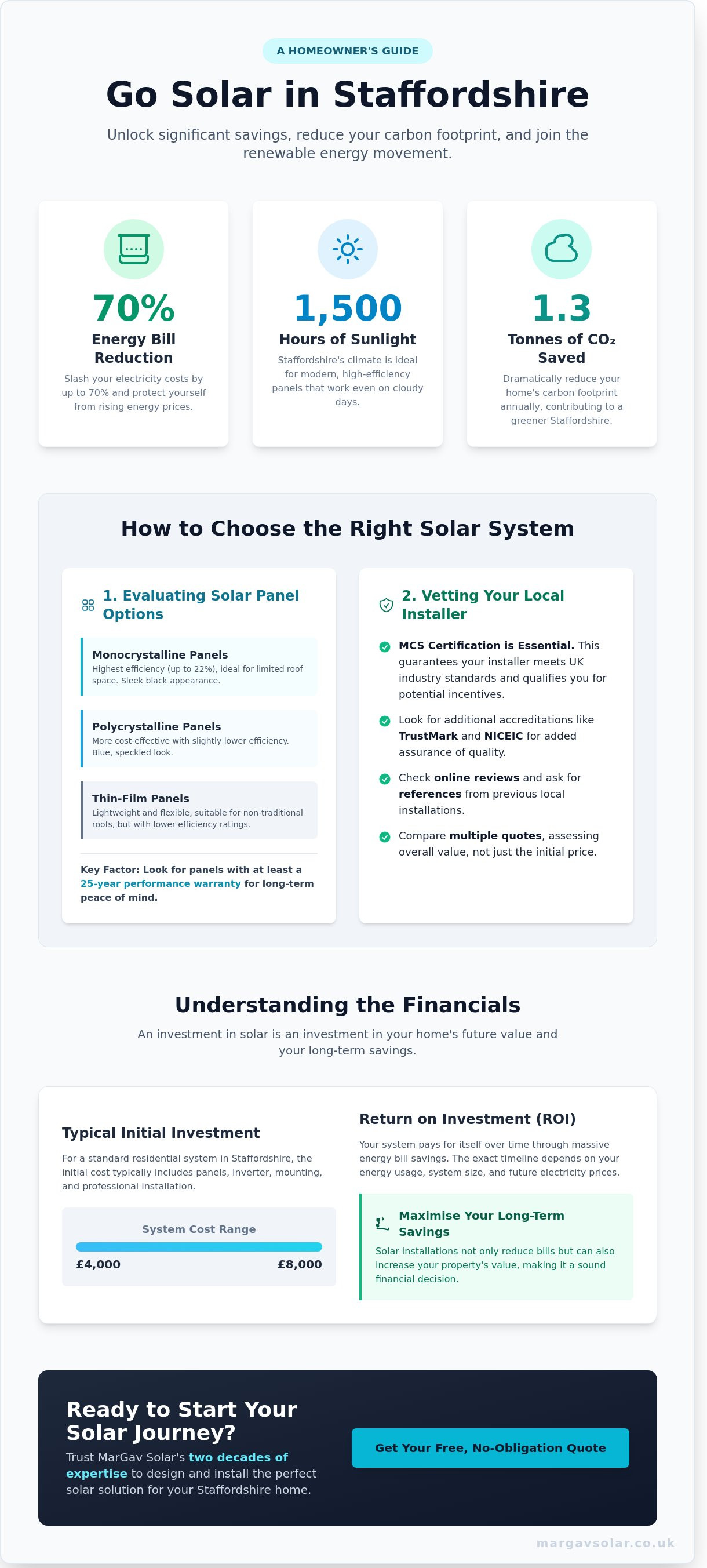
Staffordshire enjoys an average of around 1,500 hours of sunlight per year. While this may seem modest compared to sunnier regions, advancements in solar technology allow panels to perform efficiently even in less than ideal weather conditions. Modern solar panels can generate electricity on cloudy days, ensuring that households can benefit from solar energy all year round. This adaptability means that residents searching for solar energy near me can find solutions that fit their specific climate challenges.
Environmental Impact and Community Benefits
Switching to solar energy significantly reduces a household's carbon footprint. According to the UK’s Department for Business, Energy & Industrial Strategy, the average home can save approximately 1.3 tonnes of CO2 emissions annually by using solar energy. Beyond individual benefits, Staffordshire has seen a rise in community solar projects, which allow neighbourhoods to share resources and reduce costs collectively. These initiatives not only promote clean energy but also foster community spirit and engagement, paving the way for a more sustainable future.
In addition to environmental benefits, solar energy contributes to Staffordshire’s long-term sustainability goals. The region's commitment to reducing greenhouse gas emissions aligns with national objectives, making solar energy a vital part of the strategy to achieve net-zero by 2050. By investing in solar technology, Staffordshire residents are not just saving money on energy bills; they are actively participating in a movement towards a greener, more sustainable environment.
- Reduced carbon emissions by over 1.3 tonnes per household annually.
- Potential for community-driven solar projects that enhance local energy resilience.
- Access to government incentives to support solar installations.
In summary, the benefits of solar energy in Staffordshire extend far beyond individual savings. By embracing this renewable energy source, residents play a crucial role in driving the region towards a more sustainable and environmentally friendly future.
How to Choose the Right Solar Panels and Installers
Choosing the right solar panels and installers is crucial for maximising the benefits of solar energy for your home. With various options available, understanding the key factors can help you make an informed decision that suits your needs and budget.
Evaluating Solar Panel Options
There are several types of solar panels to consider, including monocrystalline, polycrystalline, and thin-film. Monocrystalline panels are known for their high efficiency and space-saving design, while polycrystalline panels are more cost-effective but slightly less efficient. Thin-film panels are lightweight and flexible, making them ideal for specific applications, although they typically have lower efficiency ratings.
Efficiency ratings are vital in determining how much energy a panel can produce. Most panels range between 15% to 22% efficiency, with higher ratings translating to more electricity generated per square metre. When researching options, look for panels from reputable manufacturers that offer warranties of at least 25 years. This reflects not only the durability of the product but also the confidence of the manufacturer in their technology.
For local recommendations, searching for “solar energy near me” can yield insights into installers with proven track records in your area. Additionally, seeking panels that have been installed by local companies can provide a sense of reliability and community support.
Finding and Vetting Local Installers
When selecting an installer, ensure they have the necessary certifications. The Microgeneration Certification Scheme (MCS) is essential in the UK, as it guarantees that the installer meets industry standards. Look for additional certifications, such as TrustMark and NICEIC, which indicate a commitment to quality and customer satisfaction.
- Check online reviews and testimonials to gauge previous customer experiences.
- Ask for references from past clients to gain insights into the quality of work.
Comparing quotes from different installers is also crucial. Don’t just focus on price; assess the overall service quality, including warranties and post-installation support. A lower quote may not always translate to better value if the service quality is lacking.
By taking the time to evaluate your options and selecting a qualified installer, you can enjoy the many benefits of solar energy while ensuring your investment is protected. For more information on finding reliable solar solutions, visit MargaV Solar.
Understanding the Financial Aspects of Solar Energy
When considering solar energy for your home, understanding the financial implications is crucial. Initial costs can appear daunting, but the long-term savings often outweigh these upfront investments. Many homeowners are discovering that solar energy near me not only reduces their carbon footprint but also provides significant financial benefits.
Cost Breakdown and ROI
The main components contributing to the initial costs of solar energy include:
- Solar panels: The price typically ranges from £4,000 to £8,000 for a standard residential system.
- Inverter and installation: Additional costs of £1,500 to £3,000 may apply.
- Maintenance: Generally minimal, averaging about £200 annually.
Despite these costs, the potential savings on energy bills can be substantial. Homeowners can save between £200 to £400 each year on their electricity bills, depending on usage and energy prices. With a typical payback period of 5 to 7 years, many find that they begin to see returns on their investment relatively quickly.
Financing and Incentive Options
To make solar energy more accessible, various financing options and incentives are available. The UK government offers several schemes, such as the Smart Export Guarantee (SEG), which pays homeowners for surplus energy fed back into the grid. This can further enhance your ROI.
Local councils often provide grants and low-interest loans to encourage the adoption of renewable energy. For instance, some regions offer up to £5,000 in grants to help cover initial installation costs. Additionally, homeowners may benefit from tax relief, such as the VAT reduction on solar panel installation, making the transition to solar energy even more appealing.
Investing in solar energy not only supports a sustainable future but can also increase your property's value. Studies show that homes with solar energy systems can sell for approximately 4% more than comparable homes without them. This means that the financial benefits extend beyond just savings on energy bills; they also enhance the overall value of your home.
In summary, while the initial costs of solar energy may seem high, the long-term savings, financing options, and increased property value present a compelling case for homeowners considering this eco-friendly solution. By exploring solar energy near me, you can take significant steps toward a greener, more economically sound future.
Navigating Local Regulations and Incentives
Installing solar panels can be a rewarding investment for UK homeowners, but it's crucial to understand the local regulations and incentives that may influence your decision. In Staffordshire, as in other regions, specific planning permissions and community initiatives can play a significant role in your solar energy journey.
Planning Permissions and Regulations
Generally, planning permission is not required if your solar installation meets certain criteria. For instance, solar panels can often be installed on domestic properties without a formal application if they do not protrude more than 200mm from the surface of the roof. However, if your home is listed or in a conservation area, you may need to seek planning permission.
Building regulations also apply and ensure that the installation meets safety and structural standards. It's advisable to consult with local authorities to confirm compliance, as this can vary from one council to another. The Staffordshire County Council actively supports solar projects and offers guidance through their planning department, making it easier for homeowners to navigate the regulations.
Local Incentives and Community Projects
Several incentives are available for residents looking to harness solar energy near them. The UK government offers the Smart Export Guarantee (SEG), which allows homeowners to receive payments for the surplus energy they generate and export back to the grid. Additionally, some local councils, including Staffordshire, provide grants or funding schemes to support solar energy initiatives.
- Smart Export Guarantee (SEG): Payments for surplus energy exported to the grid.
- Local Grants: Check with Staffordshire Council for available funding.
Applying for these incentives is often straightforward. Homeowners can start by contacting their local council to understand the specific criteria and documentation required. Successful community projects, such as the Solar Together initiative, showcase collaborations aimed at increasing solar adoption across Staffordshire. This programme has helped numerous households install solar panels at discounted rates.
Local councils play a vital role in promoting solar energy initiatives, offering resources and support for residents. They often conduct outreach programmes to raise awareness about the benefits of solar energy, encouraging more homeowners to consider this sustainable option.
By understanding the local regulations and taking advantage of available incentives, you can make a well-informed decision about solar energy. For more detailed guidance and to explore your options, contact us today.
MarGav Solar: Your Trusted Local Solar Partner
When searching for "solar energy near me" in Staffordshire, homeowners and businesses consistently discover MarGav Solar as their trusted local renewable energy specialist.
Your Journey to Energy Independence Starts Now
Staffordshire homeowners are perfectly positioned to harness the power of solar energy. With
Frequently Asked Questions
How effective are solar panels in Staffordshire's climate?
Solar panels are quite effective in Staffordshire's climate, which experiences a mix of sunny and cloudy days throughout the year. While the region may not receive as much sunlight as southern parts of the UK, solar panels can still generate electricity efficiently. On average, solar panels in the UK can produce between 750 to 1,200 kWh per year, depending on the installation and local weather conditions.
What are the cost implications of installing solar panels at home?
The cost of installing solar panels at home can vary widely, typically ranging from £4,000 to £8,000 for a standard system. This includes the panels, inverter, and installation fees. However, with government incentives such as the Smart Export Guarantee, homeowners can offset some of these costs by selling excess energy back to the grid, making solar energy a financially viable option in the long run.
How do I choose a reliable solar panel installer near me?
To choose a reliable solar panel installer near you, start by checking their credentials and experience. Look for installers who are certified by organisations like the Microgeneration Certification Scheme (MCS). Reading customer reviews and requesting quotes from multiple companies can also help you assess their reliability and competitiveness. Don't hesitate to ask for references from previous installations.
Are there any local incentives for solar energy in Staffordshire?
Yes, there are local incentives for solar energy in Staffordshire. The Smart Export Guarantee (SEG) allows homeowners to earn money by exporting surplus electricity generated by their solar panels back to the grid. Additionally, some local councils may offer grants or funding for renewable energy projects, so it's worth checking with your local authority for specific programmes available in your area.
What maintenance is required for residential solar panels?
Residential solar panels require minimal maintenance, primarily involving keeping them clean and free from debris. It's advisable to inspect the panels periodically for any signs of damage or dirt accumulation that could hinder performance. Many homeowners in Staffordshire find that annual professional cleaning and inspection are sufficient to ensure optimal efficiency and longevity of their solar systems.
How long does it take to install solar panels?
The installation of solar panels typically takes one to three days, depending on the size of the system and the complexity of the installation. Once you’ve chosen a reliable installer, they will provide a detailed timeline. Most installations are completed quickly, ensuring that you can start benefiting from solar energy as soon as possible.


