

The highest SEG export rate isn’t always the best deal. It may depend on importing electricity from the same supplier or having your system installed by them. If you’re searching for an “MCS certified solar installer Staffordshire”, remember that changing your SEG tariff is usually a supplier and paperwork process, not a reason to replace your panels.
It’s understandable to wonder whether your system qualifies, who handles the switch and whether your payments could pause while providers change. Your energy supplier manages the SEG tariff and account. An installer may help you locate system details or certification documents, but doesn’t control your contract or export payments.
This guide explains how to compare export rates with import costs and contract terms, check eligibility and gather the information a new supplier may request. You’ll also learn how to use meter readings and coordinate the change to reduce the risk of a payment gap, plus when to ask an installer for help and when to contact your supplier. If you’re still receiving Feed-in Tariff payments, take extra care before switching export arrangements, as that decision may be irreversible.
Key Takeaways
- Check your existing export agreement and gather your system and installation records before approaching a new SEG supplier.
- Compare eligibility criteria, import supply conditions, payment frequency and contract terms, not just the advertised export rate.
- Confirm the supplier’s latest rates and application requirements directly before applying, as terms can change.
- Follow the new supplier’s transfer instructions and wait for confirmation before cancelling your current export arrangement.
- If you’re looking for an MCS certified solar installer in Staffordshire, check certification independently. An installer may help identify system records, but the supplier handles the tariff application.
What changing your SEG tariff means for a Staffordshire solar household
Changing your Smart Export Guarantee (SEG) tariff is generally an administrative change to who pays you for eligible electricity sent to the grid. It doesn’t usually require you to change your electricity import supplier, replace your panels or alter how your system works. The SEG is part of the wider world of Microgeneration, which includes small-scale renewable electricity production such as rooftop solar.
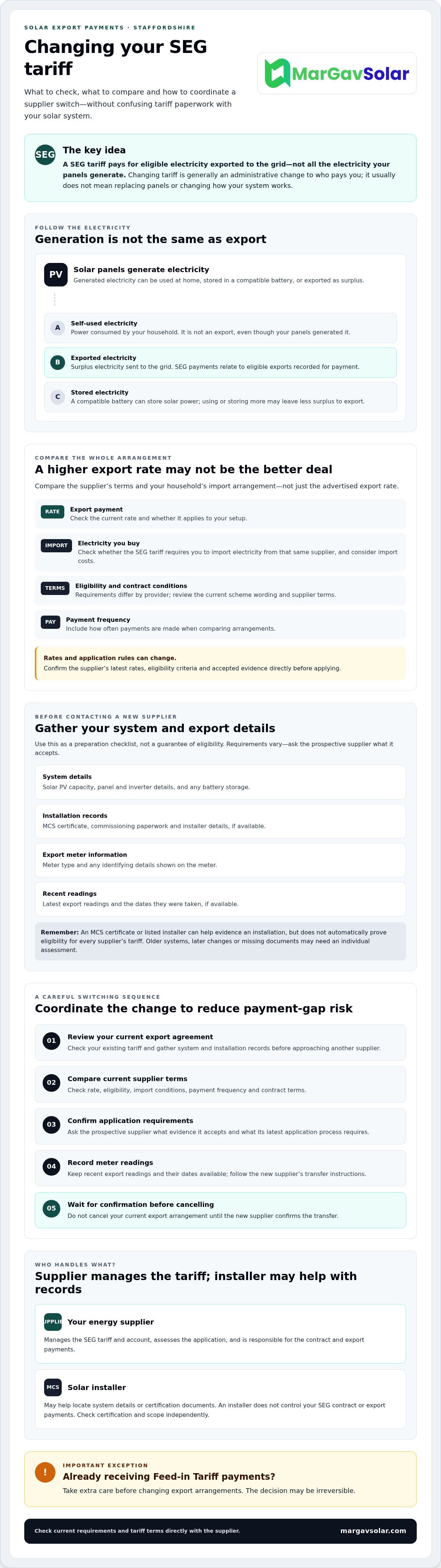
Generated electricity is all the power your solar panels produce. You can use some of it in your home, store it in a compatible battery or export surplus electricity to the grid. Self-used electricity is consumed by your household, while exported electricity is surplus sent to the grid. SEG payments relate to eligible exports, not all the electricity your panels generate.
For Staffordshire households, the practical point is simple: an export tariff and an import supply contract are separate arrangements, even if one supplier offers both. Before switching, check whether a prospective SEG tariff requires you to buy your imported electricity from that supplier. Confirm the current scheme wording and each provider’s terms directly, as requirements and tariff details can change.
What does the Smart Export Guarantee pay for?
Eligible suppliers offer export tariffs that pay for electricity recorded as exported to the grid. Rates, eligibility conditions and payment terms vary, so check the supplier’s current tariff before applying rather than relying on an old comparison or advertised headline figure. Electricity you use directly at home doesn’t count as an export, even though your panels generated it.
Does changing an SEG tariff affect your solar system?
A tariff switch changes the payment arrangement, not the panels’ ability to generate electricity. Your import supply, panel operation and battery use are all part of your household energy setup, but choosing a different export supplier doesn’t automatically change them.
Equipment changes can affect how much electricity you export. For example, using more solar power at home or storing more in a battery may leave less surplus to send to the grid. Check your tariff terms if you alter your system, and ask the supplier whether it needs updated details. For background on system options and installation, consult a Staffordshire solar panel installation guide.
If paperwork or system details are unclear, an MCS certified solar installer in Staffordshire may be able to help identify installation records. Check an installer’s certification and scope independently. The supplier remains responsible for the SEG application and tariff.
Check SEG eligibility and paperwork before contacting a new supplier
Before comparing applications, gather the details a prospective supplier needs to assess your system and export setup. Requirements can vary, so treat this as a preparation checklist, not a guarantee of eligibility. Read Ofgem guidance for generators, then confirm the current rules and accepted evidence with the supplier you’re considering.
- System details: Note the solar PV capacity, panel and inverter details, and any battery storage.
- Installation records: Look for the MCS certificate, commissioning paperwork and installer details, if available.
- Export meter information: Record the meter type and any identifying details shown on it.
- Recent readings: Have your latest export readings and the dates they were taken to hand, if available.
An MCS certificate or a listed installer can help evidence an installation, but it doesn’t automatically prove that your household meets every condition of a particular supplier’s tariff. Providers may set their own application requirements and ask for different evidence. Older systems, changes made since installation or missing documents may need an individual assessment. Ask the supplier what it accepts before submitting an application.
Which documents and meter details might a supplier request?
Search your installation paperwork for an MCS certificate, then check whether the prospective supplier requires one and what alternatives it accepts. Gather inverter details, commissioning records and export meter information, along with recent readings where available. If a record is missing, ask the supplier how to proceed rather than assuming the system is ineligible or applying with incomplete evidence.
How to check an installer’s MCS certification in Staffordshire
Use the current public MCS installer directory and search the company’s exact legal or trading name. Check that the listing is current and covers the relevant technology and installation work, not just a similar company name. An installer’s certification status is separate from a supplier’s decision about your system or tariff. If you’re looking for an MCS certified solar installer in Staffordshire, verify the directory entry and scope yourself rather than relying on a general claim.
If you can’t locate system records, an installer may be able to help identify information about existing equipment. MarGav Solar provides solar maintenance and consultation in Staffordshire, which may be useful when checking an existing system. This is separate from applying for or switching an SEG tariff, which remains supplier led. You can ask about a solar system consultation if you need help reviewing your setup.
Compare SEG tariffs by more than the headline export rate
A higher export rate may look attractive, but it doesn’t tell you how much electricity you’ll export or what conditions come with the tariff. Compare offers against your household’s import costs, usage patterns and export history. Check the official Smart Export Guarantee rules, then verify each supplier’s current rates and terms on the date you apply. There’s no single tariff that suits every Staffordshire home.
What should you compare in SEG tariff terms?
Use a simple table to compare each offer. Record where you found the information and the date, since tariffs and terms can change. Ask the supplier to clarify anything unclear before applying.
| What to compare | Questions to ask |
|---|---|
| Export rate | Is it fixed, variable or dependent on the time electricity is exported? |
| Eligibility | Does the tariff accept your system and installation circumstances? |
| Import supply tie-in | Must you also buy your electricity from this supplier? |
| Payment frequency | How often are export payments calculated and paid? |
| Contract conditions | What are the contract duration, exit terms and technical prerequisites? |
Consider the whole energy deal, not export income in isolation. If a tariff requires you to switch your import supply, compare the resulting import contract with your current one as well. A high export rate may not suit your household if the associated conditions don’t fit your needs.
How solar panels and batteries can change your export profile
Your export pattern depends partly on when you use electricity. Power consumed directly by appliances at home isn’t available to export. A battery can store some surplus generation for later use, which may reduce exports at one time and change when remaining electricity reaches the grid. The outcome depends on system settings, battery capacity and household needs. Where possible, use your own meter readings rather than assuming a particular tariff will pay more.
For a closer look at how storage affects household energy use, read a battery storage guide and compare its advice with your system setup. If you need help understanding your equipment or export profile, an MCS certified solar installer in Staffordshire may be able to discuss system details. Check certification and scope independently. The supplier remains responsible for explaining its tariff and application terms.
How to switch SEG suppliers step by step
Changing your export provider is a supplier led process, so confirm the handover before ending your current arrangement. The new supplier should explain what it needs and how the change will be handled. Keep records of messages, readings and dates throughout, particularly if you’re concerned about a gap between payment periods.
The switching checklist: from comparison to application
- 1. Review your current terms. Check how payments are calculated and whether the agreement includes notice, an end date or exit conditions. Note the dates covered by your most recent payment.
- 2. Compare alternatives. Look at export rates alongside eligibility, any import supply tie-in, payment schedule and contract conditions.
- 3. Confirm the new supplier’s requirements. Ask whether your system and meter setup are accepted, which documents it needs and when the transfer can take place. Requirements and processes can differ between suppliers.
- 4. Apply using its specified process. Submit the requested system records and export readings as instructed. Check readings and dates carefully before sending them.
- 5. Wait for clear transfer instructions. Don’t cancel your existing export arrangement until the new supplier confirms how and when the transfer should happen. Save application confirmations and keep copies of documents and correspondence.
Accurate readings help you track which payment period they relate to. Follow the supplier’s instructions for providing them, and retain a note of the reading, date and submission confirmation. Don’t assume your import supplier is responsible for an SEG account if the two arrangements are with different providers.
What to do if the switch is delayed or payments change
Contact the supplier responsible for the SEG account or transfer stage in question and request a written update. Before treating a payment difference as an error, compare the readings used, the dates covered and the relevant contract terms. If the explanation doesn’t resolve your concern, follow that supplier’s published complaints process and check its current guidance on escalation routes.
If the supplier asks for system information you can’t find, an installer may be able to help identify equipment or locate installation records, but won’t manage the tariff transfer. If you’re seeking an MCS certified solar installer in Staffordshire, check the company’s current status and relevant scope independently. For a local check of your existing solar system, ask MarGav Solar about a consultation. The company offers solar consultation and maintenance in Staffordshire, separate from SEG applications and supplier switching.
When an MCS certified solar installer in Staffordshire can help with your SEG switch
An installer can help you understand your solar equipment and locate available system records, but your energy supplier manages the SEG application, tariff and payment account. Keep those roles separate to direct each question to the right place: ask the supplier about eligibility and transfer arrangements, and ask an installer about the system itself.
A system review may be useful if paperwork is missing, equipment has changed or export readings seem unexpectedly low. For example, if your inverter monitoring shows generation but your export meter records little surplus, an installer can help assess the equipment and how electricity is being used or stored. That doesn’t establish whether you qualify for a particular tariff. The supplier makes that assessment.
When should you ask an installer to check your system?
Consider asking for a review if generation or export readings don’t seem consistent with your monitoring records, or if you can’t identify your panels, inverter or installation documents. An installer may be able to assess the equipment and help locate records where accessible. For routine upkeep, consult a solar panel maintenance guide and arrange professional attention if the system appears to need it.
What Staffordshire homeowners should confirm before choosing an installer
Check the company’s current certification status and scope in the relevant public directory, and ask about insurance and written workmanship terms. For proposed work, request an itemised proposal that identifies equipment and installation tasks and explains what electrical certification arrangements apply. A directory listing alone doesn’t confirm that an installer is right for every job, so check the specific work being offered.
MarGav Solar provides solar maintenance and consultation in Staffordshire. Before choosing any installer, check its current status independently rather than relying on an unverified claim. A search for an MCS certified solar installer in Staffordshire should include a check that the certification covers the relevant technology and work.
If you’d like advice on an existing system or are considering residential solar PV, you can discuss a local consultation with MarGav Solar. Bring any available inverter details, monitoring information and installation records. The team may help you understand your setup, while your chosen energy supplier remains the point of contact for tariff applications and SEG payments.
Make your next SEG switch with confidence
A smoother change starts with knowing what your current agreement requires, having your system records and export readings ready, and checking the new supplier’s eligibility rules and contract terms before applying. Compare the tariff in the context of your household’s energy use, not just its headline export rate. Keep your existing arrangement in place until the new supplier explains the transfer process.
If system records are missing or your equipment needs checking, an installer may be able to help with the solar setup, while the supplier remains responsible for the SEG application and payments. If you’re looking for an MCS certified solar installer in Staffordshire, verify the company’s current certification and relevant scope independently.
MarGav Solar brings more than 20 years of industry experience and provides consultation, installation and ongoing maintenance support. For advice about your Staffordshire solar system, talk to MarGav Solar about your Staffordshire solar system. The team can help you review your solar setup, while your energy supplier handles SEG applications and payments.
Frequently Asked Questions
How do I switch to a different SEG tariff?
Start by reviewing your current export agreement, then compare tariffs and check the prospective supplier’s eligibility criteria, contract terms and document requirements. Ask how it handles the transfer and when to provide meter readings. Submit the requested information through its specified process, keep copies of your application and readings, and don’t cancel your existing arrangement until the new supplier confirms what to do. Requirements can vary, so check directly before applying.
Can I change my SEG supplier without changing my electricity supplier?
Yes, you can usually choose an SEG supplier that’s different from your electricity import supplier. However, some export tariffs may require you to take your imported electricity from the same company, so check the conditions carefully. Compare the import contract as well as export payments if a tariff has a tie-in. Staffordshire households should confirm current terms with each supplier, since offers and eligibility conditions can change.
Do I need an MCS certificate to receive SEG payments?
An MCS certificate may be requested as evidence that your installation meets scheme requirements, but suppliers can specify what documentation they accept, including equivalent evidence. Check the current eligibility rules and application requirements with the supplier before applying. An installer’s certification doesn’t by itself confirm that your household meets every condition of a particular tariff. If your certificate is missing, ask the supplier what other records it will consider.
Can I switch SEG tariffs if my solar panels were installed years ago?
Possibly, but an older installation isn’t automatically eligible or ineligible. The supplier may assess the system’s certification, installation records, meter setup and other details against its current requirements. Gather any certificate, commissioning paperwork, inverter information and export readings you can find, then ask the supplier what evidence it accepts. If equipment has changed or documents are missing, a solar installer may help identify system details, but the supplier decides tariff eligibility.
How long does it take to switch SEG suppliers?
There isn’t a single switching timeframe to rely on. Timing depends on the suppliers’ processes and your application. Ask the prospective provider how long its transfer is expected to take, what could delay it and when your new tariff would begin. Keep your existing export arrangement active until the supplier confirms the handover instructions. If the change takes longer than expected, contact the supplier handling the application for a written update.
What meter readings do I need to switch my SEG tariff?
Follow the new supplier’s instructions, as it will confirm whether it needs a current export reading, a reading on a particular date or other meter details. Record the reading and date exactly as shown, and keep proof of submission. Export readings relate to electricity sent to the grid, not electricity used in your home. If your meter doesn’t display export information or you’re unsure which reading applies, ask the supplier before submitting it.
Can a Staffordshire solar installer change my SEG tariff for me?
No, your energy supplier manages the SEG application, tariff and export payments. A Staffordshire installer may be able to help you identify panels, inverter details or installation records, but that’s different from arranging a tariff switch. If you’re looking for an MCS certified solar installer in Staffordshire, check the company’s current certification and relevant scope independently. MarGav Solar provides solar consultation and maintenance in Staffordshire, but doesn’t manage SEG supplier changes.


