

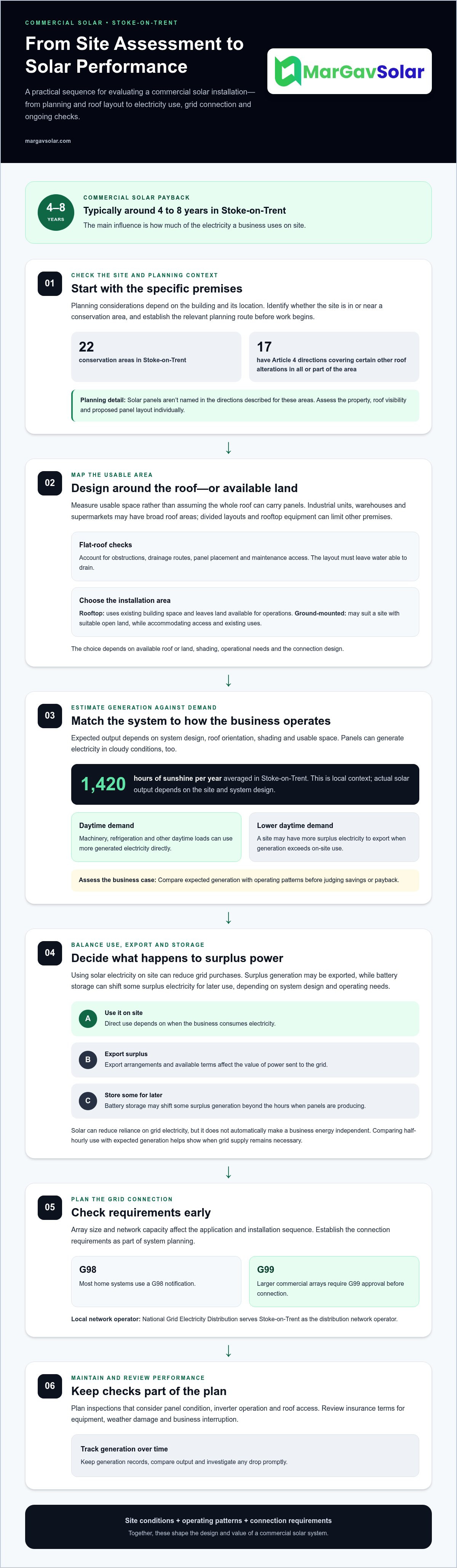
Commercial solar installations typically pay back in around 4 to 8 years, depending mainly on how much electricity a business uses on site. Whether solar power for your business in Stoke-on-Trent needs planning permission depends on the building and its location. In all or part of 17 local conservation areas, Article 4 directions cover certain other roof alterations, while solar panels aren’t named in the directions described for the city.
For industrial units, warehouses and supermarkets, the key question is not simply whether the roof can support panels. Roof layout, daytime electricity use, grid exports and the potential value of battery storage all shape what a system can do. Flat roofs can also be suitable, with obstructions and drainage among the practical considerations.
This guide explains what to consider before installing solar, including planning permission, flat-roof design, generation in cloudy weather, exporting surplus electricity and storing energy for later use. You’ll also learn how solar services in Staffordshire fit into the process, helping you assess the next steps for your premises.
Key Takeaways
- Assess the building’s location and roof before deciding what planning steps or grid applications a commercial installation may need.
- On a flat roof, consider obstructions, drainage and panel layout to make practical use of the available space.
- Compare solar generation with your business’s electricity use to weigh exporting surplus power against storing it for later.
- Industrial units, supermarkets and warehouses need system designs that reflect their roof layouts and operating patterns, with maintenance considered over time.
- MarGav Solar offers Residential Solar PV Systems, Battery Storage Solutions, EV Charging Points and Solar Panel Maintenance & Cleaning.
Do I need planning permission for solar panels in Stoke-on-Trent?
Planning permission depends on the premises and its location, so assess both before designing a commercial solar installation. Stoke-on-Trent has 22 conservation areas; in all or part of 17, Article 4 directions cover certain other alterations to roof slopes facing a highway, waterway or open space. Solar panels aren’t named in the directions described for these areas.
For a site in or near a conservation area, identify the roof’s orientation, visibility and proposed panel layout, then establish the relevant planning route before work begins. Planning considerations can differ from one Stoke-on-Trent roof to another, so assess the specific property.
Commercial Premises and Roof Potential
Industrial units, warehouses and supermarkets often offer broad roof areas, while smaller commercial premises may have more divided layouts or rooftop equipment to work around. Stoke-on-Trent’s Ceramic Valley Enterprise Zone spans 140 hectares across six sites and has brought 2,376 jobs, highlighting the scale of local industrial activity. For each property, map usable roof space, obstructions and the business’s daytime electricity demand before sizing PV systems.
Rooftop and Ground-Mounted Systems
Rooftop solar uses existing building space, leaving land available for loading, parking or operations. Ground-mounted solar may suit a business with suitable open land, but its layout must accommodate site access and existing uses. The right option depends on available roof or land, shading, operational needs and the connection design.
Stoke-on-Trent averages 1,420 hours of sunshine during the year, and solar panels can also generate electricity in cloudy conditions. Actual output depends on system design, roof orientation, shading and how much usable space is available. An initial design should relate expected generation to the site’s electricity use, especially when machinery or refrigeration runs through daylight hours.
Commercial solar payback in Stoke-on-Trent is typically around 4 to 8 years, depending mainly on how much electricity the business uses on site. A warehouse using power during working hours may consume more generation directly; a site with lower daytime demand may export more surplus electricity. Compare operating patterns with the proposed system output before judging the business case.
Grid applications form part of system planning. Most home systems use a G98 notification, while larger commercial arrays require G99 approval before connection. National Grid Electricity Distribution serves Stoke-on-Trent as the distribution network operator. Establish the connection requirements early, since array size and network capacity affect the application and installation sequence.
Plan for maintenance, insurance and performance risks. Schedule inspections that consider panel condition, inverter operation and roof access, and review insurance terms for equipment, weather damage and business interruption. Keep generation records so you can compare output over time and investigate any drop promptly.
Can I Install Solar Panels if My Commercial Property Has a Flat Roof?
Yes, a flat roof can accommodate commercial solar panels. The design needs to account for obstructions and drainage, so assess the usable area rather than treating the entire roof as available. A good plan shows where panels can sit, how maintenance access is preserved and how water will continue to drain. These details affect both the layout and the electricity the system can generate.
Start by comparing expected generation with the business’s electricity use. A supermarket, for example, may use power during daylight for refrigeration and lighting, while a warehouse’s demand depends on its operations. Using electricity on site can reduce purchases from the grid. Surplus generation may be exported, so the balance between daytime demand and output affects the system’s value.
The Energy Saving Trust calculator estimates annual bill savings of £600-£900 for a typical 4kWp solar panel system, depending on location and the Smart Export Guarantee. This is a residential-system estimate, not a forecast for a commercial roof. For a business, savings depend on system size, generation, electricity use and how much surplus power is exported. Use those factors in a site-specific assessment rather than applying a household estimate directly.
Solar generation can reduce reliance on grid electricity, but it does not automatically make a business energy independent. Panels generate during daylight, while demand may continue after output falls. Comparing half-hourly electricity use with expected generation helps show when solar can serve on-site loads and when grid supply remains necessary. Battery storage can shift some surplus generation for later use, depending on system design and operating needs.
Generating electricity on site can reduce a business’s exposure to changes in how much power it buys from the grid. It does not eliminate grid reliance or fix the price of every unit used. The result depends on how much electricity the panels generate, how much the premises consume directly and the terms available for exported power. A useful savings estimate should make these assumptions clear.
For a flat-roof project, review the roof plan, drainage routes, obstructions and electricity demand together. Then compare proposed generation with the site’s operating pattern and export arrangements. The Energy Saving Trust identifies reduced electricity bills, lower carbon footprints and payments for surplus generation among the potential benefits of solar PV. Actual outcomes depend on system design and how the business uses its electricity.
Solar generation, grid exports and battery storage
A commercial solar system combines panels, an inverter and, where needed, battery storage. How these components work together affects when a business uses its own electricity, exports surplus generation or draws power from the grid.
Solar Generation and Grid Exports
Solar cells can generate electricity in cloudy conditions because they do not need direct sunlight. Output still varies with daylight, roof orientation, shading and system design. Electricity used by the business as it is generated can reduce the amount bought from the grid. Surplus electricity may be sold to an electricity company, with payments depending on the applicable export arrangement.
Review the site’s electricity use alongside expected generation. A business with daytime operations may use more solar power directly, while a site with low daytime demand could have more surplus to export. This comparison helps inform system design and export arrangements, and clarifies how much grid electricity the business may still need outside solar generation hours.
Exporting and storing surplus are different ways to use the same electricity. Export sends it to the grid; a battery keeps some available for later. The balance depends on business demand, solar output and storage capacity. Map when key equipment operates, then consider whether exporting or later on-site use better fits the site’s energy pattern.
System Components and Warranties
Panels generate direct current electricity, while an inverter converts it for use on site. A battery can store surplus power for later, depending on the system configuration. When comparing designs, consider how the components work together, what the system monitors and which warranty terms apply to panels, inverters and storage. Review performance coverage separately from product and workmanship terms.
Inverter choice matters because it connects generation, battery storage and the building’s electrical system. A hybrid inverter can work with panels and a compatible battery; the design should match the business’s intended use. An existing system may need an inverter upgrade or replacement to support a changed setup. Compatibility, operating requirements and warranty coverage should guide the design.
Battery storage can shift some solar electricity from generation hours to a later period, such as evening operations. It does not create additional energy: the amount available depends on solar surplus, battery capacity and when electricity is used. Compare this with export options and grid demand when deciding whether storage suits your premises.
Battery storage can also support EV charging by making stored solar electricity available to a vehicle later. Its practical value depends on when vehicles are parked, when solar generation occurs and whether other site loads need the same stored energy. Comparing vehicle charging patterns with building demand helps clarify system priorities.
Solar storage may provide power during grid outages, depending on the system design. Understand which loads the setup can support and how it operates during an outage. Matching panels, inverter and battery to actual site needs clarifies the system’s role, whether the priority is self-use, exports, EV charging or backup.
Solar installation and maintenance in Staffordshire and nearby counties
A commercial solar project moves from site survey through system design, installation and aftercare. In Staffordshire, planning around roof condition, battery placement and business operations helps shape a workable installation sequence.
Consultation Through Aftercare
Begin with a consultation to outline the site’s electricity needs, operating hours and priorities. A property assessment then documents roof layout, obstructions, access and proposed equipment locations. The resulting design should explain how panels, inverters and any battery will fit the premises. After installation, maintenance and generation monitoring can help identify faults or changes in performance.
Timing also needs coordination. The installer’s estimate is typically around 4 to 6 weeks from first enquiry to installation. Use that period to plan site access, deliveries, staff communication and any grid application alongside the survey and design work.
Certification and Customer Protections
Certification is one part of assessing an installer’s qualifications, but the written project scope matters too. It should identify the equipment, installation work, commissioning steps and aftercare responsibilities. Set out workmanship coverage and product warranty terms separately, so each protection is clear. For example, establish who handles system faults and keeps performance records.
Keep project documents together, including the design, equipment details, commissioning records and maintenance schedule. These support future servicing and help explain the system’s original configuration if an inverter or battery needs attention.
Planning Installation Around Business Operations
For a warehouse, agree delivery routes and roof access before installation begins. A supermarket can plan work around customer areas, refrigeration and loading activity. An industrial unit should coordinate access with machinery movements and shift patterns. This helps organise installation while keeping essential business operations in view.
Where practical, schedule work for quieter operating periods and agree how staff will receive updates. Include battery equipment locations and electrical work in the site plan rather than treating them as separate tasks. A clear sequence helps avoid clashes between installation activity and normal site use.
Roof Conditions and Structural Checks
Before installing commercial panels, survey the roof’s condition, construction, drainage, obstructions and safe access. A structural assessment should establish whether it can support the proposed system and mounting arrangement. Repair needs, roof age and equipment placement also affect the suitability of the design.
Nearby examples show how storage choices vary by project: Brown Edge in Staffordshire has 20 kWh of battery storage, while installations in Alsager, Cheshire, and Norton in Hales, Shropshire, each list 10 kWh. These examples illustrate different project configurations, not a standard specification for every roof. Match the design to the premises and its electricity use.
Solar solutions for industrial units, supermarkets and warehouses
Industrial units, supermarkets and warehouses use electricity differently, so a good solar design starts with operating patterns. An industrial unit may run machinery through working hours; a supermarket has refrigeration and lighting loads; a warehouse may use power for handling equipment and offices. Compare those demands with solar generation times to see where on-site electricity can serve daily operations and where surplus may arise.
Roof space is only one part of the assessment. Map skylights, ventilation equipment, roof access and drainage, then identify usable panel areas. A large roof can still be a poor fit if shading or equipment breaks up the layout. Include roof condition and structural capacity in the design process, alongside access routes for installation and future maintenance.
Bring together electricity records, operating hours and planned changes for each site. A supermarket adding refrigeration equipment, for example, may have a different daytime demand profile from a warehouse running mainly during staffed shifts. This comparison helps size the system around electricity the business can use directly. It also helps estimate when surplus could be exported or stored, rather than relying on roof area alone.
Carbon reporting can be another consideration for a business member responsible for sustainability or facilities. Record the system’s generation and on-site use so energy decisions can be reviewed against operational needs. Stoke-on-Trent City Council’s climate strategy targets city-wide net zero by 2050; that local context makes clear why businesses may assess emissions alongside electricity use. A solar installation’s contribution depends on its output and how the site uses the generated power.
Grid connection planning matters for larger arrays. Larger commercial systems require G99 approval before connection, while the local distribution network operator for Stoke-on-Trent is National Grid Electricity Distribution. Account for this application in project planning, alongside the site survey and installation schedule. The array design, network requirements and business operations all influence the route from initial assessment to commissioning.
System performance also depends on practical aftercare. Set a maintenance plan that considers panel condition, inverter operation, roof access and generation records. A fall in recorded output can prompt an investigation into shading, equipment issues or changes in site use. A clear system design should explain its assumptions, including how the business will use power, export surplus and review performance.
For an industrial unit, supermarket or warehouse, bring together the roof plan, electricity-use pattern and connection needs before settling on a design. Discuss solar options for your business premises as a next step toward assessing how generation could fit your operations.
MarGav Solar: Residential Solar PV Systems
MarGav Solar provides solar panel systems, battery storage, EV charging points, and solar panel maintenance and cleaning. These services can support businesses planning solar or energy upgrades for their premises, as well as owners seeking maintenance for existing solar panels.
To explore a solar project, outline your property’s electricity use, available roof space and goals for using or storing generated power. This gives the consultation a clear focus and helps shape a system around your premises and priorities.
To discuss your needs, contact MarGav Solar.
Turn your solar plans into a practical next step
Before moving ahead, decide what you want a solar project to do for your premises. Is your priority to use more generated electricity on site, support vehicle charging or plan energy use beyond daylight hours? These priorities can shape the discussion and keep the next step focused on your property and operations.
If you’re asking, “How could solar power for my business in Stoke-on-Trent fit my plans?”, MarGav Solar provides solar panels, battery storage and EV charging points. These solutions can be tailored to your property and energy needs.
You don’t need to have every design decision settled before starting a discussion. Bring your aims and the basic details of the property, then explore which direction makes sense for your circumstances. Contact MarGav Solar about your project and take the next step towards a clearer solar plan.
Frequently Asked Questions
Can My Business Premises Run Solely on Solar Power?
The answer depends on the property’s size and annual electricity use. A business with substantial daytime demand may use a large share of its solar generation directly, while evening or overnight operations need power after panels stop generating. Battery storage can shift some surplus electricity for later, but system capacity and consumption patterns determine how much grid reliance remains. Compare annual demand with expected generation before planning for complete independence.
Do you offer finance?
MarGav Solar describes funding of up to 50% towards commercial solar panel installations. Funding support is different from a loan or repayment plan, so don’t treat the percentage as a monthly finance offer. How funding applies depends on eligibility and project details. Consider how the remaining project costs fit your business budget, and base financial planning on the terms applying to your installation.
How Does PPA Work For My Business?
With a Power Purchase Agreement, a third party funds the solar system, and your business buys the electricity it generates at a predetermined rate for an agreed contract period. The arrangement can reduce energy costs by up to 75%, according to the market information provided. The result depends on the contract rate and how much generated electricity your business uses. Review the contract period, electricity price and export arrangements.
Investing in Solar Panels - Are Solar Panels Expensive?
The investment depends on system size and design, the roof, electrical work and whether battery storage is included. A larger installation may involve more equipment and a different grid connection process than a smaller array. MarGav Solar provides a project quote based on the proposed installation. Compare expected generation and on-site use with your business’s energy priorities, rather than judging by panel count alone.
What is the typical cost of commercial solar panels in Stoke-on-Trent?
There is no single project price that suits every Stoke-on-Trent business. Cost depends on system size, roof condition, installation complexity, electrical requirements and whether storage is included. MarGav Solar provides a project quote based on the proposed installation. A useful assessment sets out the proposed equipment and work, then relates the project to your premises’ electricity use and operating pattern.
How much could a Stoke-on-Trent business save with solar power?
Savings depend chiefly on how much generated electricity the business uses on site, alongside system output and export arrangements. If you’re assessing solar power for your business in Stoke-on-Trent, compare your electricity consumption with expected generation. Treat any estimate as an example, not a forecast for every business.
What grants, tax relief, or financing are available for UK businesses installing solar panels?
MarGav Solar describes funding of up to 50% towards commercial solar panel installations. Other funding and tax treatment depend on the business, asset ownership, project structure and current scheme rules. These are separate questions: a grant or funding contribution reduces eligible project costs, while finance involves repayment terms. Build your assessment around the specific installation and your company’s circumstances, rather than assuming every scheme applies.
What planning permission and building regulations apply to commercial solar panels in England?
Planning requirements depend on the property and location. Stoke-on-Trent has 22 conservation areas; Article 4 directions in all or part of 17 cover certain other roof alterations facing a highway, waterway or open space. Larger commercial arrays require G99 approval before grid connection. Building-related checks should address roof structure, drainage and electrical integration, so include these in the design and installation plan.


