
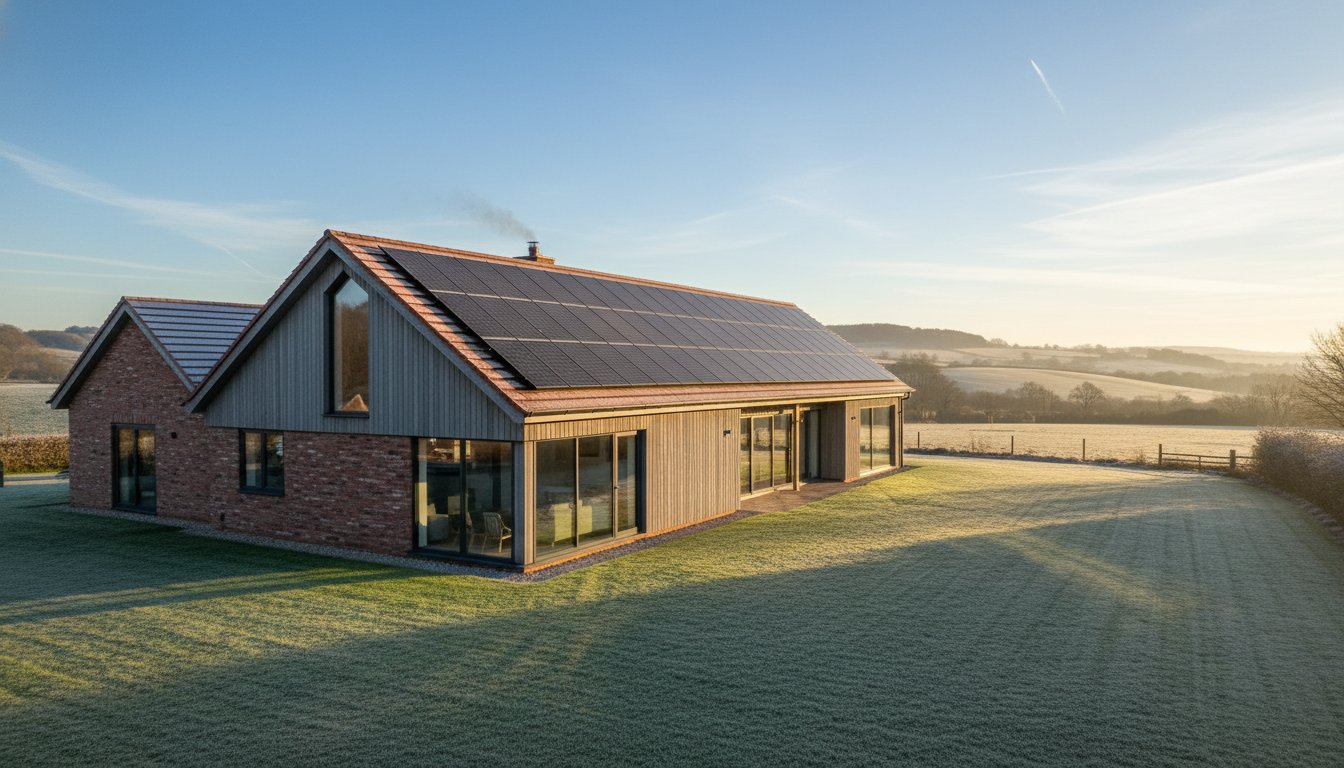
What if the freezing temperatures of a British January actually made your solar cells more efficient than a sweltering July afternoon? It’s a common misconception that solar panels stop working when the frost sets in. You’ve likely felt that familiar sting of uncertainty as energy bills climb during the peak heating months, wondering if your investment is simply sitting idle under the grey clouds. It’s natural to worry about solar panel performance in UK winter, especially when you’re looking for a reliable return on investment during the darkest weeks of the year.
This guide will show you exactly how to turn those short days into significant energy yields. We’ll explain the science of how panels thrive in the cold and how you can use 2026 incentives, like the 0% VAT rate on installations and high-paying Smart Export Guarantee (SEG) tariffs of up to 32p/kWh, to your advantage. You’ll learn how pairing your system with battery storage and keeping up with professional maintenance can protect your home from rising costs. We’re covering everything from the new Warm Homes Plan grants to the impact of the 2026 Future Homes Standard, giving you total confidence in your year-round energy strategy.
Key Takeaways
- Learn why cold temperatures can actually improve solar panel performance in UK winter by enhancing the efficiency of your PV cells.
- Get a realistic look at seasonal generation shifts to help you manage energy expectations during the UK’s shorter daylight hours.
- Discover how battery storage and smart tech can bridge the gap during peak evening hours by using "force charging" from the grid.
- Understand the impact of snow and dirt on your system and why professional maintenance is vital for maintaining yield on grey days.
- Follow a practical checklist to winter-proof your investment, from checking your inverter's health to verifying installer certifications.
How Solar Panels Actually Work in the UK Winter (Light vs. Temperature)
A common misunderstanding persists that solar panels require heat to generate electricity. In reality, heat is often the enemy of efficiency. Understanding How Solar Panels Actually Work reveals that they are electronic devices, much like your laptop or phone. They rely on light, not temperature. While the UK’s winter sun sits lower in the sky, the core technology remains active as long as there is daylight. Heat is not the fuel; photons are.
Optimising solar panel performance in UK winter depends on the interaction between these photons and silicon cells. Even when the air is biting and the ground is frozen, your panels are busy converting light particles into usable energy. You don't need a heatwave to keep your home running on renewable power.
The "Cold Weather Boost" Explained
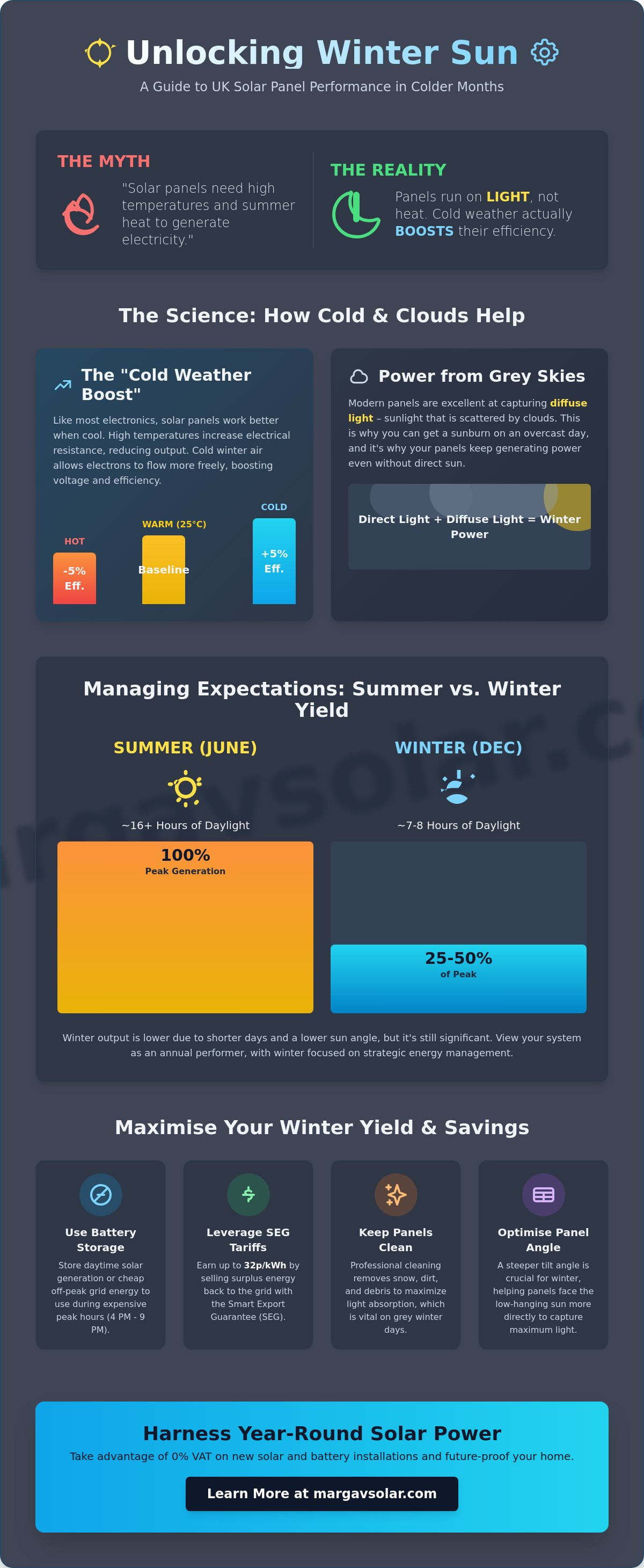
It sounds counterintuitive, but solar panels are more efficient at conducting electricity when they are cold. High temperatures create electrical resistance within the circuits, which slows down the flow of electrons. When the mercury drops, this resistance decreases. This physical shift allows the panels to produce more voltage for every bit of light they capture. The colder the panel, the more efficiently it can process the available light.
Most high quality panels come with a specific temperature coefficient rating that defines how much efficiency is gained as the temperature stays below 25°C.
Photovoltaic Cells: Generating Power from Grey Skies
Many homeowners worry about the UK’s famously overcast weather. However, modern photovoltaic (PV) cells don't just wait for a cloudless sky. They harvest both direct sunlight and diffuse light. Diffuse light is the solar radiation that has been scattered by clouds and particles in the atmosphere. This is why you can still get a sunburn on a cloudy day, and it's why your panels don't switch off just because the sky is grey.
Modern Tier 1 panels are designed to capture a broader spectrum of light than older models. While a bright June day provides the highest peak output, your system continues to generate a steady trickle of energy throughout a grey December afternoon. Daylight hours are the primary metric that matters. As long as there is enough light to see, your panels are generating power.
To maximize this capture, the seasonal tilt of your installation is crucial. Since the sun sits lower on the horizon during the winter months, a steeper angle can help the panels face the sun more directly. This helps catch as many photons as possible before the early 4 PM sunset. This strategic positioning ensures that solar panel performance in UK winter remains as high as possible despite the shorter days.
Managing Expectations: Real-World UK Solar Yields (Nov–Feb)
Expectations often clash with reality when December arrives. During the winter solstice, the UK receives roughly 7 to 8 hours of daylight. This is a sharp contrast to the 16 hours enjoyed in mid-June. Because of this, solar panel performance in UK winter naturally dips. It is vital to view your system as an annual performer rather than a monthly one. The surplus energy generated during the long, bright days of spring and summer creates the bulk of your yearly ROI, while winter is about strategic energy management.
A professional solar panel installation must be designed with these lean months in mind. One of the biggest challenges isn't just the lack of light, but the angle of the sun. In winter, the sun sits much lower on the horizon. This creates longer shadows from nearby trees, neighbouring chimneys, or even dormer windows that wouldn't be a factor in July. If your panels are shaded for three hours in the morning, your winter yield could drop significantly more than your summer yield would under the same conditions.
The 25-50% Seasonal Shift
It is normal for a UK solar system to produce between 25% and 50% of its peak summer output during the coldest months. While this sounds like a steep decline, it's a predictable part of the UK energy cycle. Most homeowners find that their panels still cover the "base load" of the house, such as fridges, standby devices, and routers, even on darker days. To bridge the gap, Maximising Winter ROI with Battery Storage becomes a key strategy, allowing you to store every scrap of generation for use during the expensive 4 PM to 9 PM peak period.
- July: High sun angle (60°), 16 hours of light, 100% potential yield.
- January: Low sun angle (15°), 8 hours of light, 20-30% potential yield.
Why Staffordshire’s "Grey Days" Still Count
Local geography plays a massive role in how your system behaves. In Staffordshire, we often experience low-lying mist in the Trent Valley or heavy cloud cover rolling in from the West. These "grey days" don't mean zero production. Because modern panels are sensitive to diffuse light, they continue to trickle-charge your home. The sun’s path in the Midlands during the winter solstice is shallow, meaning south-facing roofs are at a premium for catching those few hours of direct light.
Even when the sky looks dull, your system is contributing. If you're concerned that your current setup isn't hitting these targets, a professional solar panel maintenance check can ensure your components are performing at their absolute limit for the season.
Common Winter Obstacles: Snow, Shade, and Dirt
While we've established that light and temperature interact to keep your system active, physical barriers are the biggest threat to solar panel performance in UK winter. It isn't just about the clouds. It's about what sits on top of the glass. During the leanest months of the year, even a thin layer of obstruction can significantly reduce the number of photons reaching your cells. Understanding how to manage these obstacles is the difference between a system that trickles power and one that shuts down entirely.
One fascinating phenomenon to watch for is the "albedo effect." This occurs when snow settles on the ground or nearby flat roofs rather than on the panels themselves. The white surface reflects sunlight back up toward your installation, sometimes providing a surprising boost in generation. However, this only works if the panels are kept clear. Accumulations of winter grime, such as salt spray from gritted Staffordshire roads or soot from domestic wood burners, can create a stubborn film that prevents this reflected light from being absorbed.
Does Snow Block Solar Generation?
Thick snow will stop generation by physically blocking all light. Fortunately, most UK snowfall is light and tends to slide off quickly. This happens because panels are installed at a tilt and the cells themselves generate a small amount of heat during operation. You should never attempt to clear snow with a plastic scraper or by pouring hot water over the glass. These methods create a high risk of micro-cracks or thermal shock, which can lead to permanent cell failure. Usually, once a tiny patch of the dark surface is exposed, it starts a thermal chain reaction that melts the remaining snow from the inside out.
Why Winter Cleaning is Essential for Yield
Dirt is a silent performance killer in December. In the summer, heavy rain often washes away dust, but winter rain is frequently accompanied by salt and atmospheric pollutants. This creates a "light-induced degradation" effect where the surface becomes less transparent over time. Professional solar panel maintenance and cleaning is particularly vital before the deep winter sets in.
Attempting a DIY clean on an icy roof is incredibly dangerous. Professional teams use specialised equipment to remove salt and soot safely, which can help you claw back 5% to 10% of lost winter efficiency. When daylight is limited to just eight hours, every percentage point of efficiency matters. Ensuring your panels are pristine allows them to harvest every available photon, regardless of how grey the Staffordshire sky appears.
Maximising Winter ROI with Battery Storage and Smart Tech
While solar generation naturally decreases during the shorter days, your ability to save money doesn't have to follow the same trend. Solar panel performance in UK winter is often judged purely by how much energy the panels produce, but the real return on investment comes from how effectively you manage that power. In 2026, the most successful systems are those that use technology to bridge the gap between low daylight hours and high evening demand.
Integrating solar battery storage is the most effective way to handle the 4 PM to 9 PM peak usage window. In December, your panels will have stopped producing by the time you turn on the lights and heating. A battery allows you to store every watt generated during the day for use when grid prices are highest. If the forecast looks particularly bleak, you can use "Force Charging" to fill your battery from the grid during cheap overnight windows. This ensures you always have a reserve of low-cost energy to supplement your winter solar yield.
Using GivEnergy Cloud to Optimise Short Daylight
The GivEnergy Cloud platform has transformed how Staffordshire homeowners manage their energy. This system uses advanced algorithms to predict local weather patterns and adjust your battery's behaviour accordingly. If the software anticipates a heavy cloud cover, it can automatically prioritise "Timed Discharge" to protect your reserves for the evening. In contrast, "Eco Mode" allows the system to dynamically react to real-time household demand. Smart monitoring prevents energy waste by ensuring that your home only pulls from the grid when your stored solar and off-peak energy are exhausted.
The Impact of Inverter Efficiency
The inverter is the brain of your system, and its efficiency is tested most during the winter. High-quality inverters have a lower "startup voltage," meaning they begin converting light into electricity earlier in the morning and continue later into the twilight. Older or lower-spec models might stay dormant during low-light periods, missing out on valuable kilowatt-hours. Modern inverter upgrades can significantly improve your system's ability to harvest energy from the low-angled winter sun, which often causes partial shading across roof sections.
MarGav Solar selects hardware specifically designed to thrive in the damp, variable UK climate. By choosing components that wake up faster and manage shade better, you can maximise your solar panel performance in UK winter without needing a cloudless sky. If your current system feels sluggish when the temperature drops, it might be time to explore a battery or inverter upgrade to regain control over your winter energy bills.
Winter-Proofing Your Solar Investment in Staffordshire
As the season shifts, taking a few proactive steps ensures your system stays efficient through the frost. Preparing your installation in November is the best way to safeguard your solar panel performance in UK winter. Start by performing a simple visual check from the ground. Look for any new debris or overhanging branches that might cast long shadows during the low-sun hours we discussed earlier. Check your monitoring app to ensure there are no communication errors between your inverter and the grid. These small checks prevent minor issues from compounding when the weather turns harsh.
If you notice a drop in output that isn't related to the weather, it's essential to use a qualified professional for repairs. Checking for NICEIC certification is the most reliable way to ensure your contractor meets the highest safety standards for electrical work. Winter conditions place extra stress on electrical connections and mounting hardware. Having a certified expert inspect your wiring integrity can prevent small faults from becoming costly winter failures. MarGav Solar provides this specialized local support, helping Staffordshire residents keep their systems running at peak capacity throughout the year.
Professional Maintenance vs. DIY Checks
While homeowners can easily check the LED status lights on their inverters, technical inspections should be left to the experts. A professional technical inspection covers more than just a quick glance. It includes thermal imaging to detect "hot spots" in cells and checking the torque of mounting bolts that might have loosened during autumn storms. This level of detail isn't just about efficiency; it's about safety. Attempting to climb onto an icy roof for a DIY repair is a significant risk that isn't worth the potential saving. Professional winter servicing ensures your system is electrically sound and physically secure against high winds and snow loads.
Planning for 2026: The Future of Winter Solar
Looking ahead, the technology continues to evolve to meet the challenges of the UK climate. High-efficiency N-type cells are becoming the new standard. These cells offer better low-light performance and lower degradation rates, making them ideal for solar panel performance in UK winter. Many residents are also moving toward a "whole-home" energy strategy. Integrating EV charging points with your solar and battery setup allows you to use every scrap of winter generation to power your commute.
Even with the seasonal dip in production, solar remains a robust financial decision. The 0% VAT rate on installations is confirmed to run until 31st March 2027, representing a significant upfront saving. When you combine this with Smart Export Guarantee (SEG) rates that can reach as high as 32p/kWh, the year-round ROI is clear. If you want to ensure your home is ready for the coldest months, a winter efficiency consultation can help you identify the best path forward for your energy independence.
Secure Your Energy Independence Year-Round
Optimising solar panel performance in UK winter is about more than just counting sunny days. It's about strategic energy management. We've seen how cold temperatures can actually boost cell efficiency and how modern battery systems bridge the gap during those dark 4 PM sunsets. By focusing on high-quality inverter technology and keeping your panels clear of winter grime, you ensure your investment continues to pay off even when the Staffordshire sky stays grey.
Don't let the seasonal shift catch you off guard. MarGav Solar brings over 20 years of Staffordshire expertise to every project. As NICEIC Certified Installers and GivEnergy Advanced Partners, we specialize in everything from battery storage solutions to professional maintenance and cleaning. Whether you're looking to upgrade an older inverter or want to ensure your system is winter-ready, we're here to help you navigate the colder months with total confidence.
Book Your Winter Solar Efficiency Audit with MarGav Solar Today and take control of your home’s energy future. Your journey to year-round sustainability starts with a system that's built to perform in any weather.
Frequently Asked Questions
Do solar panels work on cloudy days in the UK?
Solar panels continue to generate electricity on cloudy days by capturing diffuse light. While direct sunlight is more powerful, modern photovoltaic cells are sensitive enough to harvest photons that scatter through thick cloud cover. You won't see the same peak output as a clear summer day, but your system will consistently provide power for your home's background energy needs.
Will snow damage my solar panels?
Standard solar panels are built to withstand significant weight and harsh weather conditions without sustaining damage. Most snow will naturally slide off the glass due to the installation angle and the small amount of heat the panels generate during operation. You should avoid trying to manually scrape snow off, as this carries a high risk of scratching the glass or causing micro-cracks in the cells.
How much less electricity do solar panels produce in winter?
You can expect your winter generation to be roughly 20% to 30% of your summer peak. This reduction is primarily due to the UK having fewer daylight hours and a lower sun angle rather than the cold weather itself. Despite this drop, solar panel performance in UK winter remains a vital part of reducing your annual grid reliance when managed with smart technology.
Should I tilt my solar panels differently for winter?
While a steeper tilt of around 60 degrees is technically better for catching the low winter sun, most UK rooftops have a fixed pitch of 30 to 40 degrees. This standard angle is a calculated compromise that maximizes total energy production across the entire year. If you're installing a new system, your installer will help determine the best orientation to balance summer surplus with winter needs.
Do solar panels still save money in the winter?
Solar panels remain a profitable investment in winter, particularly when paired with a battery storage system. By storing daytime generation and using off-peak grid charging, you can avoid the most expensive electricity rates during the evening. Even a small amount of winter generation helps offset your base load, while high-paying export tariffs ensure any surplus is still rewarded for its value.
Is it worth cleaning solar panels in the winter?
Cleaning is often more important in winter because salt from gritted roads and soot from chimneys can create a thick film on the glass. This grime blocks light at a time when photons are already scarce. Professional maintenance ensures that your panels are pristine, helping you maintain the best possible solar panel performance in UK winter despite the atmospheric pollutants that accumulate during the colder months.
Can I charge my solar battery from the grid in winter?
You can absolutely charge your battery from the grid, which is a key strategy for the colder months. Many smart inverters allow you to schedule "force charging" during cheap overnight windows. This ensures your battery is full for the morning rush, effectively supplementing the lower solar yields you might experience on particularly dark or rainy December days when generation is limited.
What happens to solar panels in freezing temperatures?
Freezing temperatures actually improve the efficiency of solar panels. Solar cells are electronic components that perform better in the cold because there is less electrical resistance in the circuits. As long as the sky is clear and light can reach the cells, a crisp and frosty January morning can be one of the most efficient periods for electricity conduction during the entire year.


