

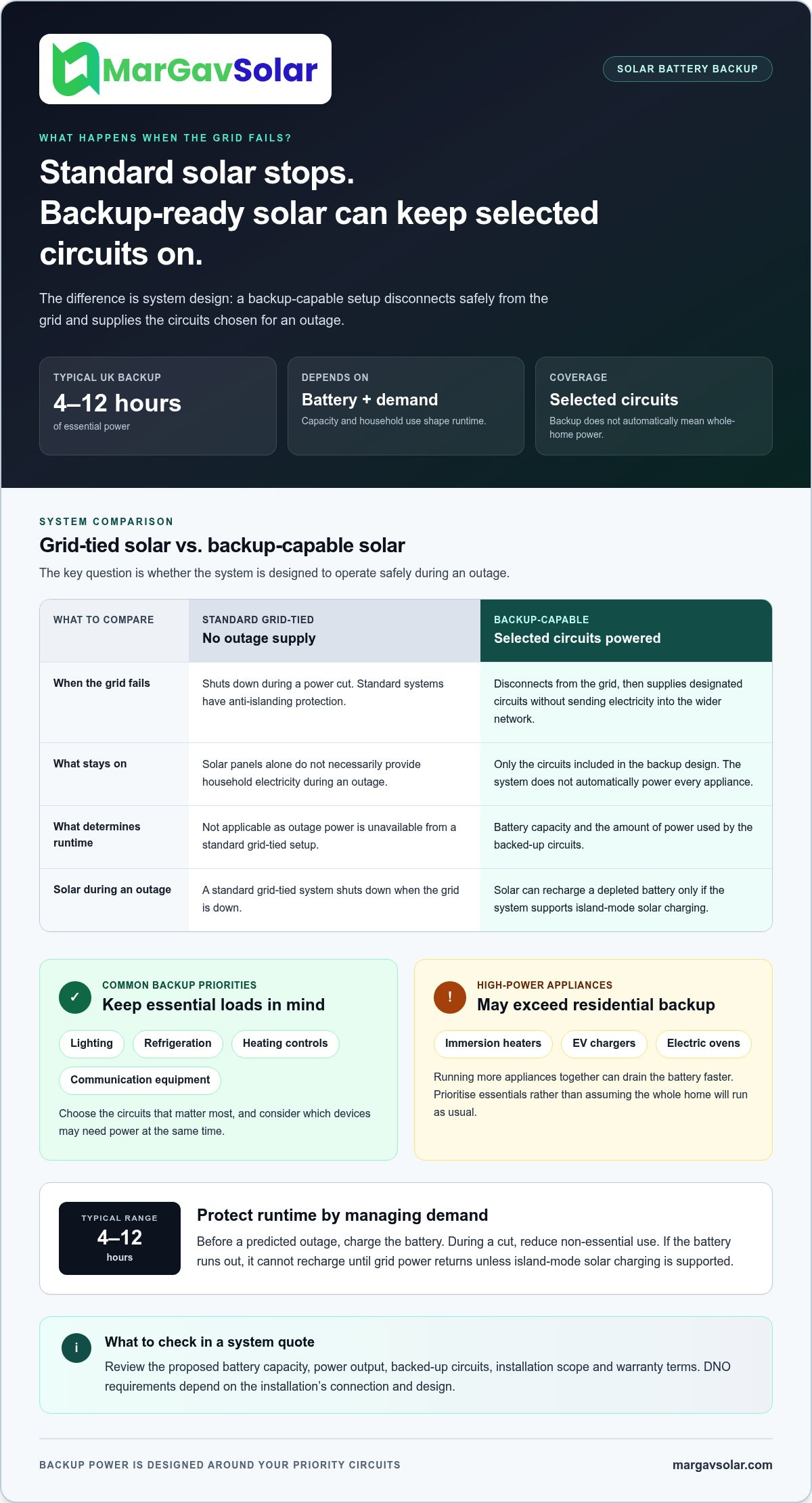
Solar battery backup can keep essential circuits running during a power cut, but it won’t necessarily keep your whole home powered. Standard grid-tied solar systems shut down during outages; a backup-capable system can disconnect from the grid and supply selected circuits. In the UK, realistic backup is typically 4-12 hours of essential power, depending on battery capacity and household demand, so peace of mind with solar battery backup starts with knowing what your system can actually run.
It’s natural to want your lights, fridge and other essentials to keep working when the grid goes down. The key is to match battery capacity and output to your priorities, and understand how long stored energy may last. This article explains how solar and batteries work together, which backup systems can power household circuits, and why a standard solar setup may not supply electricity during an outage. It also compares battery backup with a diesel generator, including practical trade-offs to consider when deciding whether backup is right for your home.
Key Takeaways
- Match backup power to the circuits you rely on most, rather than assuming a battery will run every appliance.
- Check whether a solar and battery setup can operate during a grid outage; a standard grid-tied system shuts down when the grid fails.
- Compare battery capacity with the power needed by essential appliances to understand how long backup energy may last.
- Weigh a battery’s quiet operation and lack of fuel management against the different backup needs your household may have.
- Explore how residential solar and battery storage can support your energy goals, with MarGav Solar as a potential next step.
Energy independence and reduced reliance on the grid
Solar panels and battery storage can reduce how much electricity a UK home draws from the grid. A hybrid inverter manages energy between the panels, battery, appliances and grid, directing power as household needs change.
Stored Solar Energy for Evening and Emergencies
Stored solar energy is electricity generated by solar panels and saved in a battery for later use. During daylight, the battery can store surplus generation; in the evening, it can power appliances when the panels produce less.
During a grid outage, stored energy can support selected household circuits if the system is designed for backup. A household might prioritise lighting and refrigeration, for example. If the battery runs out during a cut, solar can recharge it only if the system supports island-mode solar charging.
Household and Business Energy Resilience
Energy storage supports resilience by making stored electricity available when solar generation or grid supply cannot meet demand. At home, that can help keep priority circuits powered during an outage. A business can likewise use stored energy for selected operations, depending on system design and electricity needs.
Battery capacity and daily use shape how much reliance on the grid can be reduced. UK homes using 15-25 kWh of electricity daily, especially those with evening demand peaks, may benefit most from battery storage. The same principle applies to businesses: match stored energy to the loads that matter most.
Stored Energy for Lower Electricity Bills
Using stored solar energy later can reduce the amount of electricity bought from the grid. For example, a household can save daytime solar generation in its battery, then use it for evening appliances instead of drawing as much electricity from the grid.
Some systems can also charge from the grid during off-peak hours and use battery power during on-peak hours. Whether this lowers bills depends on the household’s tariff, charging schedule and consumption. Compare the times when electricity is cheaper with the hours when the home typically needs power.
Where Battery Energy Comes From
A home battery can store electricity from solar panels, the grid, or both. With solar, surplus daytime generation can be saved for use after sunset. Grid charging offers another option, including charging during off-peak hours when a suitable tariff makes that schedule useful.
A standalone grid-backup storage system can operate without solar panels and charge using excess grid power. Energy storage and solar generation are therefore separate choices: a battery can provide stored electricity without panels, while pairing the two lets a home store its own solar generation.
What Energy Independence Means in Practice
Energy independence means relying less on grid electricity, not necessarily disconnecting from it. A hybrid inverter can manage flows between solar panels, the battery, appliances and the grid, while stored battery energy helps cover demand when solar generation falls.
For example, a household can use solar power directly during the day, store surplus for evening use, and draw from the grid when demand exceeds available solar generation and battery energy. This balance can improve reliability, but the result depends on household use, solar output and battery charging.
What You Need to Know about Solar Power Backup System?
During a power cut, a backup-capable battery can supply designated circuits, but it won’t automatically power every appliance. The system design determines what stays powered and how long stored energy lasts.
Essential Appliances and Circuits During Outages
Essential circuits are selected parts of a home’s electrical system connected to battery backup. Prioritising them helps homeowners reserve stored energy for practical needs during outages.
Common priorities include lighting, refrigeration, heating controls and communication equipment. Keeping a fridge and a few lights powered may matter more than running an electric oven, for example. High-power appliances, including immersion heaters and EV chargers, usually exceed residential battery backup capacity.
A system can be designed for essential circuits or a broader share of the home’s electrical demand. The more appliances running together, the faster the battery can drain. Consider which devices need power at the same time, then match the backed-up circuits to those priorities.
Battery Operation and Outage Preparation
A grid-backup system stays connected to the utility during normal operation, then disconnects from the grid during an outage. It can supply designated circuits without sending electricity into the wider network.
Before a predicted outage, charging the battery helps keep energy available for priority appliances. During a cut, reduce non-essential use, such as leaving extra lights on, to preserve stored power. Once depleted, the battery cannot recharge until grid power returns unless the system supports island-mode solar charging.
Generators can provide another source of backup power, but operate separately from the battery system. The right arrangement depends on which loads need power and for how long.
In the UK, standard grid-tied solar systems shut down during power cuts because safety regulations require anti-islanding protection. Battery backup must therefore be designed to disconnect safely and power selected circuits. DNO requirements depend on the installation’s connection and design.
When reviewing a quote, look for the proposed battery capacity, power output, backed-up circuits, installation scope and warranty terms. Check what the warranty covers, its duration and any exclusions, along with how the system behaves when the grid fails.
Clear planning makes backup more useful: identify essential appliances, decide which circuits matter, and understand how solar charging works during an outage. Reviewing the backup system design can help connect those choices to your home’s needs.
Backup-capable versus standard battery systems
Whole-home backup is possible with a system designed to supply the home’s circuits, but capability depends on the battery, inverter and installation design. Backup requires dedicated electrical arrangements to isolate the home from the grid. Limitations include finite stored energy and appliances whose power demand exceeds system capacity.
A standard grid-tied solar system shuts down during a power cut because UK safety regulations require anti-islanding protection. A backup-capable storage system can disconnect from the grid and supply backup circuits, so a battery alone doesn’t guarantee power during an outage.
Names such as ICONICA inverter-charger systems and Enphase IQ System Controller may appear in discussions of backup equipment. A product name alone doesn’t show whether a particular setup can power a whole home: the system design and supported circuits determine what remains powered.
Backup Duration and System Sizing
Backup duration is how long a storage system can supply its connected circuits. Sizing matters because a larger household load drains stored energy faster, while limiting backup to essential circuits can extend its use.
Realistic residential battery backup in the UK typically supplies essential power for 4-12 hours, depending on battery capacity and household demand. Systems designed purely for backup may provide 12-24 hours of essential power. These ranges differ because system design and the loads being powered differ.
For whole-home backup, the design must account for appliances running together, not just total battery capacity. An electric oven and an immersion heater, for example, can demand more power than residential backup systems usually provide.
Backup Risks and Limitations
Battery backup is finite, and a power cut can last longer than the stored supply. Once depleted, a battery cannot recharge until grid power returns unless the system is designed for island-mode solar charging.
High-power appliances, including electric ovens, immersion heaters and EV chargers, usually exceed residential battery backup capacity. Even with whole-home wiring, you may need to prioritise essential circuits rather than run every appliance as usual.
Preparation matters too: charging the battery before an expected outage helps reserve energy for priority circuits. Solar panels can recharge a battery during a cut only if the system supports island-mode charging; standard grid-tied systems shut down instead. System design therefore shapes both backup duration and which appliances remain available during an outage.
Battery capacity, power output, depth of discharge and cycle life
Battery capacity, power output and system design determine how much backup power is available during a UK outage. These measures answer different questions: how much energy is stored, how quickly it can be delivered, and how much remains usable over the battery’s service life.
Capacity describes how much energy a storage system can hold, while power output describes the rate at which it can supply electricity. A battery might store enough energy for several essential appliances yet still be unable to run high-demand equipment at the same time. Compare both figures with the loads you want powered, such as a fridge, lights and heating controls.
Depth of discharge describes how much stored capacity is used before recharging. Usable capacity, rather than the headline capacity alone, helps estimate backup duration. Cycle life describes how repeated charging and discharging affect a battery over time. Residential solar battery backup systems typically last 10 to 15 years, depending on usage and maintenance.
In the UK, standard grid-tied solar systems shut down during power cuts because safety regulations require anti-islanding protection. This prevents a solar installation from continuing to send electricity to the grid while crews may be working on it. Backup power requires equipment designed to isolate the home from the grid and supply selected circuits.
Can solar panels recharge a home battery during a UK power cut? Yes, if the system is designed for island-mode solar charging. Otherwise, once the battery is depleted, it cannot recharge until grid power returns, even if sunlight reaches the panels.
Medical and other critical power needs require careful load planning. List the equipment that must stay powered, its running demand, and whether it needs an uninterrupted supply. Then distinguish those loads from optional appliances, such as an electric oven, so the battery’s available output is reserved for priorities.
Tesla Powerwall 3 is a named battery system, but its name alone doesn’t tell you which circuits a particular installation can support during an outage. Compare its usable capacity, power output and backup configuration with the appliances you need, rather than assuming any residential battery will provide whole-home backup.
- Capacity: the stored energy available to use.
- Power output: how much electricity appliances can draw at once.
- Depth of discharge: the share of capacity used before recharging.
- Cycle life: how repeated charging and discharging affect service life.
A battery may run lighting and a fridge together but not an immersion heater as well, for example. Matching capacity and output to essential appliances helps establish a realistic backup plan, while system design determines whether solar charging continues during an outage.
Solar battery backup compared with diesel generators
Solar battery backup stores electricity for use during an outage, while a diesel generator makes electricity by burning fuel. An uninterruptible power supply (UPS) is usually designed to keep specific connected equipment running through a supply interruption. The right option depends on which loads need power and for how long.
A residential battery runs quietly and doesn’t require fuel storage or refuelling. It can provide backup power to selected circuits, and solar panels may recharge it during an outage if the system supports island-mode solar charging. Without that capability, the battery can’t recharge until grid power returns. This limitation matters during a prolonged outage.
A diesel generator can supply electricity independently of solar generation, but it needs regular servicing, oil changes, fuel storage and refuelling. Some traditional generators also require manual activation. By contrast, battery systems can provide automatic backup when configured for it. Their operation can feel more seamless, but available power still depends on stored energy and system design.
Cost and maintenance are different considerations. Battery systems may need replacement every 8-15 years, while generators require ongoing servicing and fuel management.
For UK households with reliable grid supply and infrequent outages, backup capability alone rarely justifies investing in a battery. The case may be stronger when storing solar electricity also supports everyday energy use. Compare how often outages affect you, which appliances matter most, and whether the battery will serve a useful purpose between outages.
During an extended outage, AC1 AC Charger Inverters can work with external backup generators to provide electricity when battery storage runs low. This combines stored energy with generator supply, rather than relying on the battery alone. It’s relevant where longer backup is a priority and the system is designed for that arrangement.
To choose between a battery, generator or UPS, list the equipment that must stay powered, its required supply and the expected outage duration. A UPS suits specific connected equipment; a battery can serve selected home circuits; a generator provides another fuel-based source. Each has different installation and operating needs.
Explore a solar and battery backup assessment to understand how stored electricity could fit your home’s energy use.
MarGav Solar: Residential Solar PV Systems
MarGav Solar helps homeowners connect solar generation with practical energy storage through residential solar panel systems and battery storage. If you’re weighing backup options, start by considering which household circuits matter most, when you use electricity, and whether you want stored energy for evenings as well as outages.
MarGav Solar can help shape a residential solar and battery system around those priorities. If you already have solar panels, battery storage can be considered alongside your existing setup. EV chargers and solar panel maintenance and cleaning are also available for related home energy needs.
Contact MarGav Solar or visit margavsolar.com to discuss your home’s solar and battery requirements.
Make your backup plan fit your home
A useful next step is to turn “backup” into a clear household priority. Decide which rooms or equipment matter most during an outage, and consider how solar and stored electricity could support everyday routines as well as emergency needs. This gives you a practical basis for weighing peace of mind with solar battery backup against the costs and limits of other options.
MarGav Solar’s residential solar panel systems and battery storage can be considered together around your home’s energy needs. If you also charge an electric vehicle, its EV chargers can form part of the wider picture. The right system starts with understanding what you want powered and how you use electricity, not simply choosing the largest battery.
Contact MarGav Solar to discuss backup and explore an approach that suits your home. A clear plan can help you move forward with confidence.
Frequently Asked Questions
How does solar battery backup provide peace of mind during a power cut?
A backup-capable solar battery system can keep selected circuits supplied when the grid fails, helping essential household routines continue. Its value depends on knowing what you need powered, such as refrigeration, communications equipment or a medical device, and how those loads fit the system. For some households, peace of mind with solar battery backup comes from planning around those priorities rather than expecting every appliance to run as usual.
How long can a home solar battery power essential appliances in the UK?
Realistic residential battery backup in the UK typically supplies essential power for 4-12 hours, depending on battery capacity and household demand. Systems designed purely for backup may provide 12-24 hours of essential power. For a Staffordshire household, actual runtime depends on the circuits in use and how much electricity connected appliances draw. Limiting use to priority equipment, such as a fridge and communications devices, helps preserve stored energy.
What size solar battery do I need for backup power?
Choose capacity by listing the appliances you need during an outage, their power demand and how long you want them to run. Also consider which devices may operate together, because battery capacity alone doesn’t determine whether the system can supply their combined demand. For a Staffordshire home, compare those priorities with typical household use and the system’s usable capacity and output. This gives a more practical sizing basis than choosing by battery size alone.
How much does a solar battery backup system cost in the UK in 2026?
The price depends on the system and is provided after a quote request. Key cost factors include battery capacity, backup functionality, installation requirements, and whether the property already has solar panels or needs related equipment. For a Staffordshire home, the existing electrical setup and circuits selected for backup also shape the work involved. Compare proposals by what they include and which household loads the design is intended to support, not by battery capacity alone.
What UK electrical regulations and DNO approvals apply to solar battery backup?
UK safety regulations require anti-islanding protection, so a backup system must disconnect safely from the grid during an outage. DNO requirements depend on the installation’s connection and design.
Which UK solar batteries provide whole-home backup during a grid outage?
Whole-home backup requires a system designed to supply the home’s circuits; the battery, inverter and installation design determine whether it can do so. A battery alone does not guarantee whole-home backup.


