

What if your solar panels generate most electricity in summer, while your heat pump needs more power on cold winter evenings? That seasonal mismatch matters, but it doesn’t prevent the systems from working well together. The key is to plan them as parts of one home-energy system. For UK homeowners, integrating solar with a heat pump UK homes can use means considering when the panels generate electricity, when heating is needed and how the home uses energy at other times.
This guide explains how solar PV can support a heat pump during daylight hours, which home and system details affect the match, and when battery storage may be worth considering. You’ll also find practical checks for your roof, insulation, heating patterns and electrical setup, so you can identify sensible next steps without relying on unverified savings claims. In Staffordshire, MarGav Solar brings over 20 years of industry experience in residential solar PV and battery storage to help homeowners consider solar alongside their heat-pump plans.
Key Takeaways
- Understand how PV electricity can support a heat pump through your home’s electrical system.
- Compare direct solar use, battery storage and grid electricity to see the trade-offs in timing and flexibility.
- Use roof orientation, shading, available roof area and household electricity use to guide early system planning.
- Consider how heating plans fit into a coordinated solar and heat-pump system for a UK home.
- See how MarGav Solar’s residential PV and battery expertise can help Staffordshire homeowners factor heating plans into solar planning.
Why combine solar panels and a heat pump in a UK home?
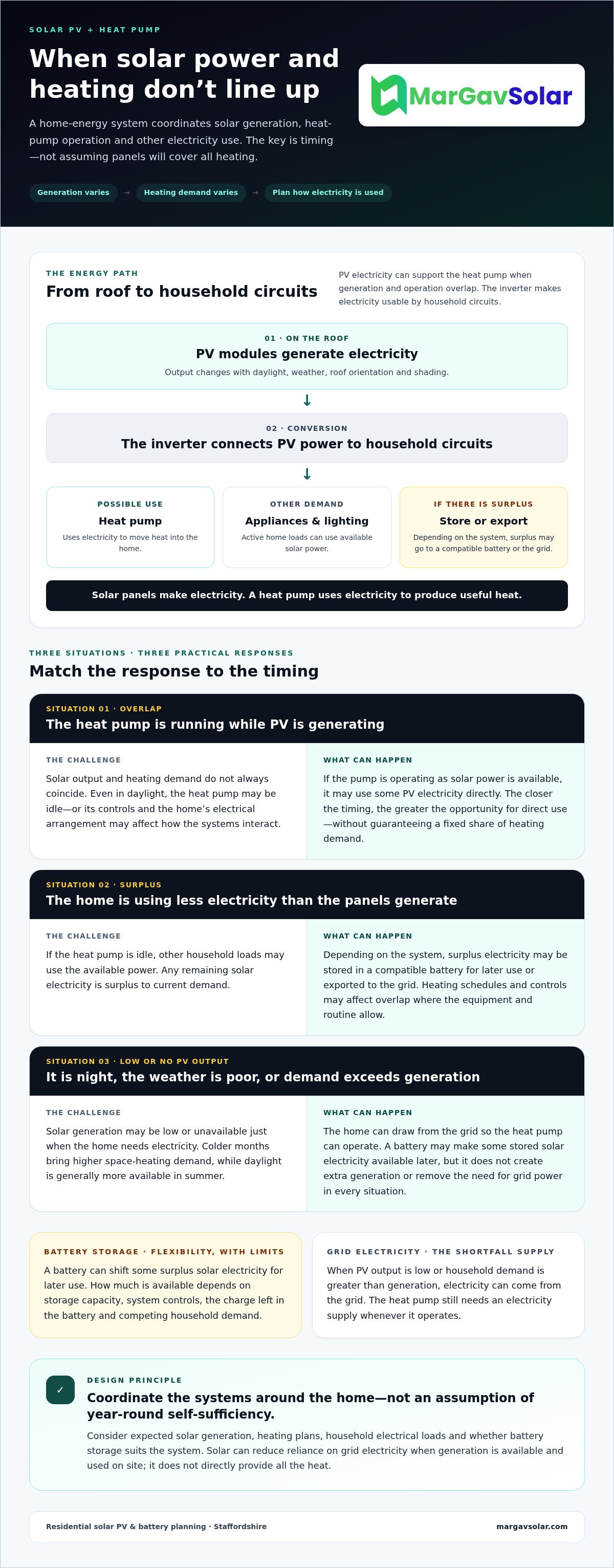
A solar PV system and a heat pump can complement each other because both use electricity in the home. Panels generate electricity when daylight reaches them, and the heat pump may use some of that power if it’s running at the time. This can help a household use more of its own solar generation instead of relying entirely on grid electricity. The contribution depends on when the panels generate power and when heating is needed.
The systems have different jobs: PV panels generate electricity, while a heat pump uses electricity to move heat from its surroundings into the home. The electricity it consumes is its input; the warmth it delivers is the output. Solar panels make electricity; a heat pump uses electricity to produce useful heat by transferring it from another source. Solar can support a heat pump, but it doesn’t directly provide all the heat.
What does solar and heat-pump integration mean?
Think of the panels, inverter and heat pump as separate components connected within a home-energy system. The inverter converts the panels’ electricity into a form household circuits can use. Depending on the system and what’s happening in the home, solar electricity may supply appliances, be stored in a compatible battery or be exported to the grid. The Solar-assisted heat pump overview describes ways solar energy and heat pumps can be combined.
Why does the UK’s seasonal pattern matter?
Daylight is generally more available in summer, while space-heating demand rises during colder months. Solar generation and heating needs therefore won’t always line up. Output also changes with weather, daylight hours, roof orientation and shading. A bright day can help cover some electricity use, while a cloudy winter day may provide much less solar power.
For example, panels might generate electricity while a heat pump is running on a mild, bright afternoon. In the evening, or during a darker spell, the household may need grid electricity unless stored energy is available. A battery can shift some solar electricity for later use, but it doesn’t create extra generation. Its suitability depends on the household and system.
Integrating solar with a heat pump UK homeowners should think of as coordination, not a promise of year-round self-sufficiency. The heat pump still needs an electricity supply whenever it operates, including when PV output is low or unavailable. A practical design considers heating plans alongside expected solar generation, rather than assuming panels will power all heating through winter. In Staffordshire, MarGav Solar can consider residential PV and battery planning alongside a home’s heat-pump plans.
How solar PV can supply electricity to a heat pump
To follow the electricity, start at the roof. PV modules generate electricity, which passes through an inverter before being used by household circuits. The heat pump is one of the home’s electrical loads, alongside appliances and lighting. If it’s operating while solar generation is available, it may use some of that electricity. If the home needs more power than the panels are producing, the shortfall can come from the grid.
A heat pump’s electrical components, such as its compressor and circulation pumps, need electricity to operate. The pump uses that input to transfer heat from its surroundings into the home. The more closely solar generation coincides with a heat pump’s operation, the greater the opportunity for the pump to use PV electricity directly. This is a matter of timing, not a guarantee that solar will cover a set share of heating demand.
What happens when the sun is shining?
While the PV system is generating, the home’s active electrical loads can use available power. The heat pump may draw from it if it’s running, but its controls and the home’s electrical arrangement affect how the systems interact. Solar electricity isn’t automatically directed to the heat pump first in every installation.
For instance, if the pump is operating on a bright afternoon, some of its electrical demand may coincide with PV generation. If it’s idle, other household loads can use the electricity; any surplus may be stored or exported, depending on the system. Heating schedules or controls may influence the overlap where the equipment and household routine allow, but comfort and heating requirements remain important.
What happens when solar output is low?
At night, in poor weather or whenever household demand exceeds PV output, the home can draw electricity from the grid. A heat pump can therefore continue to operate when panels aren’t generating, provided the home has an electricity supply. Solar reduces reliance on grid electricity only when generation is available and used on site.
A battery can store some surplus solar electricity for later use, potentially making it available when the panels are producing little or nothing. It doesn’t remove the need for grid electricity in every situation. The amount available depends on factors such as storage capacity, system controls, the charge left in the battery and competing household demand. A battery is an option to assess, not an automatic requirement.
For homeowners integrating solar with a heat pump UK-wide, the practical design question is how the home’s generation, heating operation and other electrical loads fit together across the day. Staffordshire households can factor heating plans into residential solar PV planning with MarGav Solar, drawing on its experience with PV and battery storage. This keeps the focus on a system suited to the home, rather than assuming every unit of solar electricity will be available to the heat pump.
Direct solar use, battery storage or grid electricity: what suits your home?
Solar electricity can reach a heat pump in different ways, depending on when it’s generated and what the home needs at that moment. Direct use relies on sunshine coinciding with the pump running. A battery may shift some surplus electricity to a later time, while the grid remains available when generation and stored energy don’t meet demand. These options can work together rather than being an either-or choice.
| Option | Timing and flexibility | Key limitation |
|---|---|---|
| Direct PV use | Used in the home while panels are generating. | Depends on heating demand coinciding with generation. |
| PV with battery storage | Some stored daytime electricity may be used later. | Available energy depends on storage capacity, controls and other household loads. |
| Grid electricity | Can supply the home when PV or stored energy is insufficient. | Tariffs and the timing of electricity use can affect operating choices. |
Winter is a useful reality check. Heating demand can be higher when daylight is shorter and solar output is lower, so a heat pump may need more electricity than the panels are generating at that moment. That doesn’t make solar a poor fit. It means the system should be considered as a whole, with grid electricity included in the plan for periods when generation is limited.
When can a battery help a heat-pump household?
A battery can hold some surplus PV electricity generated during the day for use after generation drops, potentially including an evening period when the heat pump or other household loads need power. Its usefulness depends on battery size and usable capacity, how the system is controlled, and how much electricity the home uses at the same time. A battery shifts available energy; it doesn’t create extra solar generation.
For a closer look at how storage fits into a home system, see this solar battery storage guide. Consider whether the home is likely to have daytime surplus and later electricity demand. That timing is central to deciding whether storage is relevant.
When might grid electricity still be part of the plan?
The grid can cover demand during dark or overcast periods, at night, or whenever heating needs exceed the electricity available from PV and storage. Tariffs may also influence when it makes sense to use grid electricity, but the right approach depends on the household’s tariff, equipment and routine. Grid use isn’t evidence that integrating solar with a heat pump UK homes rely on has failed; it’s a normal way to balance variable generation with changing demand.
When comparing options, consider your heating schedule alongside other major electrical loads. This gives you a more grounded basis for deciding whether direct use may suit the home or whether battery storage deserves consideration.
Plan a solar and heat-pump system around your home
A coordinated plan starts with the home, not a panel count or an assumed need for a battery. When integrating solar with a heat pump UK homeowners should consider how the building uses energy, the roof’s potential and the heating system’s expected demand together. The following checks help identify useful information before settling on a design.
- Assess the home. Note the roof’s condition, orientation, shading and usable area. Consider where electrical equipment could be located and whether planned home improvements may affect the roof or energy use.
- Understand demand. Review household electricity records and heating needs, including hot-water routines and existing heating arrangements. The heat pump’s design and expected demand help show when electricity may be needed, while daily household patterns reveal competing loads.
- Review the PV design. Consider how roof space and conditions could shape the solar array. Assess generation potential against the home’s electricity use rather than assuming a specific yield from roof orientation or panel area alone.
- Consider storage. Once generation and demand are understood, assess whether a battery could shift some surplus electricity to a later time. Storage is an option, not a default requirement; its role depends on household patterns and system controls.
What information helps size the solar PV system?
Household electricity records can show when consumption is highest and how it changes across the year. Pair those records with a roof assessment. Orientation, shade from trees or nearby buildings, roof condition and usable area all inform the design. These factors help frame the discussion, but they don’t establish a guaranteed level of generation. For broader context on the process, explore this solar panel installation guide.
How should the heat pump fit into the plan?
Treat the heat pump’s design and expected demand as inputs to whole-home electricity planning. Heating and hot-water schedules, controls and other significant electrical loads can affect how much PV electricity is used directly. If the heating system is still being planned, share those plans early so the solar design can take likely demand into account without assuming the systems will always operate in sync.
Keep scheme details separate from system design. If you’re considering a grant or need to understand installer or product certification, verify current eligibility and technical requirements in official UK guidance before making decisions. Rules can change, so avoid relying on outdated summaries.
For Staffordshire homeowners, MarGav Solar can consider roof conditions, household needs and heating plans as part of residential solar PV planning. Discuss your home’s solar PV plans to start shaping a system around the way you expect to use energy.
How MarGav Solar can help coordinate solar planning in Staffordshire
Planning solar around a heat pump means looking beyond the roof. The home’s electricity use, available roof space and heating plans all help shape a PV design for the household. MarGav Solar brings over 20 years of industry experience to residential solar PV and battery planning in Staffordshire, with support from consultation through installation and ongoing maintenance. The focus is on coordinating solar plans with the home, not assuming solar will cover every heating need.
What to expect from a residential solar consultation
A project discussion can consider your home, electricity needs and what you want solar to do. Roof condition, orientation, shading and usable space help inform a tailored PV design, while household energy records and heating plans add context. If a heat pump is planned or already in place, its expected use can form part of the conversation about the home’s wider electricity needs. The Staffordshire solar installation guide offers further context on the installation process.
To make the discussion practical, gather recent electricity bills or usage records, note any roof or building work under consideration, and describe when the household typically needs heating and hot water. These details help connect the home’s circumstances with its solar goals. MarGav Solar’s residential PV expertise can bring those factors together as part of whole-home energy planning.
Where battery storage and ongoing support fit
Battery storage is one option to assess, not an automatic addition. Its potential role depends on when solar generation is available, how the household uses electricity and whether shifting energy to later suits the home’s routine. The Staffordshire solar battery storage guide can help you understand the questions to weigh up before discussing storage as part of your project.
Planning also means thinking about solar ownership beyond installation. Panel maintenance and cleaning, along with inverter upgrades or replacements when needed, are relevant parts of looking after a PV system over time. These considerations sit alongside the original design, household use and any future changes to the home’s heating plans.
If you’re considering integrating solar with a heat pump UK homeowners can plan around their property and routines, MarGav Solar can discuss the solar PV and battery-storage aspects with you. Discuss your Staffordshire solar PV project and bring your roof details, electricity records and heating plans to the conversation.
Take the next step towards a coordinated home-energy plan
The most useful starting point is a clear picture of how your home uses energy now and how that may change if you add or already have a heat pump. With that context, you can explore a solar PV plan that reflects your roof, household routines and heating goals, then decide whether battery storage belongs in the discussion. A well-considered plan doesn’t depend on assuming every sunny hour will match a heating need; it focuses on what makes sense for your property.
For Staffordshire homeowners, MarGav Solar can shape residential solar PV plans around the home and its heating intentions. Its solar and battery expertise, backed by over 20 years of industry experience and support from consultation through installation and ongoing maintenance, offers a practical foundation for planning. Discuss your Staffordshire solar PV plans with MarGav Solar to take the next step.
Frequently Asked Questions
Can solar panels power a heat pump in the UK?
Yes, solar panels can supply some of a heat pump’s electricity when the system is generating and the pump is operating. For example, solar power may contribute during a daytime heating or hot-water cycle, while grid electricity can cover demand at other times. The contribution varies with weather, season and household use, so plan around solar as one electricity source rather than the heat pump’s sole supply.
Is it worth combining solar panels with a heat pump?
It can be worthwhile if using more of your own generated electricity fits your household’s priorities and the property suits solar PV. Consider your roof, electricity use and heating plans, rather than relying on a generic savings estimate. If a heat pump is part of a planned renovation, consider solar design alongside other electrical changes to make the overall plan more coherent.
Do I need a battery with solar panels and a heat pump?
No, a battery isn’t essential. A home can use solar electricity as it’s generated and draw from the grid at other times. Storage may be useful if your household regularly has solar generation left over during the day and electricity demand later on, but its suitability depends on usage patterns, capacity and system controls. Compare that potential role with your household’s actual routine before treating a battery as necessary.
Will solar panels run a heat pump in winter?
Solar panels can contribute electricity in winter, but don’t assume they’ll meet all a heat pump’s demand through the season. Shorter daylight periods, overcast weather and higher heating needs can limit how well generation and use coincide. For example, a household may have low solar output during an early morning heating period. Plan for the home’s electricity supply when PV generation is limited, rather than depending on winter sunshine alone.
Can I add solar panels to a home that already has a heat pump?
Yes, solar PV can be considered for a home with an existing heat pump. Useful preparation includes gathering electricity records, noting the pump’s operating and hot-water schedules, and checking the roof’s condition, shading and usable area. These details help shape a design around the home’s existing equipment and routines. Include any planned changes, such as an extension or a new major electrical load, in the project discussion.
Is the Boiler Upgrade Scheme available for solar panels or batteries?
No, the Boiler Upgrade Scheme is for eligible heat-pump installations, not solar panels or battery storage. As of October 2026, the scheme in England and Wales provides grants for eligible air-source and ground-source heat pumps; check current eligibility and terms against official government guidance. Solar PV and batteries need to be considered separately in your project planning, rather than treated as costs covered by this heat-pump grant.
How do I plan solar panels around a heat pump in Staffordshire?
Start with your roof details, recent electricity use and the heat pump’s expected operation, including hot-water routines. MarGav Solar can use your household needs and heating plans to inform residential solar PV planning, with battery storage considered as an option rather than a default. Its Staffordshire solar expertise can help you develop a plan suited to your home and energy goals.


