
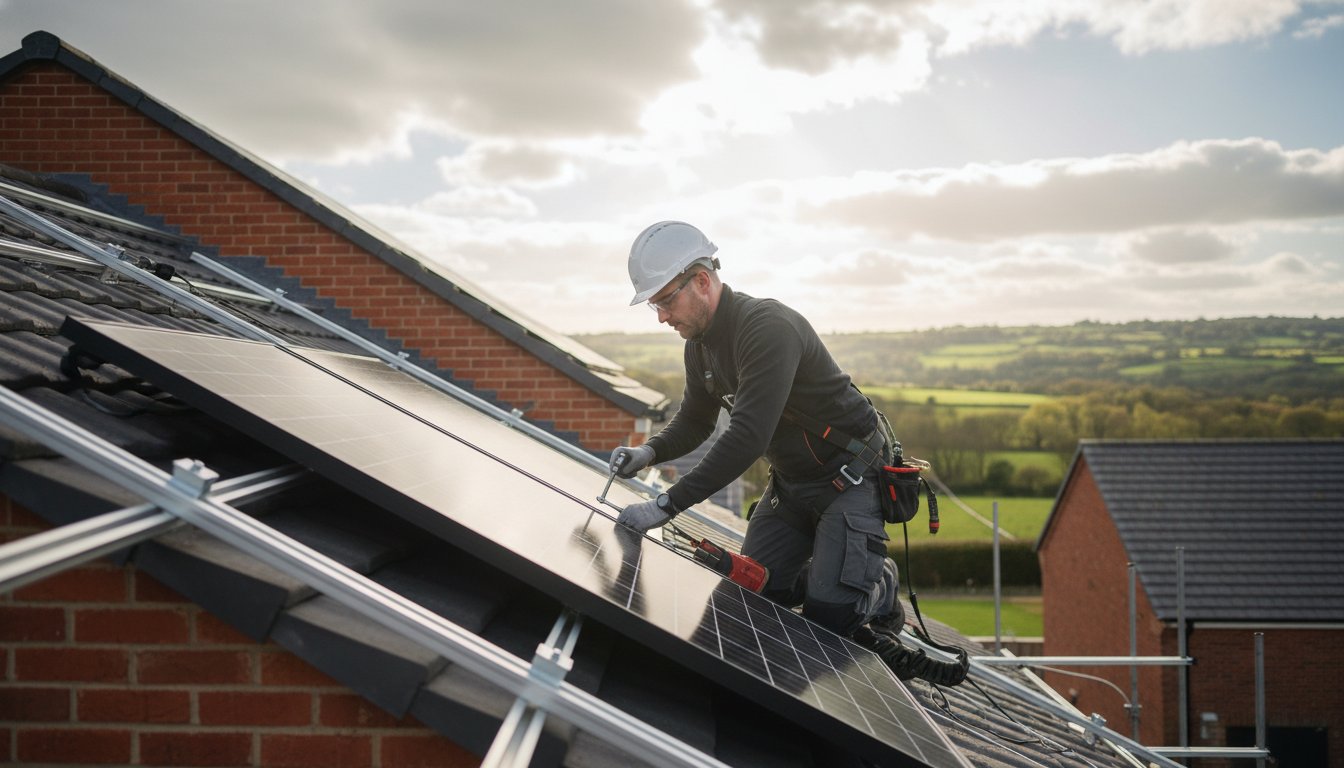
Most solar system failures in 2026 aren't caused by faulty hardware. They're usually the result of common solar panel installation mistakes made during the initial setup. You've likely seen the headlines about roof leaks or installers who vanish once the job is done, and it's natural to feel overwhelmed by the technical jargon of G99 approvals or the April 2026 wiring amendments. You want a system that slashes your bills, not a mounting list of repair costs. We agree that protecting your home's structural integrity is just as important as the energy it generates.
This guide ensures you avoid the costly technical, legal, and physical errors that ruin solar ROI and protect your investment for decades. We'll walk you through the essential checks for MCS compliance, the reality of current 0% VAT incentives, and how to verify that your electrical setup meets the newest safety standards. You'll gain the clarity needed to secure a high-performing system that powers your home, battery storage, and EV charger reliably for years to come.
Key Takeaways
- Learn why tailored system sizing and specific roof orientation are vital for maximizing energy generation and avoiding underperformance.
- Understand how to sidestep common solar panel installation mistakes like missing MCS certification, which is required to access the Smart Export Guarantee.
- Identify the physical warning signs of a poor job, such as improper roof fixings that lead to leaks or untidy cable management that risks damage.
- Discover how to correctly match battery storage capacity to your household load to ensure your system remains efficient and reliable for years.
Overlooking Site Suitability and System Sizing
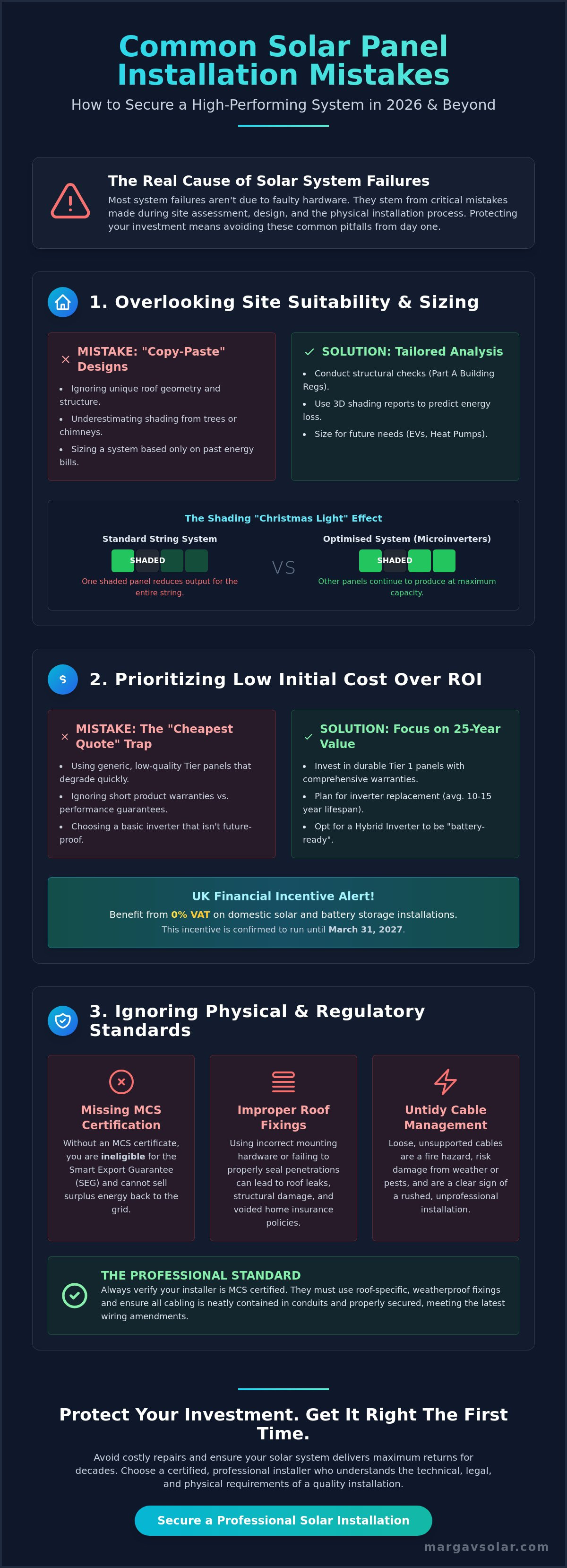
Many homeowners assume that if a roof has space, it's ready for solar. This assumption leads to some of the most common solar panel installation mistakes, specifically "copy-paste" system designs that fail to account for the unique geometry of a UK property. A generic layout might look good on paper, but it often ignores local shading or the structural limits of the building. Before any panels are mounted, a professional must verify that the roof complies with Part A of the Building Regulations for structural safety. Adding hundreds of kilograms of hardware to an unreinforced roof can lead to sagging or long-term damage.
Orientation is another area where generic advice fails. While south-facing roofs provide the highest total yield, an East/West split is often more effective for modern families who need power during morning and evening peaks. Understanding how Rooftop solar power systems interact with your specific environment is the only way to guarantee a solid return on investment. A system that doesn't match your home's physical reality will never reach its advertised efficiency.
The Shading Myth: Why One Tree Can Ruin Everything
Shading is frequently underestimated. In a traditional series-connected system, shading just one corner of a single panel can act like a kink in a hose, restricting the flow of energy through the entire string. This is often called the "Christmas light effect." To prevent this, modern systems use microinverters or power optimisers. These components allow each panel to operate independently, ensuring a passing cloud or a chimney shadow doesn't kill your entire morning's production. Professional 3D shading reports are now the industry standard for predicting these losses before you commit to an install.
Sizing for the Future, Not Just Today
Your electricity needs in 2026 are likely much higher than they were in 2020. With the UK's transition toward heat pumps and the widespread adoption of EV Charging Points, a system sized for your past usage will fall short. It's a mistake to size a system based solely on current bills without considering future upgrades. However, bigger isn't always better. Oversizing your array without integrated Battery Storage Solutions means you'll export most of your power to the grid for a lower rate rather than using it yourself. A balanced design matches your generation capacity with your actual consumption patterns.
Prioritizing Low Initial Costs Over Long-Term ROI
Selecting a provider based on the lowest quote is one of the most frequent common solar panel installation mistakes. While a bargain price is tempting, it often hides the use of generic components and rushed labor. High-quality Tier 1 panels are tested for long-term durability, but generic brands might boast high efficiency ratings that degrade rapidly after just a few years of UK weather. You're buying a 25-year energy hedge. If the panels fail in year seven and the "Solar Cowboy" has vanished, your initial savings disappear instantly. True value is found in the total yield over decades, not just the lowest invoice on day one. With the UK's 0% VAT rate on domestic solar and battery storage set to run until March 31, 2027, the financial argument for investing in quality components has never been stronger.
Warranty pitfalls are another area where low-cost systems fail. A performance guarantee might promise 80% output after 25 years, but it's worthless if the product warranty only lasts five years and the panel physically breaks. Reputable manufacturers offer comprehensive warranties that cover both parts and labor. When you calculate the 25-year cost of ownership, you'll want to include the price of at least one inverter replacement and regular Solar Panel Maintenance & Cleaning. A system that's maintained properly will consistently outperform a neglected one, even if the latter had slightly better specs on paper.
The Inverter Trap: Don’t Skimp on the Brains
The inverter is the hardest-working part of your system. It's the "brains" that manages energy flow from DC to AC. In 2026, the industry average lifespan for a standard string inverter remains between 10 and 15 years. This is significantly shorter than the 25 to 30-year lifespan of the panels themselves. Avoiding common solar panel installation mistakes means planning for this mid-life replacement from day one. Opting for a hybrid inverter ensures your system is ready for future Battery Storage Solutions without needing a complete overhaul. If your current system is underperforming, professional Inverter Upgrades and Replacements can often restore lost efficiency.
Installer Credentials Checklist
Beyond hardware, legal compliance is essential. All installations must adhere to UK planning and building regulations to ensure safety and structural integrity. MCS certification is also mandatory if you want to earn money back through the Smart Export Guarantee (SEG). For homeowners in areas like Staffordshire, local reputation and proper accreditation are the best safeguards against poor workmanship. You can learn more about why these standards matter in our NICEIC Certification Guide. Choosing an installer who understands these regional and national requirements protects your investment from legal and physical failure.
Navigating UK Regulations and Electrical Certifications
Failing to secure the correct paperwork is one of the most frustrating common solar panel installation mistakes because it directly impacts your bank account. In the UK, the Microgeneration Certification Scheme (MCS) is the gold standard. Without an MCS certificate, you'll find it nearly impossible to sign up for the Smart Export Guarantee (SEG). This means you won't get paid for the surplus energy you send back to the grid. While the Future Homes Standard push has made solar more common, the administrative requirements remain strict. You must ensure your installer is certified so your system is recognized by energy suppliers and the national grid.
Planning permission is generally less of a hurdle in 2026 than it used to be. For most homes in Staffordshire, roof-mounted panels fall under "permitted development." This applies as long as panels don't protrude more than 200mm from the roof slope and aren't installed higher than the chimney. However, if you live in a conservation area or a listed building, you'll likely need formal approval from your local council. For flat roofs, regulations allow panels to extend up to 0.6 metres above the roofline. Checking these specifics before work begins prevents costly enforcement actions later.
The DNO Notification: The Step Most DIYers Miss
Every solar system must be registered with the Distribution Network Operator (DNO). This is the company responsible for the power lines in your area. If your system capacity is 3.68kW or less per phase, it usually falls under G98 regulations, where the DNO is simply notified after the install. Larger systems require prior approval under G99 regulations. Skipping this step is a major error; the grid can technically force you to disconnect an unregistered system. A professional installer handles this G99 paperwork to ensure your system is legally allowed to operate. This is especially critical when integrating high-draw tech like EV Charging Points or large Battery Storage Solutions.
Exporting Energy: SEG and Smart Meters
To maximize your ROI, you need a way to track what you're sending back to the grid. A smart meter is essential for modern UK solar setups. It provides the half-hourly data required by energy suppliers to pay you the best SEG rates, which can reach up to 25p/kWh in May 2026. If your current setup feels outdated or isn't communicating correctly with your meter, you might need to look into Inverter Upgrades and Replacements. Modern hybrid inverters make this communication seamless, ensuring you never miss out on export payments because of a technical glitch. Avoiding these common solar panel installation mistakes ensures your system is a financial asset from day one.
Physical Installation Errors and Roof Protection
A solar system is only as reliable as the roof it sits on. One of the most damaging common solar panel installation mistakes involves the "drill and hope" method. This happens when installers use universal brackets or poor-quality fixings that don't match your specific tile type. Instead of securing the system to the rafters, they might miss the structural timber entirely or fail to use proper flashing. Over time, the weight of the panels combined with wind uplift creates micro-cracks in the roof tiles. This leads to slow, hidden leaks that can rot your roof timbers long before you see a damp patch on the ceiling.
Cable management is another area where shortcuts are frequently taken. DC cables should never rest directly on roof tiles or be left dangling. The rough surface of a tile acts like sandpaper during windy conditions, eventually wearing through the insulation and creating a fire risk. Professional installers use UV-stabilized conduits and stainless steel clips to keep wiring tucked away. Choosing between on-roof and in-roof systems also matters here. While on-roof is standard, in-roof systems replace a section of tiles entirely, offering a sleeker profile that is often preferred for new builds or total roof replacements.
Roof Integrity: Fixings, Flashing, and Fire Safety
Your installation must comply with Part A (structural safety) and Part P (electrical safety) of the UK Building Regulations. Using roof-specific brackets ensures the load is distributed correctly across the rafters. Fire safety is equally critical; improper sealing of cable entries or poorly mounted DC isolators can create water ingress points that short-circuit the system. Ensuring your system meets the BS 7671 Amendment 4 standards introduced in April 2026 provides peace of mind that your electrical connections are current and safe.
The Staffordshire Pigeon Problem: Why Mesh is Mandatory
In areas like Staffordshire, birds are a significant threat to solar longevity. Pigeons love the sheltered, warm environment underneath solar panels. Once they move in, their acidic droppings can corrode the aluminum frames and wiring. Even worse, the debris they bring for nesting blocks airflow, causing panels to overheat and lose efficiency. Skipping bird mesh during the initial install is a major oversight. Retrofitting mesh later is often twice as expensive because it requires re-erecting scaffolding. Including bird-proofing from Day 1 is the best way to avoid these common solar panel installation mistakes and keep your system running cleanly. You can find more tips on protecting your array in our Solar Maintenance Guide.
If you're worried about the state of your existing system or want to ensure a new one is installed correctly, professional Solar Panel Maintenance & Cleaning can identify and fix these physical issues before they become expensive disasters.
Integration and Maintenance Oversight
Many homeowners fall into the "set and forget" trap, believing solar requires zero attention once the installers leave. This is one of the most persistent common solar panel installation mistakes. Without a monitoring app, you won't know if a single string has failed or if your inverter is underperforming until you receive a surprisingly high energy bill months later. Modern systems use smart platforms like GivEnergy Cloud to provide a live view of generation and consumption. This visibility is crucial for identifying faults early. It's the difference between a system that pays for itself and one that becomes a roof ornament.
Battery storage mismatch is another frequent issue that ruins ROI. If your battery capacity is too small for your household load, you'll still rely on expensive grid power during peak evening hours. Conversely, if it's too large, you've paid for storage you'll never actually fill. A professional assessment of your 2026 energy consumption patterns is the only way to avoid this. Properly sized Battery Storage Solutions allow you to shift your solar energy to when you need it most, rather than exporting it for a lower SEG rate.
Smart Integration: Battery and EV Charging
Integrating EV Charging Points with your solar array is the ultimate way to utilize free energy. However, these systems must communicate perfectly. A common error is choosing an EV charger that doesn't sync with your solar inverter, forcing you to pull from the grid even when your panels are producing a surplus. Ensuring all components speak the same language is vital for a "zero-bill" home. When your battery and charger are integrated, you can prioritize charging your car with excess solar before the energy is sent to the grid.
Long-term Maintenance Strategy
Dirt and debris are the silent killers of solar ROI. Industry data suggests that heavily soiled panels can lose up to 20% of their energy yield, a phenomenon known as the "20% Yield Rule." While UK rain helps, it often leaves behind a film of traffic dust or lichen that blocks sunlight. Professional Solar Panel Maintenance & Cleaning is necessary to keep your system at peak performance. Crucially, keeping a log of these professional inspections is often a requirement for hardware warranty claims. Many homeowners don't realize that manufacturers can void a 25-year warranty if there's no evidence of regular upkeep. Annual professional checks also verify the health of your Inverter Upgrades and Replacements, ensuring the electrical components remain safe and efficient. For a full breakdown of how to plan your setup correctly, consult our Staffordshire Solar Installation Guide.
Protecting Your Clean Energy Investment
Success in home solar depends on more than just high-spec hardware. It's the result of technical precision, structural safety, and strict adherence to UK regulations. By choosing a path that prioritizes MCS certification and professional roof protection, you'll avoid the common solar panel installation mistakes that drain ROI and cause long-term property damage. Whether you're integrating Battery Storage Solutions or installing EV Charging Points, the goal is a system that works seamlessly for decades.
MarGav Solar brings over 20 years of UK solar expertise to every project. Our team of NICEIC and MCS Certified Installers provides fixed-price installation contracts, so you don't have to worry about hidden costs or administrative hurdles. We handle the technical details to ensure your system is safe, compliant, and highly efficient. Book your expert solar consultation with MarGav Solar today and take the first step toward a reliable, zero-bill future. Your home deserves an energy solution that is built to last.
Frequently Asked Questions
Do I need planning permission for solar panels in Staffordshire?
Most homeowners in Staffordshire don't need planning permission because solar panels are usually considered "permitted development." This applies as long as the panels don't protrude more than 200mm from the roof surface and aren't higher than the highest part of the roof. However, you must check with your local planning authority if your home is a listed building or located in a conservation area, as stricter rules apply there.
Can I install solar panels myself to save money?
You shouldn't attempt a DIY installation if you want to maximize your financial return. While you might save on initial labor, you'll miss out on the Smart Export Guarantee (SEG) because energy suppliers require an MCS certificate from a professional installer. DIY attempts often lead to common solar panel installation mistakes like improper roof sealing or electrical faults that can void your home insurance and hardware warranties.
What is the most common reason solar panels fail?
Inverter failure is the most frequent reason for system downtime. While the panels themselves can last over 25 years, the inverter is the "brains" of the system and works under high stress. Most inverters have a lifespan of 10 to 15 years. Regular monitoring is essential so you can identify when it's time for professional Inverter Upgrades and Replacements to keep your energy generation consistent.
How do I know if my installer is MCS certified?
You can verify an installer's credentials by searching the official Microgeneration Certification Scheme (MCS) online directory. Every certified company has a unique registration number. Working with an MCS-certified installer is the only way to ensure your system meets UK safety standards and qualifies for export payments. Always ask for their certification number before signing any fixed-price installation contract.
What happens to my solar panels in a power cut?
Standard solar systems automatically shut down during a power cut to protect utility workers from electricity being fed back into the grid. This is a safety requirement known as anti-islanding. If you want your home to remain powered during a blackout, you'll need to invest in Battery Storage Solutions that include an emergency power supply (EPS) function to isolate your home from the grid.
Is bird proofing really necessary for solar panels?
Bird proofing is highly recommended to prevent pigeons from nesting in the warm space beneath your panels. Nesting birds bring debris that can scratch panel surfaces and droppings that corrode wiring over time. It's much more cost-effective to install protective mesh during the initial setup than to pay for expensive cleaning and retrofitting once an infestation has already caused damage to your system.
How often should solar panels be serviced?
You should arrange for professional servicing at least once every year. Regular Solar Panel Maintenance & Cleaning ensures that dirt, lichen, and bird debris don't cause a significant drop in your energy yield. These annual checks also allow a technician to inspect the electrical connections and the health of your inverter, ensuring the entire system remains safe and operates at peak efficiency.
What is the difference between G98 and G99 grid connections?
G98 is a simplified notification process for smaller systems with a capacity of 3.68kW or less per phase. For these systems, the installer notifies the Distribution Network Operator (DNO) after the job is finished. G99 is for larger systems and requires prior approval from the DNO before installation can begin. Misunderstanding these regulations is one of the common solar panel installation mistakes that can lead to legal issues with the grid.


