
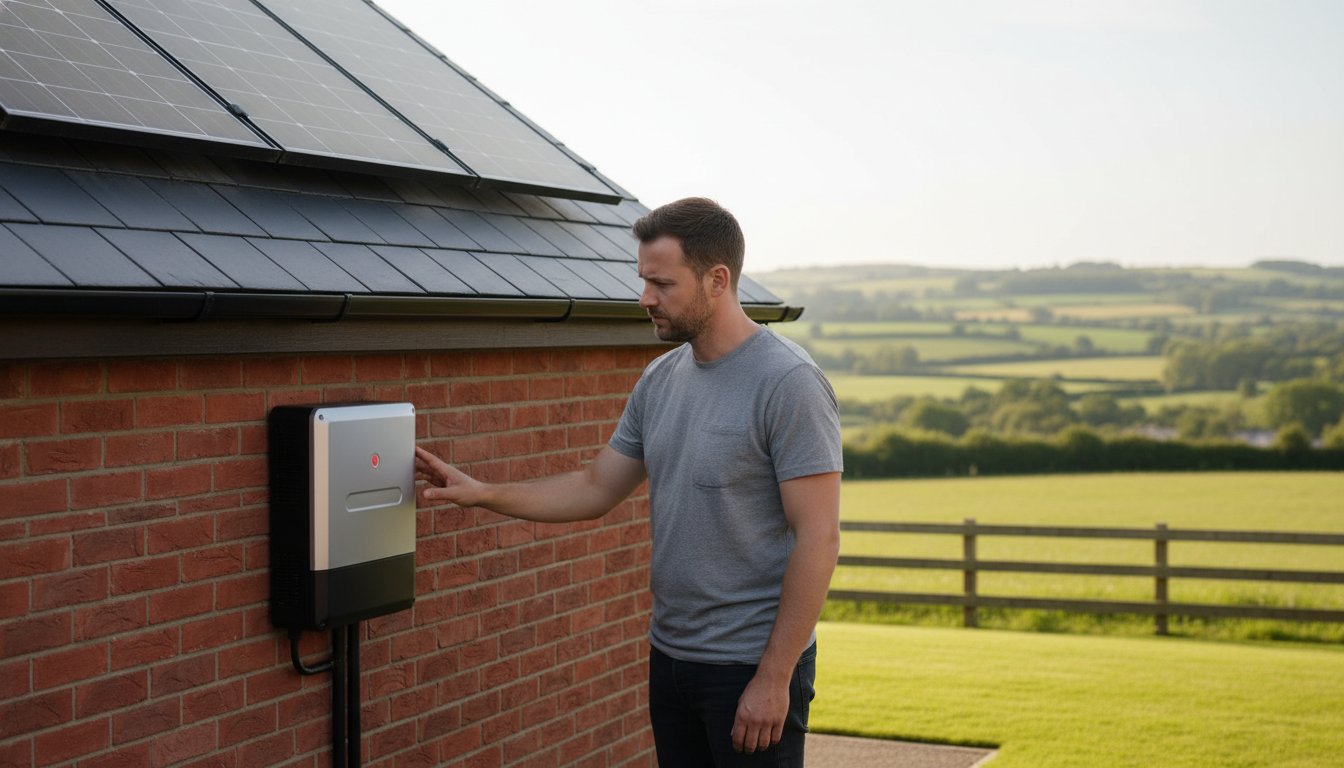
You wake up on a sunny Staffordshire morning, check your energy app, and see a flatline where your production should be. It's incredibly frustrating to watch potential savings vanish while your system sits idle. Between cryptic error codes and the valid fear of electrical hazards, troubleshooting solar inverter faults can feel overwhelming for any homeowner. You aren't alone in feeling confused by a flashing red light, but many issues don't have to mean a total system failure.
We understand that you want your home back on green energy as quickly as possible without risking your safety or your warranty. This guide provides a clear path to help you diagnose common issues safely and learn exactly when it's time to call a Staffordshire professional to restore your energy production. We will walk through the difference between external grid fluctuations and internal hardware failures. You'll also learn how the 2026 NEC updates and modern safety standards impact your system's performance, giving you the confidence to manage your solar investment effectively.
Key Takeaways
- Understand why your inverter is the "brain" of your energy system and why it is more prone to technical issues than static solar panels.
- Decode common error messages, such as isolation faults caused by Staffordshire moisture and UK grid voltage fluctuations.
- Master the safety limits of troubleshooting solar inverter faults by identifying which components carry lethal voltage and what can be visually inspected.
- Follow a safe, step-by-step guide to resetting your system, including the essential "5-minute rule" for discharging internal power.
- Discover how regular maintenance and timely hardware upgrades can extend your system's life and prevent costly production downtime.
Understanding Solar Inverter Faults: The Heart of Your System
The Solar inverter is the most hardworking component in your home energy setup. While your panels sit silently on the roof, the inverter is constantly converting DC electricity into usable AC power for your home. It acts as both the brain and the heart of the system, managing energy flow to your appliances and battery storage. Because it contains complex power electronics that handle high currents and heat, it's naturally more susceptible to wear than the static panels themselves. When you begin troubleshooting solar inverter faults, you'll find that these devices are designed to be incredibly sensitive to protect your home's electrical integrity.
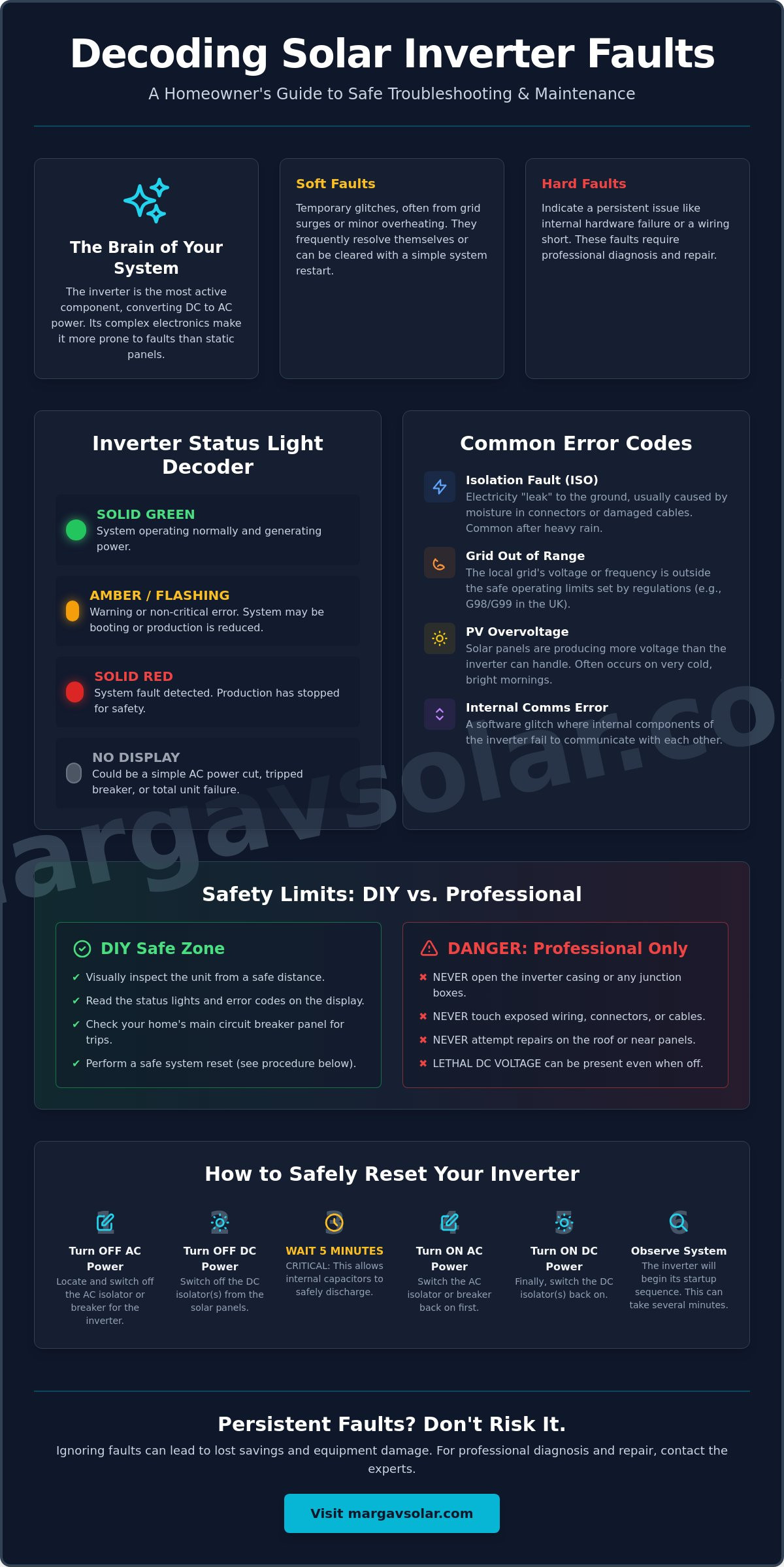
Faults generally fall into two categories: soft and hard. A soft fault is often a temporary glitch. This might be caused by a brief surge on the UK grid or a minor overheating event during a rare Staffordshire heatwave. These issues often resolve themselves or require a simple system restart. A hard fault, however, indicates a more serious internal hardware failure or a persistent external issue like a cable short. Modern monitoring platforms, such as the GivEnergy Cloud, provide real-time data that helps you distinguish between these states. By checking your app, you can often identify a pending issue before it leads to a total system shutdown.
How to Read Your Inverter’s Status Lights
Most modern units use a universal traffic light system to communicate their health. A solid green light confirms that your system is generating power normally. Amber or flashing lights usually signal a warning or a non-critical error that hasn't fully stopped production yet. A solid red light is the universal signal for a system shutdown. If you encounter a "No Display" scenario, it could mean a simple power cut has tripped your breakers, or it might indicate the unit has suffered a total internal failure. A solar fault is a protective shutdown triggered by internal safety sensors to prevent electrical fires or hardware damage.
The Impact of Faults on Your Energy ROI
System downtime is the direct enemy of your return on investment. In Staffordshire, losing even a few days of production during the peak summer months can lead to a noticeable spike in your monthly utility bill. Beyond the immediate loss of free energy, ignoring persistent faults can lead to long-term battery degradation. If your inverter isn't managing charge cycles correctly, your expensive battery storage solution could suffer permanent capacity loss. When troubleshooting solar inverter faults, always verify your equipment warranty status. Many systems installed in recent years include 5 to 10-year coverage, which often makes professional repairs a straightforward process rather than a major unexpected expense.
Common Solar Inverter Error Codes and What They Mean
When your system stops producing, it often communicates the problem through a specific alphanumeric code. Understanding these messages is the first step in troubleshooting solar inverter faults effectively. These codes act as a safety barrier, preventing minor electrical issues from becoming hazardous. An in-depth analysis of inverter faults reveals that most shutdowns are triggered by external environmental factors rather than internal component failure. By 2026, inverter technology has become even more sensitive to ensure compliance with updated safety regulations and performance standards.
- Isolation Faults (ISO): These occur when the inverter detects a "leak" of electricity to the ground, usually due to moisture ingress.
- Grid Out of Range: A common issue where the local UK grid voltage or frequency exceeds the G98 or G99 regulatory limits.
- PV Overvoltage: This happens if your solar panel array provides more voltage than the inverter's maximum input capacity, often on very cold, bright mornings.
- Internal Comms Error: A software glitch where the internal control board loses contact with the power processing hardware.
Isolation Faults and Moisture Issues
Staffordshire’s damp climate and heavy rain are frequent causes of isolation faults. If you notice a "Ground Fault" or "ISO" error after a storm, moisture has likely entered a junction box or a connector. This often points to cable damage or poor installation practices by "solar cowboys" who failed to use weather-rated seals. Because the DC side of your system carries lethal voltage, never attempt to open junction boxes or touch exposed wiring yourself. If these errors persist after the weather dries up, seeking professional inverter services is the safest way to identify the exact point of ingress.
Grid Faults: It Might Not Be Your Inverter
Your inverter is designed to sync perfectly with the National Grid. However, local power cuts or voltage spikes in Staffordshire can cause your system to desynchronise. If you see "Grid Under/Over Voltage" or "Grid Frequency Out of Range," your inverter is likely working correctly but has shut down to protect your home. This is often a result of G98/G99 safety protocols that prevent your system from feeding power into a potentially unstable grid. While troubleshooting solar inverter faults often starts with a glance at the display, the solution usually lies in understanding these specific UK grid requirements. If the error code appears only during peak evening hours or mid-day sun, you may need to contact your local Distribution Network Operator (DNO) rather than your solar installer.
DIY Troubleshooting vs. Professional Repair: Safety Limits
Safety is the most critical factor when troubleshooting solar inverter faults. While it's tempting to try a hands-on fix to get your savings back on track, you must respect the "Hands-Off" rule for internal components. A standard string of solar panels can produce between 300 and 600 volts of direct current (DC). Unlike the alternating current (AC) used in your home sockets, DC electricity is a constant stream that can cause a "lock-on" effect during an electrical shock, making it far more dangerous than standard household power. You should never attempt to open the inverter casing or dismantle DC isolators yourself.
Beyond the physical risks, unauthorised DIY repairs carry significant financial consequences. Most inverter manufacturers in 2026 use internal seals and digital logs that record when a unit has been opened. Breaking these seals usually voids your manufacturer warranty immediately. In the UK, professional repairs should always be conducted by an installer with NICEIC certification. This ensures the work meets strict safety standards and keeps your home insurance valid. Professional technicians have the specialised testing equipment needed to measure string voltages and insulation resistance without exposing themselves to lethal hazards.
What You Can Safely Check Yourself
There are several external factors you can safely inspect before calling for help. Start at your main consumer unit (fuse box) and the AC isolator switch near the inverter to see if a breaker has simply tripped. It's also wise to check the unit's physical environment. Staffordshire gardens can be windy, and it's common for dust, cobwebs, or garden debris to block the inverter’s cooling fans. If the fans can't spin, the unit will shut down to prevent overheating. Finally, verify your Wi-Fi connectivity. Sometimes what looks like a system failure is actually just a lost internet connection preventing your monitoring app from updating.
Red Flags: When to Call MarGav Solar Immediately
Some symptoms require an immediate shutdown and professional intervention. If you detect a smell of burning plastic, see smoke, or hear audible "arcing" sounds that resemble popping or sizzling, turn off the AC isolator immediately and call a professional. These are signs of serious electrical faults that could lead to a fire. Visible water ingress inside the inverter casing is another non-negotiable red flag. Additionally, if you experience repeated "Ground Fault" or "ISO" errors that persist even after a system reset, there is likely a deeper wiring issue that requires a certified technician to resolve safely.
How to Reset a Solar Inverter: A Step-by-Step Safety Guide
When troubleshooting solar inverter faults, a system reset is often the first and most effective step for clearing minor software glitches. Think of it like restarting a computer that has frozen. However, because you're dealing with high-voltage electricity, you must follow a specific sequence to ensure the safety of both yourself and your equipment. The most vital part of this process is the 5-Minute Rule. Solar inverters contain large capacitors that store electrical energy even after the power is disconnected. You'll need to wait at least five minutes for this energy to dissipate fully before attempting a restart.
Follow these steps to perform a safe "cold boot" of your system:
- Step 1: Locate your AC Isolator switch. This is usually a rotary switch near the inverter or a labeled breaker in your main consumer unit. Switch it to the 'OFF' position.
- Step 2: Locate the DC Isolator switch. This is typically found on the bottom or side of the inverter casing. Switch it to 'OFF'.
- Step 3: Wait for all lights, LEDs, and digital displays on the unit to go completely dark. This confirms the internal capacitors are discharging.
- Step 4: Once five minutes have passed, reverse the process. Switch the DC Isolator to 'ON' first, then switch the AC Isolator to 'ON'.
The Shutdown Sequence Matters
Cutting the AC power before the DC power is a critical safety step. By turning off the AC side first, you stop the inverter from actively trying to push power into your home. This prevents electrical "arcing" inside the DC switch, which can cause wear and tear over time. If your inverter doesn't have a visible DC switch, it likely has an internal isolator or a separate DC breaker box nearby. Once you've flipped the switches back on, the unit will enter a "Startup" phase. It will run through internal safety checks for sixty to ninety seconds before clicking into the "Producing" phase, where it begins generating green energy again.
What if the Fault Returns?
If your system trips again immediately after a reset, don't keep trying. We recommend the "Three Strikes" rule: if the fault returns three times, it indicates a persistent hardware issue or an external wiring fault. At this stage, further resets could potentially damage the internal circuitry. You can use the GivEnergy Cloud to pull detailed fault logs, which provide a history of exactly when and why the system shut down. Documenting these error codes will help your technician diagnose the problem much faster. If your system remains offline after a reset, you can book a professional inverter health check to prevent further energy loss and ensure your system is safe.
Preventing Future Faults: Maintenance and Upgrades
The best way to reduce the frequency of troubleshooting solar inverter faults is to move from reactive repairs to proactive care. While the inverter is the most complex part of your energy system, it doesn't have to be the most stressful. Statistics show that a typical string inverter has a lifespan of 10 to 15 years, while microinverters can last between 20 and 25 years. If your system is approaching the decade mark, you might notice more frequent "soft faults" or a slight dip in conversion efficiency. Modern units in 2026 can achieve efficiency levels of over 97% to 98%, making a replacement a smart financial move if your older hardware is struggling to keep up with current energy demands.
Isolation faults, which we discussed as a major cause of shutdowns, are often preventable. Regular solar panel maintenance ensures that cable runs remain secure and that moisture hasn't compromised the housing of your DC components. For systems over five years old, a professional health check is a vital investment. These inspections can identify small issues, like a degrading capacitor or a loose terminal, before they escalate into a total system failure that leaves your home without power during peak production hours.
The Role of Professional Maintenance
A professional service goes far beyond a simple visual check. Technicians use thermal imaging cameras to detect "hot spots" within the inverter and its associated wiring. These hot spots are often invisible to the naked eye but indicate high electrical resistance, which is a major fire risk and a common precursor to a hardware fault. Additionally, as we navigate the requirements of 2026 smart grids, software and firmware updates have become critical. These updates ensure your inverter remains compatible with the latest UK grid stability protocols and can communicate effectively with modern battery storage solutions.
If your system is frequently tripping or providing lower yields than expected, it might be time to explore inverter upgrades. Upgrading to a modern hybrid inverter allows for better management of solar, battery, and grid power, providing the resilience needed for modern Staffordshire homes.
Investing in Reliability with MarGav Solar
With over 20 years of experience, we've seen every type of solar fault imaginable across Staffordshire. This local expertise is invaluable for complex fault diagnosis, especially when dealing with the specific grid conditions and weather patterns of the region. We provide end-to-end support, helping homeowners from the initial solar panel installation through to long-term repairs and system optimisations. Our team ensures that your transition to green energy remains a hands-off, profitable experience for your household. Contact us today to book a fixed-price maintenance inspection and keep your energy production running at its peak potential.
Secure Your Solar Investment for the Future
Your solar inverter is a sophisticated piece of technology that works tirelessly to power your home. While many issues can be identified through a simple reset or by checking your monitoring app, persistent red lights or burning smells require immediate expert attention. Mastering the basics of troubleshooting solar inverter faults ensures you can distinguish between a minor grid hiccup and a hardware failure that risks your energy ROI. Protecting your system with regular maintenance isn't just about safety; it's about making sure your panels continue to pay for themselves year after year.
Don't let a faulty unit compromise your savings or your peace of mind. With over 20 years of solar expertise in Staffordshire, our NICEIC-certified electrical engineers are specialists in GivEnergy and all major UK inverter brands. We can diagnose your system quickly and safely to get your energy production back to peak performance. Book a Professional Inverter Health Check with MarGav Solar today to ensure your hardware is operating at maximum efficiency.
Your journey toward sustainable energy doesn't have to be interrupted by technical glitches. With the right knowledge and professional support, your solar PV system will remain a reliable and profitable asset for your Staffordshire home for decades to come.
Frequently Asked Questions
Why is my solar inverter showing a red light?
A red light is the universal signal that your inverter has detected a fault and has shut down to protect itself. This is often triggered by internal safety sensors identifying an issue like a grid surge or a hardware failure. You should check the digital display or your monitoring app for a specific error code to begin troubleshooting solar inverter faults and determine the cause of the shutdown.
Is it safe to touch my solar inverter if it has a fault?
It's generally safe to touch the exterior casing and the external isolator switches, but you must never attempt to open the unit. The internal components carry high-voltage DC electricity that can be lethal even when the system appears to be off. If you notice a burning smell, see smoke, or hear buzzing sounds, keep your distance and contact a professional immediately.
How much does it cost to replace a solar inverter in the UK?
The total cost of a replacement depends on the power capacity of your system and whether you choose a standard string inverter or a hybrid model. Prices vary across the industry based on brand and warranty length. It's worth checking your original installation paperwork, as many units are covered by a five to ten-year manufacturer warranty that may cover the cost of the hardware.
Can a power cut damage my solar inverter?
Standard power cuts usually won't damage your inverter, but the voltage spikes that sometimes occur when the grid turns back on can be hard on internal electronics. Most modern inverters have built-in surge protection to handle these events. If your system doesn't restart automatically once the power returns, follow the safe reset procedure outlined in this guide.
Why does my inverter stop working when it is very hot outside?
Inverters generate heat while converting electricity, and they will "derate" or shut down if they get too hot to prevent internal damage. This often happens if the unit is installed in direct sunlight or a poorly ventilated loft space. Keeping the cooling fins clear of dust and ensuring there is plenty of airflow around the unit will help it stay online during Staffordshire summer peaks.
Will my solar panels work if the inverter is faulty?
Your solar panels will continue to generate DC electricity whenever the sun is shining, but that energy cannot be used by your home without a working inverter. The inverter acts as the gateway between your roof and your appliances. If it's faulty, your home will simply pull all its power from the National Grid instead of your solar array.
How often should a solar inverter be serviced?
We recommend a professional health check every two to three years to ensure your system remains efficient and safe. Regular servicing allows a technician to tighten electrical connections and update firmware, which can prevent many common issues before they start. This proactive approach is much more effective than troubleshooting solar inverter faults after your energy production has already stopped.
What is an isolation fault on a solar system?
An isolation fault occurs when the inverter detects that electricity is "leaking" to the ground, which is a significant safety risk. This is frequently caused by moisture entering damaged cables or junction boxes after heavy rain or snow. The inverter shuts down immediately to prevent the risk of electric shocks or potential fire hazards in your home.


