

Did you know that 94% of UK homeowners choosing solar power in 2026 are now opting for a battery at the same time? It's a massive shift from just a few years ago. It makes perfect sense when you look at the numbers. Installing solar panels and battery storage together has become the gold standard for anyone tired of watching their hard-earned energy vanish back into the grid for minimal returns. If you've felt the sting of rising electricity bills despite having some solar knowledge, you aren't alone. It's often confusing to weigh up AC versus DC systems or worry about how much disruption a major installation might cause in your home.
We understand that you want a clear path to lower bills and protection against power cuts. You shouldn't have to deal with the headache of a messy or intrusive process. This guide will show you why combining these technologies is the most cost-effective way to achieve energy independence this year. You'll discover how to take full advantage of the 0% VAT benefits available until March 2027. We'll also explain why a single, unified installation is often easier than you think. We've used our 20 years of expertise to break down the technical details into helpful advice for your Staffordshire property.
Key Takeaways
- Understand how an integrated energy ecosystem provides significantly higher efficiency and faster ROI than a standalone solar PV system.
- Learn why installing solar panels and battery storage together is the most effective way to secure 0% VAT savings before the 2027 policy change.
- Decode the technical jargon between AC and DC-coupled systems to identify the most efficient wiring configuration for your new installation.
- Get a clear roadmap of the Staffordshire installation process, including how to navigate local G99 grid applications and technical site surveys.
- Discover how to use smart tariffs to "arb" the grid by storing cheap off-peak energy and selling your surplus back at peak rates.
Why Installing Solar Panels and Battery Storage Together is the Standard for 2026
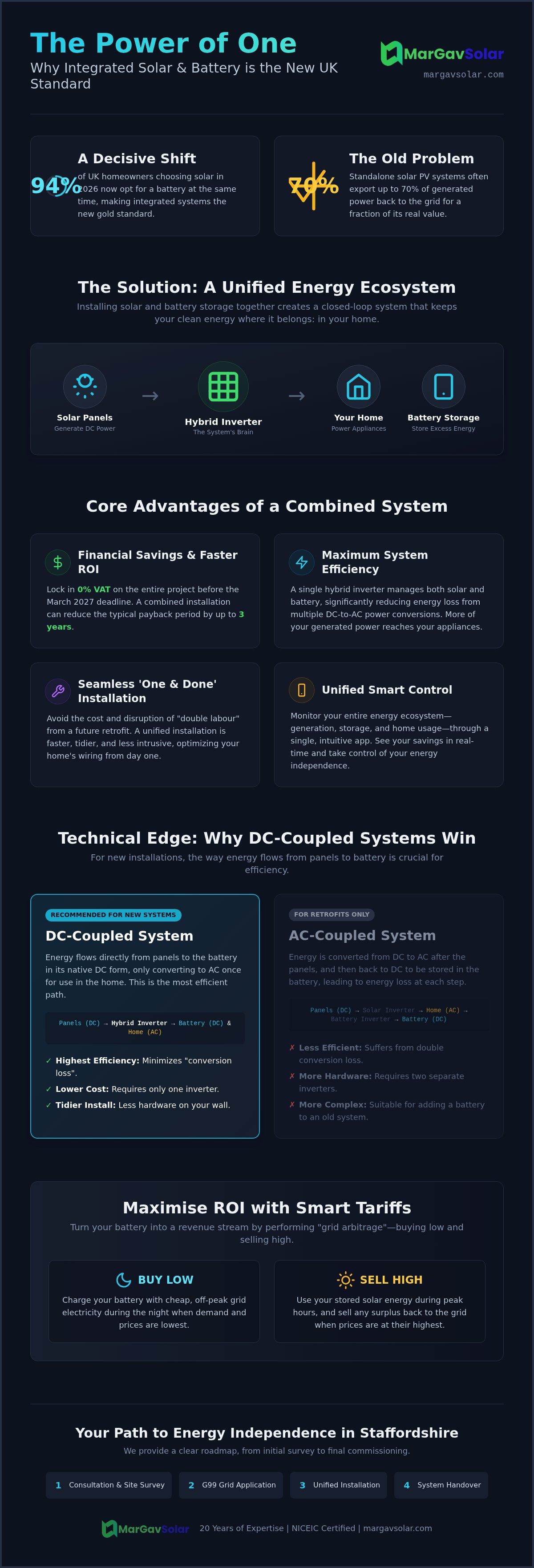
The days of viewing solar panels and batteries as separate upgrades are over. In 2026, the "integrated energy ecosystem" has become the baseline for UK homeowners. While standalone solar PV was once the norm, it often left households exporting up to 70% of their generated power back to the grid for a fraction of the cost they paid to buy it back at night. By installing solar panels and battery storage together, you create a closed loop that keeps your clean energy where it belongs: in your home. This approach has become so effective that nearly 94% of all new domestic installations now include storage as standard. It's the most reliable way to shield your household from volatile energy markets while preparing for a future of smart tariffs and electric vehicle integration.
Choosing a combined installation also eliminates the "double labour" footprint. Instead of having installers return a year later to dismantle parts of your system for a retrofit, everything is completed in a single, efficient visit. This reduces the time our NICEIC-certified teams spend at your property and ensures that your home's wiring is optimized for high-capacity home energy storage systems from day one. For Staffordshire residents with specific housing stock requirements, this "one and done" approach is often the least intrusive way to upgrade.
The Financial Logic: VAT Savings and ROI
The most compelling reason to act now is the current UK tax landscape. A zero rate of VAT applies to the installation of energy-saving materials, including solar panels and batteries, until 31 March 2027. After this date, the rate is set to revert to 5%. By installing solar panels and battery storage together now, you lock in that 0% rate on the entire project, including the battery which might otherwise carry a higher tax burden if purchased as a standalone item later. Industry data suggests that this combined approach can reduce the typical payback period by up to three years compared to staggered installations. You start saving on every unit of electricity from the first hour the sun hits your roof, rather than waiting for a secondary upgrade to stop the "leakage" of power back to the grid.
The Technical Edge: Single Inverter Efficiency
From a technical perspective, integrated systems are simply more efficient. When you install both components at once, we can use a hybrid inverter. This single unit manages both the solar generation and the battery storage. It's a significant upgrade over having two separate inverters, which often leads to "conversion loss" as energy is repeatedly switched between DC and AC power. With a hybrid system, energy stays in DC form for longer, meaning more of the power your panels produce actually makes it into your appliances. Plus, you get a unified view of your home's performance. Systems like the GivEnergy Cloud allow you to monitor your generation, storage, and home usage through one helpful app, making it easy to see exactly how much you're saving in real-time.
Technical Deep Dive: AC-Coupled vs. DC-Coupled Systems
When you're installing solar panels and battery storage together, you'll likely hear terms like "AC-coupled" and "DC-coupled" thrown around. It sounds like high-level jargon, but it simply refers to the point where the electricity generated by your panels meets your storage system. In a standard solar setup, panels produce Direct Current (DC) electricity. However, your home runs on Alternating Current (AC). Coupling determines whether that energy is stored while it's still DC or after it has been turned into AC. Getting this right is crucial because it affects how much of your free solar power you actually get to use.
DC-Coupled: The Integrated Choice
DC-coupled systems are widely considered the "gold standard" for brand-new, integrated installations. Because the energy flows directly from the panels into the battery without being converted to AC first, you lose significantly less power through conversion heat. This setup relies heavily on a Hybrid Inverter. This single, sophisticated component acts as the "brain" of your home energy system, deciding in real-time whether to send power to your appliances, the battery, or the grid. It's a streamlined approach that leads to lower hardware costs and a tidier installation footprint since you only need one unit on the wall. We find this is the ideal choice for Staffordshire homeowners starting their renewable journey from scratch or performing a full roof renovation.
AC-Coupled: The Flexible Alternative
While DC is efficient for new builds, AC-coupled systems offer unmatched flexibility. In this configuration, the solar panels and the battery have their own separate inverters. This is the standard choice for retrofitting storage to an existing solar array without replacing your original equipment. It also provides a unique "independence" factor. If your solar inverter happens to fail, your battery system remains fully operational, allowing you to charge from the grid during cheap off-peak hours. As highlighted by NYSERDA on home energy storage, these systems are essential for improving home resilience and managing energy costs during peak times. At MarGav Solar, we sometimes recommend AC coupling for larger or more complex Staffordshire properties where the battery needs to be located in a separate building or garage. If you're weighing up these technical options, you can request a fixed-price quote from our local experts to see which system offers the best ROI for your specific roof layout.
The Installation Process: What Staffordshire Homeowners Should Expect
The journey to energy independence doesn't happen overnight, but it's much faster when you're installing solar panels and battery storage together. By combining these two projects, you avoid the hassle of multiple scaffolding setups and repeated visits from electrical teams. In Staffordshire, the process begins with a technical site survey. We don't just look at your roof; we check the structural integrity of your rafters and the age of your consumer unit. This ensures your home can safely support the weight of the panels and the high-current throughput of a modern battery system. Most Staffordshire homes, particularly older properties in areas like Stafford or Rugeley, may require minor wiring updates to meet current safety standards before the main work begins.
The most critical administrative step involves the District Network Operator (DNO). In our region, this is usually National Grid Electricity Distribution. When you install a combined system, the total potential power export often exceeds the 3.68kW limit for a standard G98 notification. This means we must submit a G99 application to the grid before work starts. While some installers might find this paperwork daunting, we handle the entire process for you. We understand the local grid constraints and ensure your system is approved for connection without unnecessary delays. Once approved, the physical installation typically takes two to three days, covering everything from mounting the roof rails to commissioning your monitoring app.
Fire Safety and Battery Placement
Safety regulations have evolved significantly for 2026, especially regarding where batteries can be placed. It's no longer a simple case of tucking a battery into any spare corner. New standards restrict battery installations in "habitable rooms" like bedrooms or living areas. Instead, we typically look at garages, utility rooms, or specific outdoor-rated locations. If a battery is installed in a loft or an enclosed space, 2026 rules require the installation of fire-rated backing boards and interconnected heat detectors. These measures ensure that in the unlikely event of a fault, you're alerted immediately. We prioritize these safety protocols to ensure your system isn't just efficient, but fully compliant with your home insurance requirements.
Grid Notifications and Paperwork
Completing the physical build is only half the job. The final stage involves the essential certifications that protect your investment. As NICEIC-certified installers, we provide the building regulations compliance certificates you'll need if you ever sell your home. We also ensure your system is MCS certified. This is vital because, without an MCS certificate, you cannot apply for the Smart Export Guarantee (SEG). The SEG allows you to earn money for any surplus electricity you send back to the grid. By installing solar panels and battery storage together, we can set up your system to maximize these payments, ensuring your paperwork is as streamlined as your new energy supply.
Maximising ROI: Smart Tariffs and the Export Guarantee
The real magic of a modern energy system happens in the software. By installing solar panels and battery storage together, you aren't just generating power; you're trading it. In 2026, energy prices aren't static. They fluctuate throughout the day based on demand and weather conditions. With a smart battery, you can practice what's known as "grid arbitrage." This means you buy electricity when it's cheap and plentiful, store it, and then use it when prices skyrocket. It's a strategy that turns your home into a mini power station that works for your wallet.
Integrating an EV charging point into this setup creates the ultimate energy trifecta. Your panels charge the battery, the battery charges the car, and your system ensures you never pull expensive power from the grid during peak hours. When you combine this with 2026 "Agile" tariffs that update prices every half hour, your system can automatically hunt for the lowest rates without you lifting a finger. It's the most sophisticated way to ensure your investment pays for itself as quickly as possible.
Time-of-Use Tariffs Explained
Imagine charging your battery from the grid at just 7p per kWh during the middle of the night. When the morning rush hits and prices jump to 40p per kWh, you don't pay the utility company a penny. Instead, you run your kettle, shower, and toaster off the cheap energy you stored while you were asleep. For a standard four-bedroom Staffordshire home, these daily shifts in consumption can lead to hundreds of pounds in annual savings. Managing this manually would be a nightmare, which is why the GivEnergy Cloud is so vital. It uses intelligent algorithms to predict your usage and automate your charging schedule based on the next day's weather forecast.
Selling Back to the Grid
While self-consumption is usually the priority, there are times when selling power back to the grid is highly profitable. The Smart Export Guarantee (SEG) requires suppliers to pay you for every unit you export. However, exporting during a sunny Tuesday at 1 PM often earns you the lowest rate because the grid is flooded with solar power. A better strategy involves "force-exporting" during peak evening events when demand is high and suppliers offer premium rates. If your current system feels like it's hitting a ceiling, looking into inverter upgrades can help you manage these export limits more effectively. You can book a free technical consultation with our Staffordshire team to see how a smart tariff could slash your specific payback period.
Why Choose MarGav Solar for Your Integrated System?
Choosing a partner for installing solar panels and battery storage together is a long-term decision. You're not just buying hardware; you're investing in a system that needs to perform reliably for decades. With 20 years of expertise in the Midlands, we've seen exactly how the UK energy market has evolved. Our NICEIC-certified installers ensure every connection meets the highest safety standards, providing you with peace of mind that your home is in professional hands. We specialize in solar battery storage solutions designed for longevity, using advanced technology like GivEnergy to ensure your system withstands the demands of daily cycling.
Our commitment to your home doesn't end when the last panel is bolted down. We provide end-to-end support that covers everything from the initial consultation to long-term maintenance. This comprehensive approach is why so many Staffordshire homeowners trust us to manage their transition to energy independence. We focus on building systems that aren't just powerful, but are also safe and fully compliant with the latest 2026 regulations.
Our Fixed-Price Guarantee
Transparency is at the heart of how we work. We offer fixed-price installation contracts, meaning the price you're quoted is the price you pay. This fee covers every aspect of the project: the bespoke system design, procurement of high-quality components, and the full physical installation. You won't find hidden costs for scaffolding or unexpected electrical upgrades buried in the fine print later. We believe in clear, honest communication from the very first quote through to the final handover of your monitoring app. It's about making the process as stress-free as possible for you.
Local Staffordshire Support
Unlike national aggregators who often outsource work to third-party contractors, we're your local experts. We understand the specific housing stock and grid requirements of Stafford, Cannock, and Rugeley. This local knowledge is invaluable when navigating the G99 application timelines or understanding regional grid constraints. Being nearby also means we're here for the long haul. Whether you need routine solar panel maintenance or technical advice, you have direct access to our technical team. There are no call centres or layers of bureaucracy. By installing solar panels and battery storage together with MarGav Solar, you're choosing a partner that understands Staffordshire’s unique energy landscape and provides reliable, local support for the life of your system.
Secure Your Energy Independence in 2026
The transition to a low-carbon home has never been more straightforward or financially rewarding. By installing solar panels and battery storage together, you aren't just cutting your monthly bills; you're future-proofing your property against energy market volatility and making the most of the current 0% VAT incentives. Whether you're prioritizing the high efficiency of a DC-coupled system or the flexibility of an AC-coupled setup, the key is to act before the tax landscape changes in early 2027. You've seen how smart tariffs and local grid knowledge can turn a standard installation into a high-performing energy asset.
As Staffordshire’s leading renewable energy consultants, we bring 20 years of expertise and the reassurance of NICEIC-certified installers to every project. We handle the complex local grid applications and technical designs so you don't have to worry about the paperwork. It's time to stop exporting your valuable green energy and start storing it for when you need it most. Our team is ready to help you navigate the specific requirements of your Staffordshire home with professional, end-to-end support.
Get a fixed-price quote for your integrated solar and battery system from MarGav Solar and take the first step toward a smarter, more self-sufficient home today. We look forward to helping you power your future with clean, reliable energy.
Frequently Asked Questions
Is it cheaper to install solar and batteries together?
Yes, it's significantly more cost-effective because you only pay for one scaffolding setup and a single visit from our electrical team. By installing solar panels and battery storage together, you also ensure the entire project is covered by the 0% VAT incentive. This avoids the higher labor costs and hardware requirements associated with retrofitting a battery to an existing system later.
Do I need planning permission for solar panels and battery storage in Staffordshire?
Most installations in Staffordshire fall under permitted development, meaning you won't need a full planning application. This applies to the majority of residential properties in areas like Stafford, Cannock, and Rugeley. However, if your home is a listed building or situated in a conservation area, you must check with the local council first. We can help identify these requirements during our initial technical site survey.
How long does it take to install a combined solar and battery system?
A typical domestic installation takes between two and three days of physical work at your property. This timeframe includes the roof work for the panels and the electrical integration of the battery and inverter. While the physical build is quick, the administrative side, specifically the G99 grid application for Staffordshire homes, is handled by our team in the weeks leading up to the installation date.
Can I add an EV charger to my integrated solar and battery system later?
Yes, you can easily add an EV charging point to your system at any time. If you've already opted for a hybrid inverter during your initial installation, the process is even simpler as the brain of your system is already equipped to manage multiple power flows. We recommend letting us know if you plan to add a charger later so we can ensure your consumer unit is prepared for the future load.
What happens to my battery storage during a power cut?
Your battery can continue to power your home during a grid failure if it's configured with an Emergency Power Supply (EPS) circuit. Most modern systems like those from GivEnergy offer this backup capability, allowing essential appliances like lights and internet routers to stay on. Without this specific setup, standard systems shut down during power cuts to prevent electricity from "leaking" back into the grid while engineers are working on repairs.
How much space do I need for a solar battery installation?
Modern lithium-ion batteries are surprisingly compact, typically being no larger than a small wall-mounted radiator. You'll need enough wall or floor space in a garage, utility room, or an external location that allows for proper ventilation and meets 2026 fire safety standards. During our survey, we'll help you choose a location that maximizes safety while minimizing the impact on your living space.
Is there still a 0% VAT rate on solar and batteries in 2026?
Yes, the UK government has confirmed that the 0% VAT rate on energy-saving materials remains in place until 31 March 2027. This applies to both the panels and the storage unit when you are installing solar panels and battery storage together. Acting before this deadline allows you to save significantly on the total project cost before the rate is scheduled to revert to 5%.
What is the lifespan of a modern solar battery?
You can expect a modern solar battery to last between 10 and 15 years depending on its chemistry and how often it's used. Most high-quality Lithium Iron Phosphate (LiFePO4) batteries come with warranties that guarantee at least 70% to 80% of their original capacity after a decade of daily cycling. Keeping the battery in a stable environment, away from extreme temperature fluctuations, will help you get the most out of your investment.


